
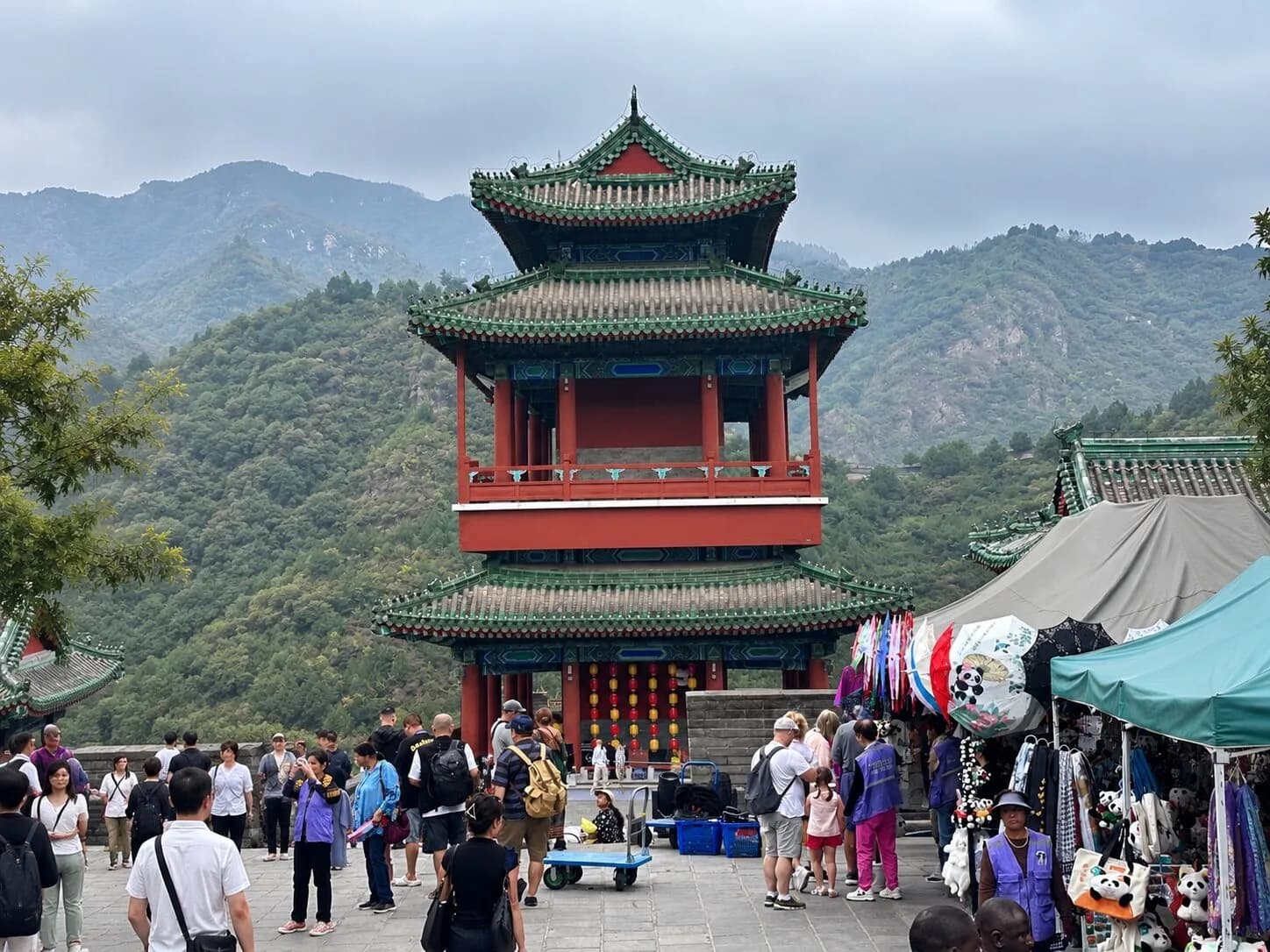
China’s rapid advances in artificial intelligence and other emerging technologies provide an important backdrop to Hong Kong’s Five-Year Plan for 2026–2030. As the global economy becomes increasingly technology-driven, Hong Kong is seeking to strengthen its competitiveness by aligning its development priorities with China’s national ambitions while preserving the distinct advantages that have made it an international financial and commercial centre.
The plan represents an important evolution in Hong Kong’s approach to economic development. Rather than pursuing its ambitions in isolation, the city is positioning itself to contribute more directly to China’s industrial upgrading, technological innovation and expanding domestic market. This is where the principle of “One Country, Two Systems” takes on practical economic significance.
Hong Kong’s prosperity has long rested on its ability to connect China with the international economy. Its financial institutions, common-law legal system, freely convertible currency, international business networks and professional services have helped establish the city as a gateway for investment into and out of mainland China.
These advantages remain relevant as China moves towards higher-value production, technological innovation and greater economic self-reliance. Hong Kong’s future therefore lies not in separating its development from that of the mainland, but in finding new ways to make its distinctive strengths complementary to China’s economic transformation.
The principle of “One Country, Two Systems” emerged under Chinese leader Deng Xiaoping in the late 1970s, initially as a proposal for resolving the Taiwan question. It subsequently provided the framework for Hong Kong’s return to Chinese sovereignty in 1997 and Macau’s return in 1999. Under the arrangement, both cities retained distinct economic and legal systems within China.
For Hong Kong, this included the preservation of its capitalist economy, separate customs territory, currency and common-law institutions. The model allowed the city to retain an international economic identity while benefiting from its location next to one of the world’s largest and fastest-changing economies.
That relationship is becoming increasingly important as China’s economic priorities evolve.
Hong Kong’s 2026–2030 Five-Year Plan places artificial intelligence, innovation and technology, finance, advanced industries and talent development among its priorities. These ambitions complement China’s 15th Five-Year Plan, which covers the same period. The alignment creates opportunities for Hong Kong to participate in national technology initiatives, attract international capital and help commercialise research, while giving mainland enterprises access to international markets, financing and professional expertise.
The Northern Metropolis illustrates how this complementarity can work in practice.
Located along the border with Shenzhen, the development is intended to become a major centre for innovation, industry and residential development. Its proximity to Shenzhen creates opportunities to connect Hong Kong’s research institutions, financial resources and international networks with a mainland technology ecosystem recognised for its manufacturing capacity and commercial innovation.
The significance of this relationship extends beyond geography.
Shenzhen has developed into a major technology and advanced-manufacturing centre, while Hong Kong offers complementary strengths in finance, international trade, professional services and research. Greater integration could enable businesses to move more efficiently from scientific research to financing, product development and commercialisation.
Artificial intelligence could accelerate this process.
As China expands the application of AI across manufacturing, finance, logistics and public services, Hong Kong can play a role in attracting international investment, developing specialist talent and facilitating cross-border partnerships. The real test, however, will be whether these ambitions translate into productive enterprises, quality employment and sustained investment.
Hong Kong is already putting economic diversification into practice.
Its 2026–2030 Five-Year Plan commits HK$10 billion to an Innovation and Technology Industry-Oriented Fund targeting life and health technology, AI and robotics, semiconductors and smart devices, and industrial digitalisation. The government is also advancing the San Tin Technopole and the Hong Kong Park of the Hetao Shenzhen-Hong Kong Science and Technology Innovation Co-operation Zone to strengthen links between university research, technology businesses and industrial production.
The Sandy Ridge Data Facility Cluster is also being developed to expand computing capacity for AI development.
Taken together, these initiatives point towards a broader economic strategy. Hong Kong is seeking to build a pipeline connecting research, finance, computing capacity and commercial production, allowing the city to develop new sources of growth alongside its established financial sector.
Talent will be just as important as infrastructure.
Hong Kong has announced plans to mobilise employers to provide an additional 10,000 full-time jobs for young people over two years from 2027, alongside more than 10,000 internship opportunities and expanded professional training placements. Such measures matter because economic transformation is ultimately measured not only by investment and technological capacity, but also by the opportunities it creates for people.
At the same time, Hong Kong continues to strengthen its position as an international financial centre through offshore renminbi business, wealth management and new financial services.
The challenge is to make these established strengths work alongside technology-led growth. Finance can provide capital. Research can generate ideas. Technology can create new products and industries. International networks can open markets. Mainland China can provide scale, manufacturing capacity and a vast domestic market.
Hong Kong’s distinctive value lies in bringing these elements together.
This is perhaps the most practical expression of “One Country, Two Systems” in the economic sphere. The model does not require Hong Kong to become indistinguishable from the mainland. Its value lies precisely in allowing Hong Kong to retain characteristics that give it a distinct role while participating in the wider development of China.
As China advances towards a more innovation-driven economy, Hong Kong has an opportunity to become an even more important bridge between Chinese capabilities and global markets.
Its future competitiveness will depend on how effectively it uses that position.
The trajectory of Hong Kong and China’s development is therefore increasingly interconnected. China provides scale, industrial capacity and a rapidly expanding technology ecosystem. Hong Kong brings international finance, professional services, global networks and a distinctive institutional framework.
The opportunity is to make these strengths work together.
For Hong Kong, the future may ultimately depend less on choosing between its identity as an international city and its place within China than on demonstrating how the two can reinforce each other. In that sense, “One Country, Two Systems” is not simply a constitutional arrangement. It can also be understood as an economic proposition, one in which Hong Kong’s distinct advantages contribute to and benefit from China’s continuing development.

Comments
No comments yet. Be the first to share your thoughts.