
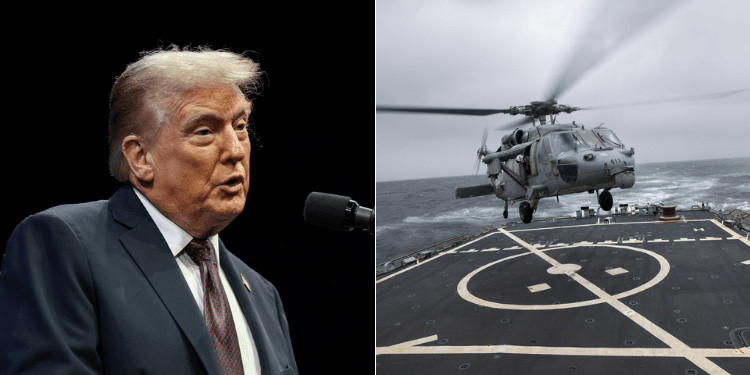
United States President Donald Trump has dismissed warnings from Iran that any American ground deployment could spiral into “another Vietnam,” as tensions between the two countries continue to intensify.
Speaking at the White House on Tuesday, March 17, Trump was asked about the risks of deploying U.S. troops into Iran.
The president, in turn, insisted he is unconcerned, to which he replied, “No… I’m really not afraid of anything.”
The remark comes after a warning from Iran’s deputy foreign minister Saeed Khatibzadeh, who told Sky News that the United States risks being dragged into a prolonged and costly conflict if it commits forces on Iranian soil.
Iran warns of a “quagmire”
In the interview conducted in Tehran, Khatibzadeh invoked the memory of the Vietnam War, one of the most difficult and controversial military engagements in U.S. history.
“Just read what happened in Vietnam,” he said, warning that American troops could face a similar fate.
He added that those pushing Washington into conflict could also pull it into a “quagmire,” suggesting a drawn-out war with no clear exit.
The Iranian official emphasized that Tehran is prepared for a sustained fight and is not currently prioritizing diplomacy, though he did not completely rule out negotiations.
Instead, he said it was up to the United States and its allies to present a proposal that could end the conflict.
His comments came amid mounting casualties. According to figures cited in the interview, nearly 1,500 Iranians have been killed since the war began, alongside hundreds of deaths across the region, including in Lebanon, Iraq, and Israel. Thirteen U.S. service members have also been reported killed.
The exchange comes as Washington weighs the possibility of deploying troops closer to Iranian territory.
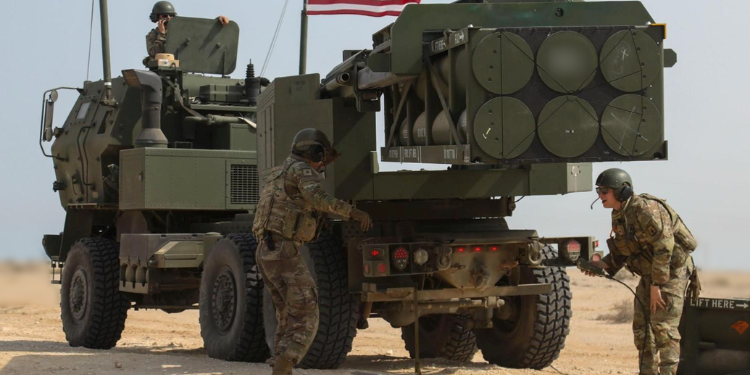
While no full-scale ground invasion has been announced, U.S. military planners under U.S. Central Command (CENTCOM) have already moved significant assets into the region.
A Marine Expeditionary Unit of roughly 2,500 troops is being deployed, supported by amphibious assault ships, including the USS Tripoli, and transport docks, such as the USS San Diego and USS New Orleans.
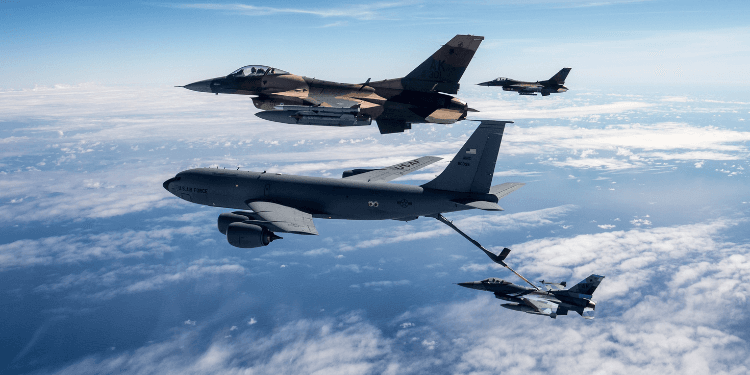
The deployment includes advanced air support, notably F-35B fighter jets, giving the unit the ability to operate independently if required.
However, officials have stopped short of confirming whether these forces would enter Iranian territory.
Kharg Island emerges as key flashpoint
One of the most likely focal points for any U.S. ground operation is Kharg Island, a strategic hub that handles roughly 90 percent of Iran’s oil exports.
Trump last week indicated that while U.S. strikes have hit military infrastructure on the island, key oil facilities remain intact—for now.
“We knocked it… literally destroyed everything on the island, except for the area where the oil is,” Trump said earlier this week, leaving open the possibility of further action.
Some U.S. lawmakers argue that securing the island would not constitute a traditional “boots on the ground” scenario.
Republican Congressman Pete Sessions on Tuesday suggested that deploying forces there would be fundamentally different from entering densely populated areas inside Iran.
“Is that boots on the ground? No, not like inside Iran where they’re in the cities,” he said, drawing a distinction between limited strategic operations and full-scale war.
Trump on the “boots on the ground” debate
Earlier this month, President Trump announced that U.S. troops could “possibly” be sent on the ground in Iran, as the war continues.
Trump made the remarks on Saturday, March 7, while speaking to reporters aboard Air Force One, reiterating that he wants to be involved in the selection of Iran’s next leader and saying he doesn’t “want to come back every 10 years.”
According to Trump, U.S. troops could “possibly” be sent into Iran, but only for a “very good reason.”
“I don’t even want to talk about it now. I don’t think it’s an appropriate question; you know I’m not going to answer it. Could there be? Possibly, for a very good reason, have to be a very good reason. I would say if we ever did that, they would be so decimated that they wouldn’t be able to fight at the ground level.”
Pressed whether he would consider using ground troops to secure enriched uranium at Iran’s nuclear sites, Trump also said it’s a possibility, but not right now.

Comments
No comments yet. Be the first to share your thoughts.