
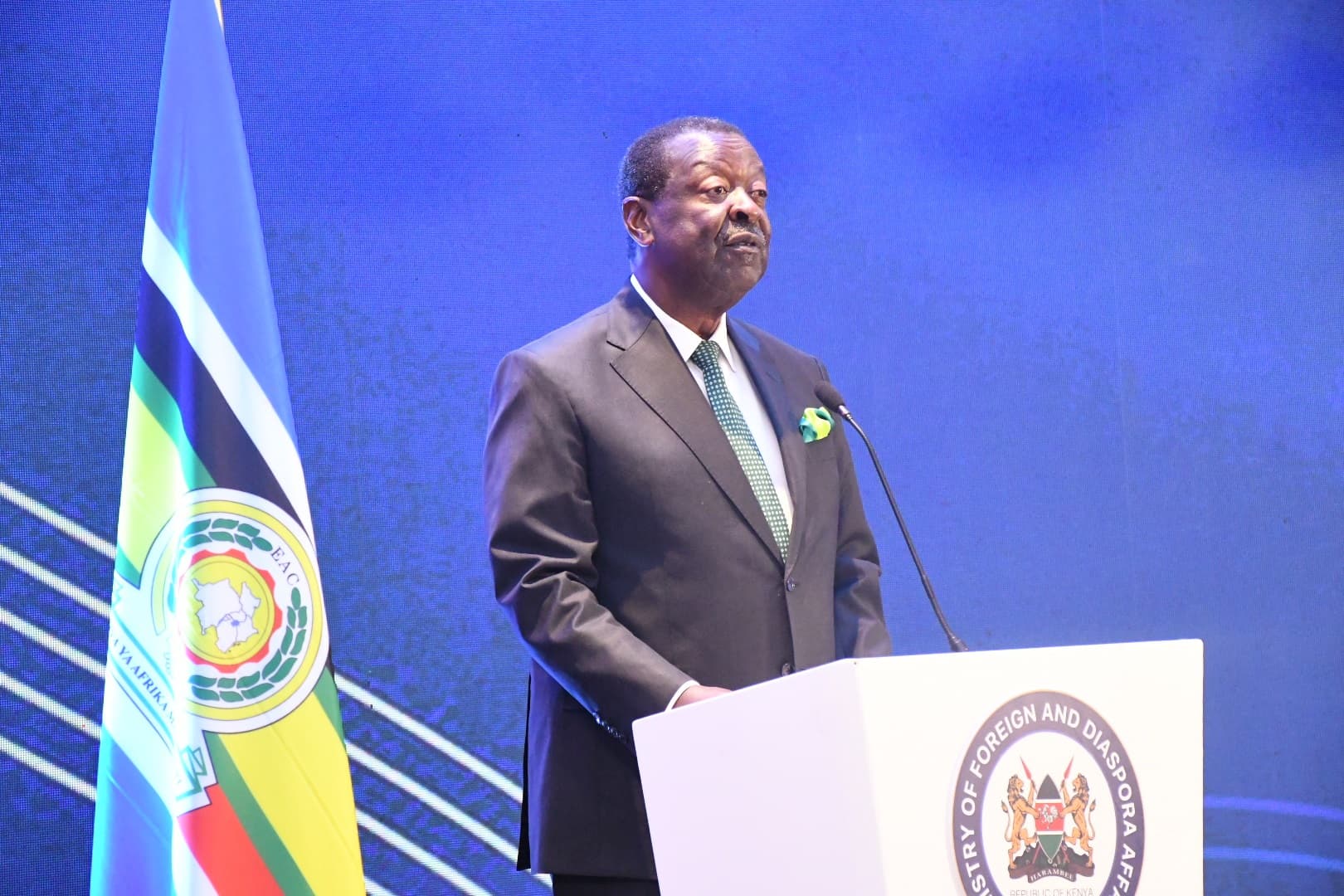
Prime Cabinet Secretary Musalia Mudavadi has called for stronger accountability, transparency and ethical leadership in public institutions.
Mudavadi said institutions could only inspire public confidence by honouring commitments, acknowledging mistakes, correcting failures and remaining open to scrutiny, adding that trust must be earned through actions rather than demanded from citizens.
Speaking during ‘The 2026 Nairobi Dialogue on Global Trust’ in Nairobi, Thursday, Mudavadi warned that public institutions risk losing legitimacy when they prioritise procedures and meetings over tangible results.
“Trust is built, strand by strand, through honesty, reliability, fairness, and the fulfilment of our obligations to one another,” he said.
The Prime Cabinet Secretary cautioned against treating public trust as a substitute for accountability, noting that the two should reinforce each other to strengthen democratic space and governance.
Citing an Afrobarometer working paper based on survey data from 37 African countries, Mudavadi said greater trust in presidents and ruling parties was associated with weaker public support for accountability mechanisms, including parliamentary oversight and citizens’ ability to hold governments accountable.
He said the findings highlighted the need for institutions that inspire confidence through their conduct rather than expecting citizens to trust them blindly.
“The strongest institutions are not those that ask people to trust them blindly, but those that inspire confidence through their conduct, while remaining transparent, honourable, and open to scrutiny,” he said.
Mudavadi highlighted the importance of trust in science and healthcare, saying institutions must demonstrate fairness, make services accessible and ensure scientific advances benefit ordinary citizens.
Referring to findings, he attributed to the ‘Wellcome Global Monitor 2026’, he said, the proportion of people who believed that most citizens in their countries benefited from science had declined from 42 per cent in 2018 to 37 per cent in 2025.
He observed that scientific evidence alone was insufficient to earn public confidence, adding that institutions must communicate openly about uncertainties, respond to public concerns and demonstrate how their work improves people’s lives.
On business and economic development, Mudavadi described trust as an essential form of economic infrastructure, noting that commercial relationships depend not only on contracts and legal safeguards but also on personal integrity and reputation.
He said legal instruments could not replace character or guarantee honesty, urging business leaders and other stakeholders to uphold their commitments and protect their reputations.
Mudavadi further called for greater involvement of religious, cultural and traditional leaders in promoting ethical conduct, saying these institutions played an important role in shaping values and influencing behaviour within communities.
He noted that while laws and regulations were necessary, they could not independently create sincerity or a sense of conscience among individuals.
“We can design procedures, set standards and impose consequences. But we cannot write sincerity into a statute or legislate conscience into existence,” he said.
The Prime Cabinet Secretary raised concerns over the spread of misinformation and deliberate disinformation on digital platforms, warning that false information could deepen suspicion and damage reputations before the truth emerged.
He said freedom of expression must be protected but should not be used to justify the fabrication or malicious distortion of facts.
Mudavadi called for families to take a leading role in rebuilding trust, describing the family as the smallest unit of society and the foundation upon which values such as honesty, respect, responsibility and compassion are nurtured.
He said these values should be carried from homes into schools, workplaces, businesses, public institutions and international relations.
“A trustworthy global order must begin with trustworthy societies,” he stressed, adding that efforts to rebuild confidence should start with individual families, communities and nations.
In international cooperation, Mudavadi reaffirmed Kenya’s support for multilateralism, saying challenges such as climate change, peace and security, public health, trade and technological change required collective action across national borders.
However, he said international institutions must earn confidence through fairness, inclusive representation and meaningful participation in decision-making.
He singled out Africa’s lack of permanent representation on the United Nations Security Council as a question of legitimacy, particularly because the Council frequently deliberates on conflicts and security challenges affecting the continent.
Mudavadi said permanent African representation, consistent with the African Union’s Common African Position on United Nations Security Council reform, would strengthen the confidence of African citizens in the global body.
He maintained that Africa should not merely be a subject of Security Council deliberations but an equal participant in shaping international peace and security decisions.
The Prime Cabinet Secretary challenged participants at the Summit to move beyond discussions and produce practical commitments that would strengthen public confidence.
He called for a clear action plan, a framework outlining specific responsibilities, a coalition of actors to implement the commitments and a credible mechanism to monitor delivery.
Mudavadi said the success of ‘the Nairobi Dialogue on Global Trust’ should ultimately be measured by whether its outcomes improved people’s lives beyond the conference venue.
By Aron Kinyamasyo


Comments
No comments yet. Be the first to share your thoughts.