
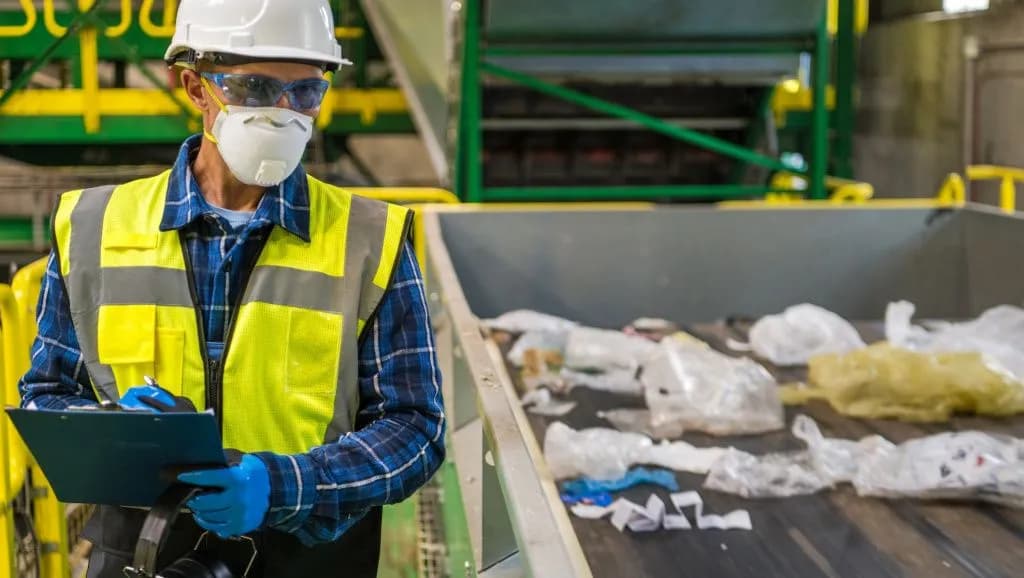
A circular economy helps conserve resources, reduce the amount of waste and lower the costs of maintaining waste disposal sites. This system replaces the linear “production – use – disposal” model with a regenerative cycle and enables the global economy to reduce spending on virgin raw materials, saving tens of trillions of roubles.
Recognising this, BRICS member states are actively discussing the transition to a circular economy (CE). In September 2026, waste recycling technologies once again became an important topic of discussion at the BRICS Summit in New Delhi.
In addition, the circular economy is one of the main ways to achieve the eleventh Sustainable Development Goal (SDG 11) adopted by the UN. Its official name is “Ensuring the openness, safety, resilience and environmental sustainability of cities and human settlements”. At the same time, experts stress that achieving this goal requires not only financial investment but also cooperation and coordination between different types of stakeholders, both within individual countries and between groups of countries.
“The BRICS group is implementing both national programmes and joint initiatives as part of the transition to a circular economy. Despite differences in approaches, there are also common trends: a focus on developing infrastructure, encouraging waste recycling and exchanging innovative technologies,” Ekaterina Reshneva, Associate Professor at the Department of Sectoral Economics of Empress Catherine II Saint Petersburg Mining University and Candidate of Economic Sciences, said in an interview with TV BRICS.
National and joint BRICS initiatives
BRICS countries currently account for 49.5 per cent of the world’s population and around 40 per cent of global GDP. The grouping includes the world’s largest energy producers and consumers, as well as states with significant potential in critical resources and technologies. Experts consider all this an important advantage in achieving sustainable development goals.
Moreover, according to Gabriela de Fatima Cia, an expert in sustainable development, international environmental cooperation, water resources management and forest ecosystems, member of the BRICS Student Commission and coordinator of the Youth Secretariat of the Centre for Integration and Cooperation of Russia and Latin America (CICRAL), the transition to a circular economy in the BRICS founding countries is now more than realistic. However, it is highly uneven.
“The transition to a circular economy is progressing faster where infrastructure investment and compliance with legislation go hand in hand, and it stalls where legislation outpaces financing and institutional capacity,” Gabriela de Fatima Cia says.
In this respect, China is currently the most advanced in terms of infrastructure. In 2020, a provision was added to the country’s legislation on solid waste management making household waste sorting mandatory. In addition, China completely banned the import of waste.
The country has created the world’s largest network of waste-to-energy facilities – more than 2,170 waste incineration plants processing 1.11 million tonnes per day. The “Waste-Free City” programme currently covers 113 cities, while the new national action plan for 2026–2030 sets a target of processing 45 billion tonnes of bulk waste annually.
“The National Development and Reform Commission of China (NDRC) announced the publication of a plan for developing the circular economy in the country during the implementation of the 15th Five-Year Plan (2026–2030). According to the document, by 2030, the circular economy system covering production, consumption, recycling and the reuse of resources will be further optimised,” Ekaterina Reshneva said in an interview with TV BRICS.
Brazil presents the opposite picture: strict legislation but relatively weak implementation. Since 2010, the National Solid Waste Policy has established a clear waste management hierarchy and a unique Brazilian “reverse logistics” model based on shared producer responsibility. However, in 2022, only 1.8 per cent of municipal waste was actually recycled, says Brazilian expert Gabriela de Fatima Cia. There are positive developments here as well. For example, the recycling rate for aluminium cans has reached 100 per cent.
Experts point to Brazil’s achievements in implementing technologies for composting organic waste, which can reduce the volume of such waste in landfills by 25 per cent.
Brazil is also actively using anaerobic digestion methods. As a result, two useful products are obtained: biogas, a mixture of methane and carbon dioxide, which is used to generate electricity and heat, and digestate – a high-quality organic fertiliser. Among other promising projects, experts highlight technologies for treating wastewater using fungi.
“Scientists from the Federal University of Alagoas (UFAL) in Brazil are developing a technology for treating wastewater using specially selected strains of fungi. This work is being carried out as part of a joint project with Tambov State Technical University and China Three Gorges University,” Ekaterina Reshneva says.
In Russia, the so-called waste reform began in 2019, when the collection and disposal of municipal solid waste became the responsibility of regional operators rather than municipal institutions. The goals of the reform are to combat illegal dumping and increase waste recycling. Targets were even set for recycling 60 per cent of waste. However, by 2024, around 90 per cent of waste was still being sent to landfills, and by 2020, separate waste collection had been established in only a few Russian regions, Gabriela de Fatima Cia notes.
Since 2025, Russia has been implementing the national project “Environmental Well-being”, which includes the federal project “Circular Economy”. Its targets include: establishing a circular economy that will ensure the sorting of 100 per cent of the volume of municipal solid waste generated annually by 2030; landfilling no more than 50 per cent of such waste and bringing at least 25 per cent of production and consumption waste into economic circulation as secondary resources and raw materials; recycling and neutralising at least 50 per cent of the total volume of Class I–II hazardous waste by 2036.
The necessary infrastructure is being developed to achieve these targets: more than 200 waste recycling plants, separate waste collection systems and facilities for processing secondary resources. As for businesses, an updated extended producer responsibility (EPR) system has been in operation in Russia since 2024, encouraging companies to develop recycling capacity and produce more environmentally friendly packaging.
India’s key government initiative for waste collection and recycling is the Clean India Mission, the second phase of which runs until the end of 2026. Over the past five years, experts say, the volume of waste sent for recycling under the programme has increased by 20 per cent. However, according to Gabriela de Fatima Cia, part of the visible progress is driven by India’s informal waste-picking economy, where millions of people earn a living by collecting and manually sorting waste, filling gaps in the government waste management system. These informal waste pickers process 15–20 per cent of all waste, including 95 per cent of the country’s electronic waste, one of the largest volumes in the world.
This informal structure is complemented by a growing municipal network. In recent years, new plants have appeared in the country, including facilities using technologies to recycle electronic waste and recover precious metals.
India’s leading co-operative recycling structure is the Material Recycling Association of India (MRAI). The association brings together national trade and recycling communities that are stakeholders in the recycling of metals, electronic waste, municipal solid waste, plastics, rubber and rubber waste, paper, glass and construction materials.
Joint BRICS initiatives in the circular economy
The transition to a circular economy and the efficient use of resources are among the key priorities on the agenda of all BRICS countries. Their joint activities are aimed at creating closed-loop supply chains, reducing waste and introducing digital recycling technologies. Experts highlight the following among the most significant projects:the BRICS Economic Information Exchange Platform;the activities of the New Development Bank;the BEST (BRICS Environmentally Sound Technology Platform);the BRICS Clean Rivers Programme;BRICS bioeconomy corridors;the BRICS STI Framework Programme.
Through the BRICS Economic Information Exchange Platform, member states can share data and expertise in the field of the circular economy. This helps identify successful cases and gaps in national strategies.
The New Development Bank actively provides funding for climate and environmental projects in renewable energy, water resource management, green infrastructure, adaptation and land restoration.
The BEST platform is a universal international platform for the practical implementation of environmental initiatives, the exchange of experience, green technologies and sustainable development methods. The BRICS Clean Rivers and Environmentally Sustainable Cities Partnership programmes are its key areas. Both initiatives are aimed at addressing common environmental and climate challenges faced by BRICS countries.
The BRICS bioeconomy corridors are strategic initiatives of the BRICS countries aimed at integrating their natural, technological and scientific potential to develop the bioeconomy, biotechnology and environmentally sustainable natural resource management. The corridors are designed to create value chains in green technologies, breeding, forestry and agriculture.
The BRICS STI Framework Programme actively supports projects focused on biomass conversion and advanced processing. The programme regularly provides grants for multilateral research in renewable energy, biotechnology and environmental protection.
Prospects, obstacles and strategies
However, the large number of joint initiatives and national programmes in the circular economy across BRICS countries does not mean that environmental and waste recycling problems will be fully and quickly resolved.
For example, Ekaterina Reshneva notes that China and India, which are demonstrating the most notable progress and ambitious plans in the transition to a circular economy, are unlikely to be able to counter the consequences of rapidly growing industrialisation. Overcrowded megacities and systemic challenges often offset environmental achievements and create obstacles to a full-scale transition to a circular economy.
“China has made the greatest progress by introducing mandatory sorting of household waste into four categories with a system of fines in a number of cities, which partly explains the country’s high recycling rate. However, even there, enforcement and recycling capacity are unevenly distributed,” independent researcher Genevieve Donnellon-May agrees with her Russian colleague.
Experts argue that the challenges on the path towards a circular economy can and should be addressed collectively, including through the exchange of experience and effective mechanisms. For example, Genevieve Donnellon-May believes that strict Chinese legislation, including mandatory waste sorting and corporate responsibility for product waste, should be adopted as a model.
“Local practical incentives can also have a significant impact. In the Brazilian city of Curitiba, residents can exchange recyclable materials for food and travel passes. This initiative has simultaneously helped increase the level of waste recycling and improve social well-being,” independent researcher Genevieve Donnellon-May says.
Such examples show that sharing experience and introducing effective technologies can contribute to higher recycling rates and the transition to a circular economy even without substantial government investment. However, according to experts, overall success will still depend on the ability of BRICS countries to overcome systemic challenges, ensure strict compliance with new regulations and involve all stakeholders in the process – from businesses to ordinary citizens.
Courtesy/ TV BRICS


Comments
No comments yet. Be the first to share your thoughts.