
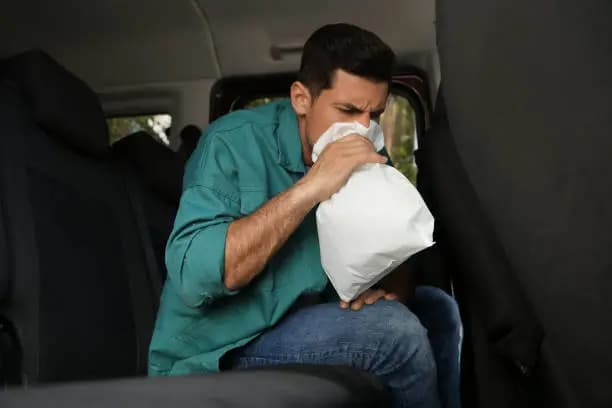
Vomiting while travelling can make a journey uncomfortable and stressful, especially when you are travelling by car, bus, train, plane or boat. It is often caused by motion sickness, which happens when the movement detected by your inner ear does not match what your eyes see. Learning how to avoid vomiting while travelling can help you enjoy longer journeys with less nausea and discomfort. Simple changes to your seating position, food choices and travel habits can make a significant difference.
-
Table of Contents
ToggleChoose the Right Seat
Where you sit can affect how much movement you feel during a journey. In a car or bus, sitting near the front may reduce the sensation of movement. On a boat, the middle area usually experiences less motion.
When travelling by train or plane, choose a seat where you can look outside and keep your surroundings stable.
- Sit near the front of a car or bus
- Choose a suitable window seat when possible
- Avoid seats that experience excessive movement
-
Look Straight Ahead
Looking at a fixed point such as the horizon can help reduce the mismatch between what your eyes see and what your inner ear senses.
Instead of looking down or watching objects moving quickly outside, keep your eyes focused ahead.
- Look at the road ahead
- Focus on the horizon when possible
- Avoid watching passing vehicles continuously
-
Avoid Reading or Using Your Phone
Reading books, watching videos or using your phone during a moving journey can make motion sickness worse.
Your eyes may focus on a stationary object while your inner ear detects movement, increasing the likelihood of nausea.
- Avoid reading while travelling
- Limit phone use during the journey
- Avoid watching movies if they make you feel sick
-
Eat Lightly Before Travelling
Travelling on a completely empty stomach can make some people feel uncomfortable, but eating a heavy meal can also increase nausea.
Choose a light meal before travelling and avoid very greasy, spicy or heavy foods.
- Eat a small meal
- Avoid excessive fatty foods
- Avoid eating too quickly
- Carry light snacks for longer journeys
-
Stay Hydrated
Dehydration can make you feel worse when you are already experiencing nausea. Drink water regularly, but take small amounts rather than consuming a large quantity at once.
Keep a bottle of water with you, particularly during long journeys.
- Drink water regularly
- Take small sips
- Avoid excessive alcohol
- Limit drinks that make you feel uncomfortable
-
Get Fresh Air
Fresh air may help reduce nausea during a journey. If you are travelling by car or bus, opening a window slightly may provide relief when it is safe to do so.
On other forms of transport, use available ventilation or move to a more comfortable area when possible.
- Get fresh air when possible
- Avoid stuffy environments
- Take breaks during long road trips
-
Keep Your Head as Still as Possible
Excessive head movement can increase motion sickness. Try to sit comfortably with your head supported and avoid constantly turning from side to side.
Closing your eyes and breathing slowly may also help when nausea begins.
- Rest your head against the seat
- Avoid unnecessary movement
- Breathe slowly and steadily
- Close your eyes if looking ahead makes you feel worse
-
Try Ginger
Some people find ginger helpful when experiencing nausea during travel. You can try ginger tea, ginger biscuits or ginger sweets before or during a journey.
However, ginger does not work for everyone, so treat it as an optional measure rather than a guaranteed solution.
- Try ginger tea
- Carry ginger sweets or biscuits
- Stop if ginger causes stomach discomfort
-
Take Breaks During Long Journeys
If you are travelling by road for several hours, regular breaks can give you an opportunity to get fresh air, walk around and drink some water.
Breaking up a long journey may help reduce the buildup of nausea.
- Stop at safe rest areas
- Walk around briefly
- Drink some water
- Get fresh air before continuing
-
Consider Motion-Sickness Medicine
If you regularly vomit while travelling, speak with a pharmacist or healthcare professional about medicines for motion sickness. Some medicines work best when taken before the journey rather than after nausea has already become severe.
Some motion-sickness medicines can cause drowsiness, so check the instructions and ask a healthcare professional whether the medicine is suitable for you.
-
Avoid Alcohol and Smoking
Alcohol and smoking can make motion sickness worse for some travellers. Avoiding them before and during travel may help reduce nausea.
It is also useful to avoid strong smells that trigger nausea.
- Avoid alcohol before travelling
- Avoid smoking
- Stay away from strong unpleasant smells
-
Get Enough Sleep Before Travelling
Being tired or sleep-deprived can make motion sickness more difficult to tolerate. Try to get adequate sleep before a long journey.
Starting your trip well-rested may help you manage movement and discomfort more easily.
- Sleep well before travelling
- Avoid starting a long journey when extremely tired
- Take comfortable breaks during extended trips
-
Carry a Travel Vomiting Kit
If you are prone to vomiting, prepare a small travel kit before leaving home. Having the necessary items nearby can reduce stress if nausea suddenly develops.
Your kit can include water, tissues, disposable bags, wet wipes, light snacks and any medicine recommended for you.
- Carry drinking water
- Pack tissues and wet wipes
- Keep disposable bags nearby
- Carry suitable motion-sickness medicine if recommended
-
Learn Your Triggers
Different people experience motion sickness in different situations. Some may struggle on winding roads, while others may feel worse on boats, flights or crowded buses.
Pay attention to what triggers your symptoms so you can plan future journeys accordingly.
- Identify the type of transport that affects you
- Note foods or smells that trigger nausea
- Remember which seating positions make you feel better
-
Know When to Seek Medical Advice
Occasional vomiting during travel may be related to motion sickness, but repeated or severe vomiting should not automatically be blamed on travelling.
If vomiting happens frequently outside travel, continues for several days, causes significant dehydration, or occurs with severe pain, confusion, chest pain or other concerning symptoms, seek medical attention.

Comments
No comments yet. Be the first to share your thoughts.