
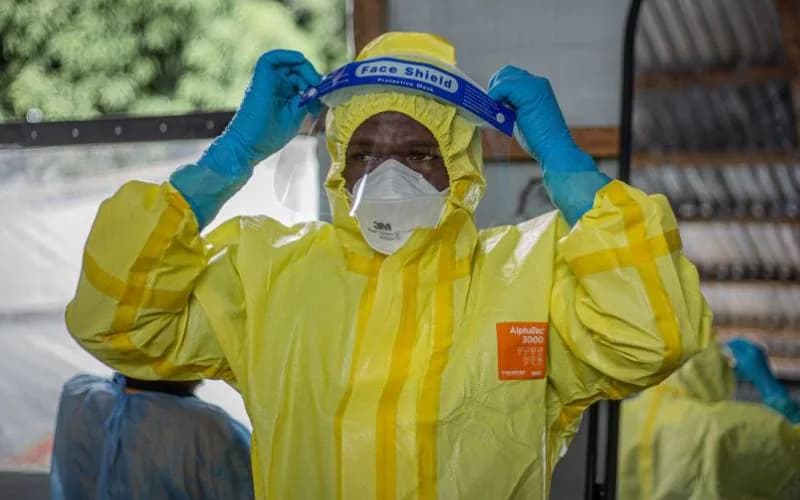
Saudi Arabia suspends visas for travellers from Kenya over Ebola

Saudi Arabia has suspended travel by its citizens to Kenya and stopped issuing visas to people arriving from the country, introducing restrictions that could disrupt travel between the two nations amid the Ebola outbreak.
The measures also bar entry to anyone who has stayed in Kenya within 21 days before arriving in Saudi Arabia, including travellers who attempt to enter through a third country.
In a statement on Friday, the Saudi Public Health Authority (PHA) said the decision followed an assessment of the Ebola situation in Kenya by health officials and was intended to limit the risk of the virus spreading into the kingdom.
“These measures include suspending travel by citizens to the Republic of Kenya and suspending the issuance of all types of visas to those arriving from Kenya,” the authority said.
The restrictions form part of Saudi Arabia’s wider response to the Ebola Bundibugyo outbreak in Africa. In June, Riyadh suspended travel by its citizens and entry for arrivals from the Democratic Republic of Congo (DRC), Uganda and South Sudan. It also introduced additional screening for travellers from countries bordering areas affected by the virus.
The restrictions come as the outbreak continues to affect several countries in Africa, with the DRC remaining the hardest-hit. Declared in the DRC in May, the outbreak has spread across eight provinces, while Kenya and Nigeria have also reported imported infections.
Latest Stories
- Supreme Court overturns Sh103 million award to firm in NSSF CCTV tender dispute
- Dockworkers in 22 countries strike to block arms shipments to war zones
- 𝐄𝐚𝐬𝐭𝐥𝐞𝐢𝐠𝐡 𝐕𝐨𝐢𝐜𝐞 𝐚𝐭 𝐍𝐢𝐧𝐞 - Eastleigh building collapse: Body of woman recovered as search enters eighth day
- Tanzania, Angola agree to connect TAZARA and Benguela railways
By October 26, the DRC had recorded 10,141 confirmed cases and 4,928 deaths, according to the European Centre for Disease Prevention and Control.
In Kenya, health authorities had confirmed nine cases and two deaths by Monday, with all infections linked to a single cluster traced to the country's first imported case.
The initial patient was a Kenyan man who had been living in the DRC before travelling through Uganda and arriving in Nairobi on October 3. He tested positive for the Bundibugyo virus and died at Nairobi Hospital two days later.
Eight more infections were subsequently confirmed among people who had come into contact with him, including relatives and healthcare workers. Kenya recorded its second death on October 23, when a woman who was the third confirmed case in the cluster died.
Meanwhile, 20 people who had been in contact with confirmed patients completed the mandatory 21-day quarantine period on Monday and were cleared to return home after showing no symptoms. Another 98 contacts remained under quarantine, according to the World Health Organisation (WHO).



Comments
No comments yet. Be the first to share your thoughts.