
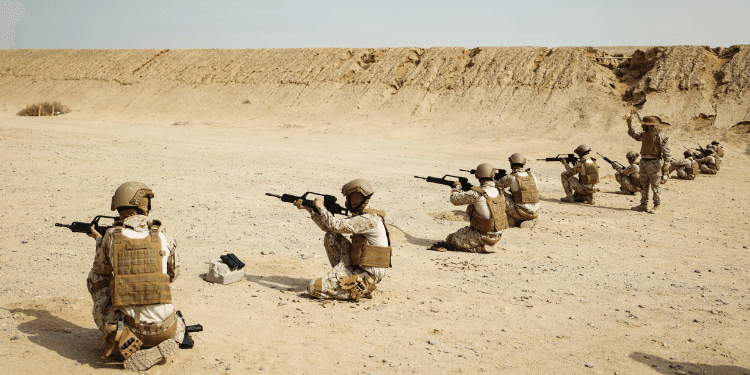
At least ten American service members were reportedly injured in a missile strike by Iran on Prince Sultan Air Base in Saudi Arabia.
According to multiple U.S. and Arab officials cited by the Wall Street Journal, two of the wounded in the Friday, March 27, attack are considered seriously injured. However, none of the injuries is believed to be life-threatening.
Officials reportedly said the troops were inside a building on the base when the missile struck, damaging several U.S. refuelling aircraft and unmanned aerial vehicles.
The Pentagon in the report confirmed that at least one missile hit the installation, marking one of the most direct Iranian attacks on American forces since the war began.
This latest strike raises the tally of U.S. casualties in the conflict to at least 303, with ten considered seriously injured. The attack comes amid escalating hostilities between Iran and Israel.
Escalating Iran-Israel conflict
Iran’s foreign minister, Abbas Araghchi, on Friday vowed retaliation against Israel after a wave of strikes on steel factories, a power plant, and civilian nuclear sites inside Iran.
“Israel has hit 2 of Iran’s largest steel factories, a power plant, and civilian nuclear sites, among other infrastructure. Israel claims it acted in coordination with the U.S. Attack contradicts POTUS extended deadline for diplomacy. Iran will exact heavy price for Israeli crimes,” Araghchi wrote on X.
The Israel Defense Forces (IDF) confirmed Friday that they were intercepting missiles fired from Iran toward Israeli territory. Alerts were sent to civilians instructing them to take cover in protected spaces until further notice.
Meanwhile, Iran’s parliament speaker Mohammad Bagher Ghalibaf mocked U.S. military capabilities, questioning Washington’s ability to protect troops on the ground.
“How can the U.S., which can’t even protect its own soldiers at its bases in the region, protect them on our soil?” he posted on X.
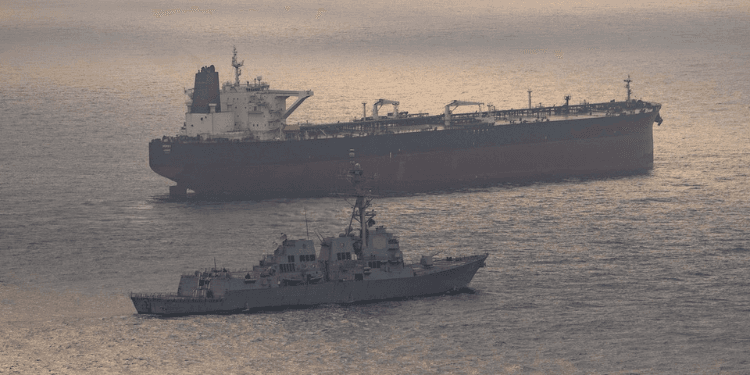
Iran’s representative to the United Nations in Geneva had earlier announced that Tehran would facilitate humanitarian shipments through the Strait of Hormuz, a critical waterway for global oil supplies.
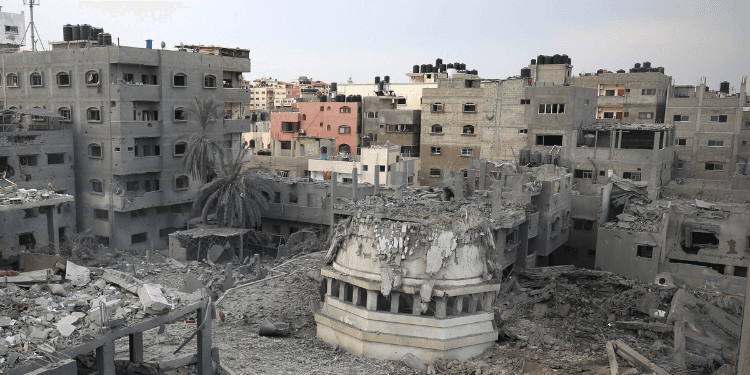
Despite this pledge, the war has already devastated Iran’s civilian infrastructure with more than 70,000 residential units, 300 health facilities, and 600 schools damaged, according to the Iranian Red Crescent Society.
The economic impact is also severe as U.S. crude oil prices surged 7% Friday, closing above $101 per barrel
Since the war began, oil prices have risen more than 50% and are up 75% since the start of the year, fueling global inflationary pressures.
Trump’s remarks
President Donald Trump addressed the conflict during the Future Investment Initiative event in Miami on Friday evening.
He claimed Iran had sent the U.S. ten oil ships as part of informal negotiations, despite Tehran’s denial of formal talks
“They actually said ‘we’re going to add an extra two,’ so we had 10 ships, and then people realized we were actually negotiating,” Trump said.
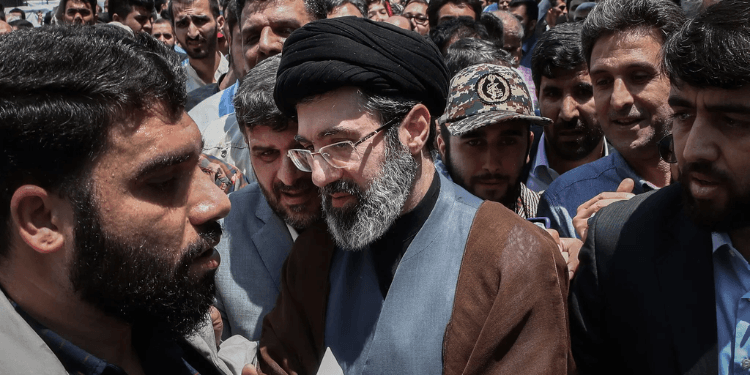
Trump also speculated about Iran’s new supreme leader, Mojtaba Khamenei, who has not been seen publicly since being injured in U.S.-Israeli airstrikes that killed his father, Ayatollah Ali Khamenei, in February.
“Their leaders are dead. Their supreme leader is no longer supreme. And the son is either dead or in very bad shape,” the president told the crowd.
He further declared that Tehran was “on the run” and “wants to make a deal,” portraying the U.S. military campaign as having decimated Iran’s capabilities. Trump even quipped about the Strait of Hormuz, calling it the “Strait of Trump,” before correcting himself.
Meanwhile, Secretary of State Marco Rubio said that the United States expects to end its operation in Iran in “weeks, not months.”
Following a meeting of G7 foreign ministers in France, Rubio also said Iran may decide to set up a tolling system for ships crossing the Strait of Hormuz – and that he had won support from his G7 colleagues to oppose any attempts to do so.

Comments
No comments yet. Be the first to share your thoughts.