
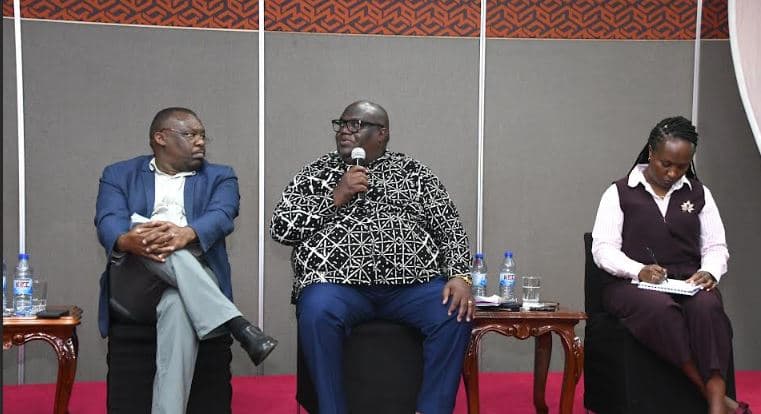
The Wildlife Conservation Trust Fund (WCTF) is seeking to unlock new sources of funding and forge stronger partnerships with government, the private sector, conservation organizations, and communities as it develops its inaugural five-year strategy to bridge Kenya’s wildlife conservation financing gap.
This comes against the backdrop of an estimated Sh20 billion annual funding requirement for wildlife conservation, compared with about Sh8 billion currently available, highlighted by the stakeholders, leaving a financing shortfall of approximately Sh12 billion.
They said the plan will enable the WCTF to mobilize additional resources, while establishing clear priorities for investing the funds to deliver measurable conservation outcomes.
“The need is around Sh20 billion for conservation. However, we are just about able to raise around Sh8 billion. This leaves us with a deficit of around Sh12 billion,” stakeholders said during a panel discussion.
Speaking during a regional stakeholder engagement in Nairobi, Wildlife Research and Training Institute (WRTI) Director and Chief Executive Officer Dr. Patrick Omondi said the development of the WCTF 2025–2030 Strategic Plan is a critical step towards mobilizing and channeling resources to priority conservation programmes.
“The meeting is helping us to identify who, apart from government, can put money into their trust fund,” Dr. Omondi said.
WCTF is designed as a resource-mobilization and conservation-financing institution, with its mandate expected to support conservation interventions across national parks, national reserves, sanctuaries, conservancies, and communities living with wildlife.
Dr. Omondi said priority areas include conservation and management of protected areas and community conservancies, species restoration, wildlife research and training, and programmes that improve community livelihoods.
He highlighted the need to support recovery programmes for some of the most endangered and endemic wildlife species, including the hirola, Grevy’s zebra, eastern bongo, and the sable antelope found in the Shimba Hills ecosystem.
Dr. Omondi further urged the Fund to invest in public awareness and visibility, saying many Kenyans remain unfamiliar with the purpose and potential role of the new financing mechanism.
He said greater awareness among the public, private sector, and conservation partners could help attract additional investment into wildlife conservation.
According to WCTF, the 2025–2030 Strategic Plan will be informed by the priorities of communities, conservancies, government agencies, conservation partners, research institutions, and the private sector.
Dr. Omondi said WRTI is also prioritizing the development of a national Red List that will profile critical and endemic species and help guide implementation of species recovery plans.
He cited the proposed development of a wildlife overpass along the Magadi–Namanga road as an example of a potential flagship project that could benefit from additional conservation financing.
The proposed infrastructure would provide a safe crossing for wildlife moving between the Nairobi National Park ecosystem and the wider Kitengela–Athi-Kapiti landscape, helping maintain connectivity and genetic exchange.
“The designs are there. If they are able to mobilize and have it actualized for the overpass for wildlife, that’s a success,” Dr. Omondi said.
He encouraged the Fund to work with the Kenya Wildlife Service and other conservation institutions to identify priority flagship projects that could be presented to potential donors and partners.
The wildlife expert said stakeholders should begin seeing tangible outcomes from supported programmes during the implementation period.
He said the Fund could provide an important financing mechanism for strengthening wildlife protection, conservation, research, and community livelihood programmes, while complementing existing financing mechanisms in other environmental sectors.
He called for a comprehensive mapping of existing funding to establish where resources are coming from, where they are being spent, and which conservation priorities remain underfunded.
“We need to understand better the governance structure and exactly what the status is before we ask where the money comes from,” he said.
Dr. Omondi also urged the conservation sector to engage the private sector more directly, including corporate foundations and financial institutions, arguing that potential contributors need to understand the specific conservation outcomes their support would finance.
Acting Chief Executive Officer (CEO) of the Wildlife Conservation Trust Fund, Caroline Tullo, urged stakeholders to remain actively engaged as the strategic plan is being developed, saying the success of the Fund will ultimately depend on partnerships, sustainable financing, and clear conservation priorities.
She said a strong investment in both conservation activities and Kenya’s wildlife assets would be necessary to ensure that communities and the wider economy benefit from the wildlife sector.
The consultations are expected to help determine the Fund’s priority areas, financing mechanisms, and approaches to ensuring that resources raised deliver measurable conservation and community benefits.
The stakeholders said closing the financing gap will require Kenya to combine domestic public financing with private investment, philanthropic support, innovative financial instruments, and broader citizen participation in wildlife conservation.
By Ian Chepkuto


Comments
No comments yet. Be the first to share your thoughts.