
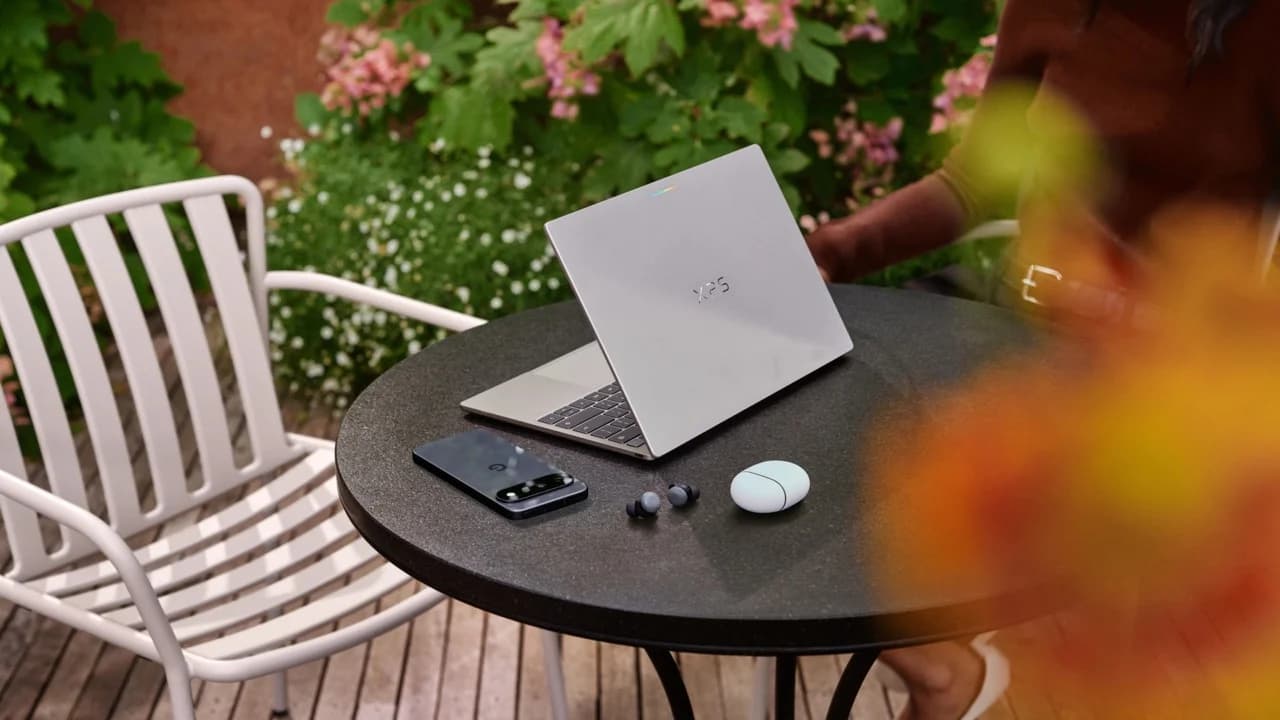
Google opened pre-orders on Monday 21st September for the first Googlebooks. Launching first are laptops priced from $899 to $1,349. They reach US shops on 4th October, and Canada, the UK, Ireland, France, Germany and Australia a day later.
A Googlebook is a laptop that runs Android, the operating system on most of the world’s phones. Google calls the laptop version Googlebook OS. It’s Android underneath, with the desktop parts of ChromeOS on top: resizable windows, a taskbar and a file manager. Google wrote the software, but Acer, Asus, Dell, HP and Lenovo built the laptops. Chromebooks carry on as the cheaper line. We covered the announcement in May and the pre-order date last week.
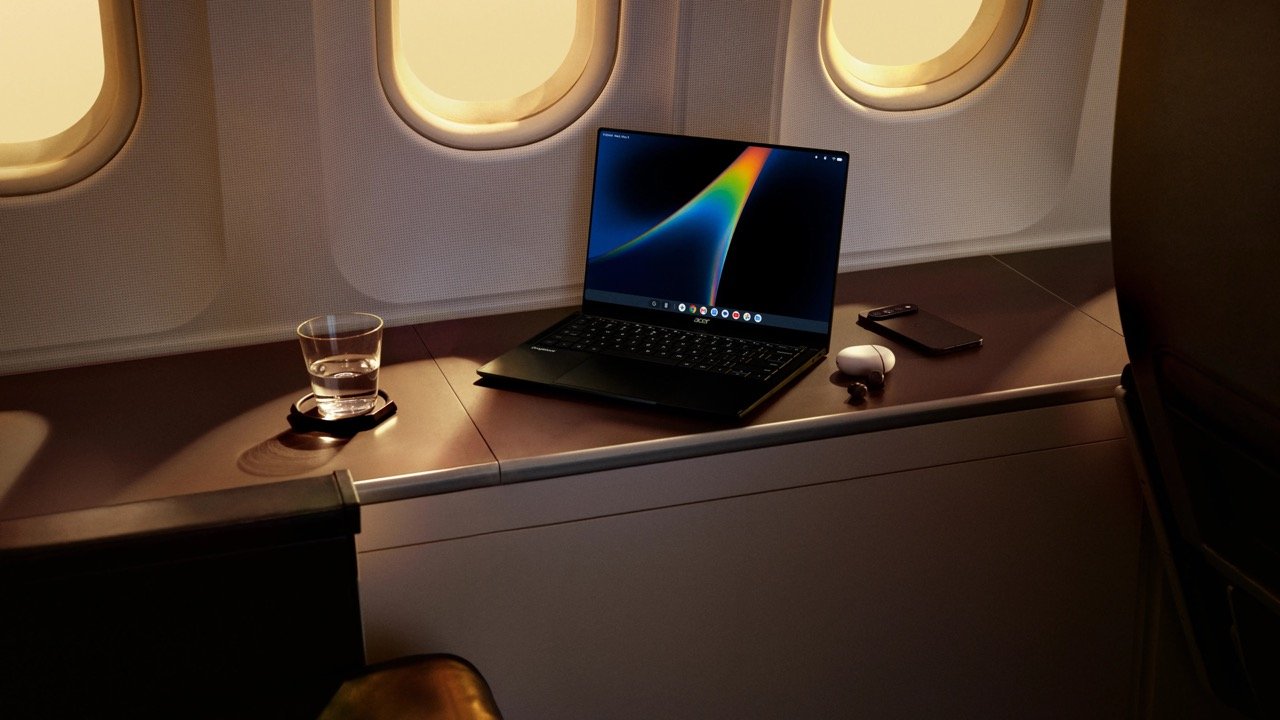
Every model has 16GB of memory and 512GB of storage.
| Laptop | Google’s list price | Google Store price | Screen | Chip | Weight |
|---|---|---|---|---|---|
| Acer Googlebook 14 | $899 (KES 116,400) | $899 | 14-inch OLED, folds into a tablet | Intel Core Ultra 5 | 1.14kg |
| Dell XPS Googlebook | $999 (KES 129,300) | $1,199 | 13.4-inch LCD | Snapdragon X Elite | 1kg |
| Lenovo Googlebook 15 | $1,099 (KES 142,300) | $1,349 | 15.3-inch OLED | Intel Core Ultra 5 | 1.29kg |
| Asus Googlebook 14 | $1,299 (KES 168,100) | Not sold | 14-inch OLED | Intel Core Ultra 5 | 1kg |
| HP Googlebook 14 | $1,299 (KES 168,100) | Not sold | 14-inch OLED | Snapdragon X Elite | 1.24kg |
Prices come from Google’s comparison page and the Google Store, and the two don’t agree. The Dell is $200 more in Google’s own store than on Google’s own list, and the Lenovo is $250 more. HP’s launch release goes the other way, at $1,199.99. The line-up changes by country too: in France the HP is the cheapest at €1,099, and the Dell isn’t sold there or in Germany. So check the maker’s site and the Google Store before you pay.
Four of the five use OLED screens, where every pixel makes its own light, so black areas are properly black instead of a glowing grey. All five are touchscreens at about 2,500 to 2,900 pixels across, sharper than a full HD screen’s 1,920. Memory, the working space that lets apps and browser tabs stay open at once, starts at 16GB on every model, twice what Apple puts in its cheapest MacBook.
Each chip has a neural processing unit (NPU), a section built to run AI tasks on the laptop instead of sending them to the cloud. Google rates them at 45 to 49 TOPS, or trillion operations per second. The trackpads are glass with haptic feedback, meaning a small motor fakes the click, so the whole pad clicks the same wherever you press. Google promises updates for up to 10 years, and every Googlebook comes with a year of Google AI Pro, a $239.88 value on HP’s count. Every model also has a Glowbar, a strip of light on the outside that shows the battery level.
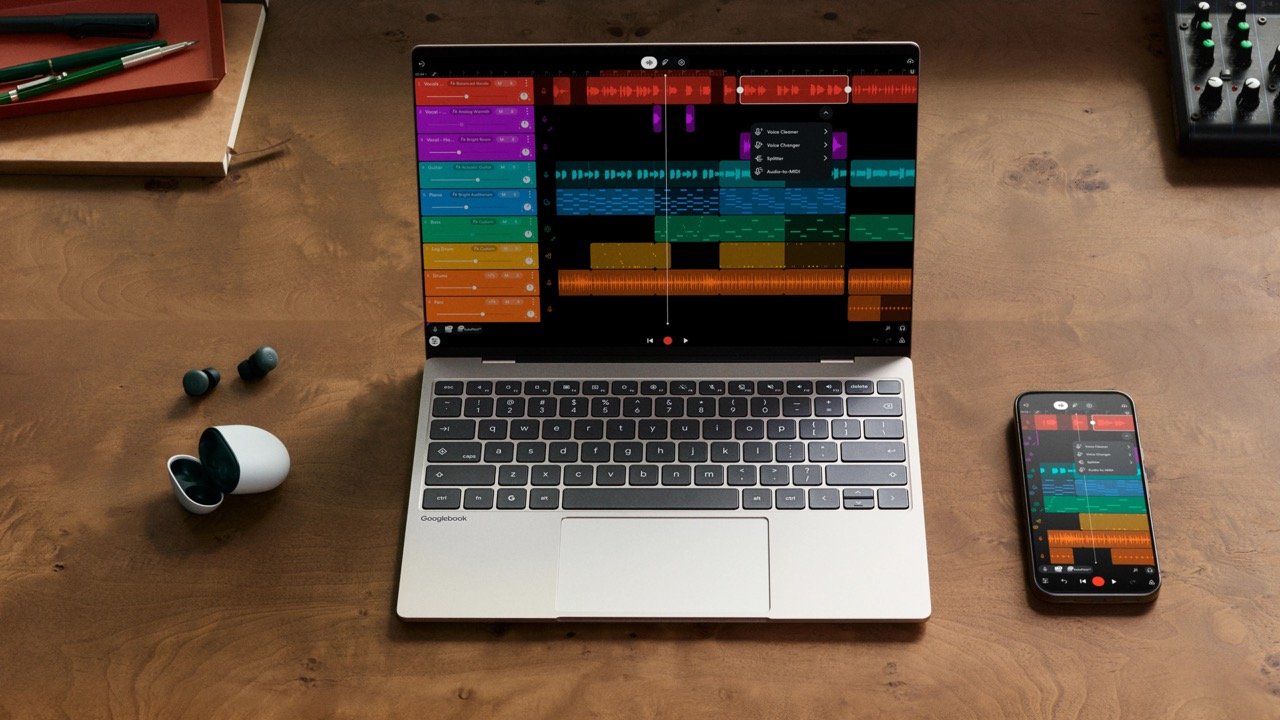
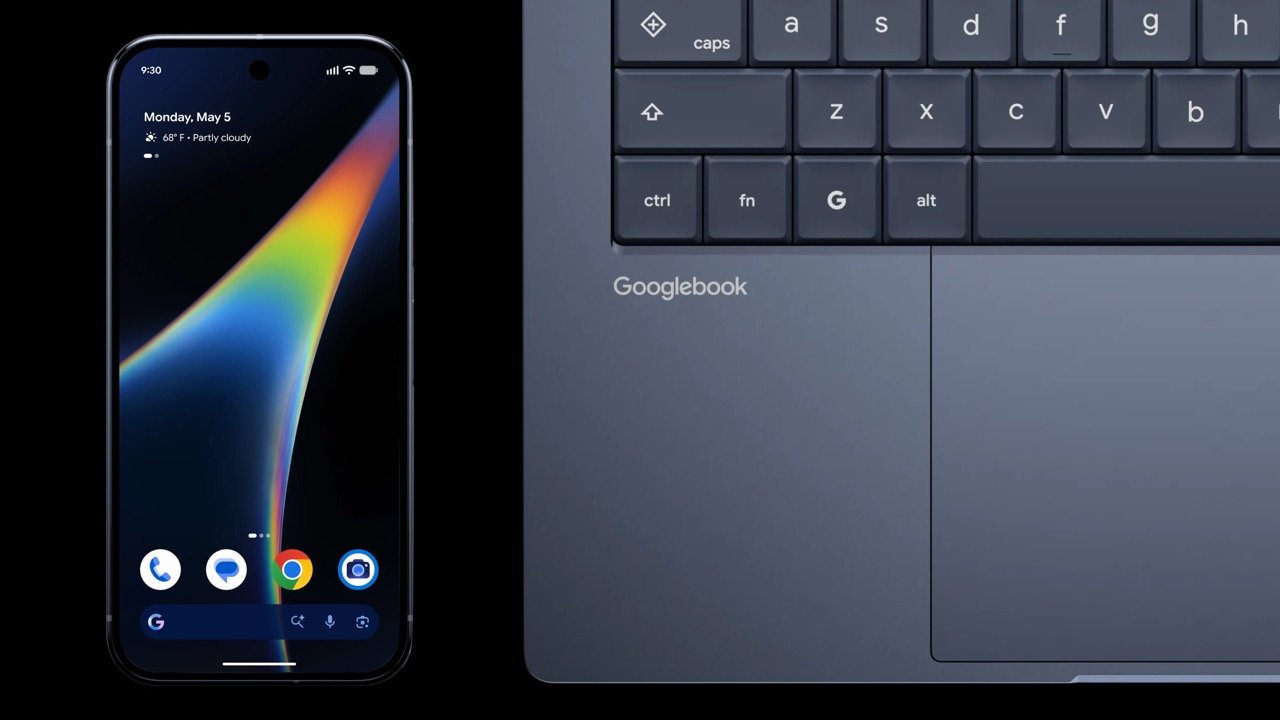
Sign in, and your Android phone’s settings, saved passwords, Wi-Fi networks and messages move to the laptop. The laptop’s Files app opens the phone’s photos and files, Cast My Apps runs phone apps in a window on the laptop, and Continue On reopens whatever you had open on the phone. Google’s Gemini features sit on top: wiggle the cursor over something on screen and Gemini answers questions about it, or talk and Rambler turns it into tidy notes.
The phone features need a phone on Android 17 or newer. Pixels got Android 17 in June and the Galaxy S26 on 16th September. If your phone isn’t there yet, the main reason to pick a Googlebook over another laptop doesn’t work for you.
Most Android apps were written for phones. On a laptop they have to resize into windows and respond to a keyboard and trackpad. Google tells developers their existing apps “will work”, but should be adapted for bigger screens. How many are adapted is what decides whether a Googlebook feels like a laptop or a big phone.
Two limits are clear already. Microsoft gives free editing in Word, Excel and PowerPoint only on Android screens of 10.1 inches or less, and the smallest Googlebook is 13.4 inches, so budget for a Microsoft 365 subscription if you edit documents. PC games come through GeForce NOW, which is cloud gaming: the game runs on Nvidia’s computers and streams to your screen like a video, so it needs a fast, steady connection. Google’s FAQ lists no way to install PC games on the laptop itself.
Developers get more than on a phone. Every Googlebook has the full desktop Chrome browser with extensions and a Linux terminal, the text-command tool programmers use to run code. The Linux side runs in a hypervisor, software that runs it as a separate, sealed-off system, so code running there is kept apart from the rest of the laptop.
Geekbench 6 is a speed test, and a higher score is faster. The single-core score is one part of the chip working alone, which is what you feel when an app opens or a page loads. The multi-core score is every part working at once, which matters for heavy jobs like exporting a video. The Googlebook figures are from Windows laptops with the same chips.
| Laptop | Price | Memory, storage | Single-core | Multi-core | Software |
|---|---|---|---|---|---|
| MacBook Neo | $699 | 8GB, 256GB | 3,612 | 9,174 | macOS |
| Acer, Asus, Lenovo Googlebooks | $899 to $1,349 | 16GB, 512GB | about 2,650 | about 11,200 | Googlebook OS |
| Dell, HP Googlebooks | $999 to $1,299 | 16GB, 512GB | about 2,800 | about 14,300 | Googlebook OS |
| Dell XPS 13 | $999.99 | 16GB, 512GB | about 2,550 | about 7,800 | Windows 11 |
| MacBook Air 13-inch | $1,299 | 16GB, 512GB | 4,226 | 17,186 | macOS |
The MacBook Neo is $200 cheaper than the cheapest Googlebook since Apple raised its price in June. It has half the memory, but it’s quicker at everyday tasks, and it falls behind every Googlebook chip only on heavy jobs.
The 13-inch MacBook Air costs the same $1,299 as the Asus and HP, wins both tests, and runs every Mac app today. Apple rates it at 15 hours of web browsing. Google rates its models at 13 to 19 hours, from its own tests.
Dell’s Windows XPS 13 has the same 13.4-inch screen, 1kg weight and 12.7mm thickness as the XPS Googlebook. Its chip is slower on heavy jobs, but it runs every Windows program, and at $999.99 it’s $199 under what the Google Store charges for the Googlebook. The Dell and HP Googlebooks also use Qualcomm’s 2024 Snapdragon X Elite, while its successor, the X2 Elite, has been in Windows laptops since the first half of this year.
Chromebooks won the cheap end of the market on price, not the $1,299 Chromebook Pixel Google launched in 2013. Googlebook OS is a new way of running a laptop, and buyers are paying flagship prices to find out whether it works. A Googlebook at about the Neo’s $699 would have let people try it for the price of Apple’s cheapest Mac. Google names MediaTek as a chip partner in its hardware post, but none of the five launch models uses a MediaTek chip.
The first reviews after 4 October will show how Googlebook OS runs on this hardware, and whether it’s worth MacBook Air money.


Comments
No comments yet. Be the first to share your thoughts.