
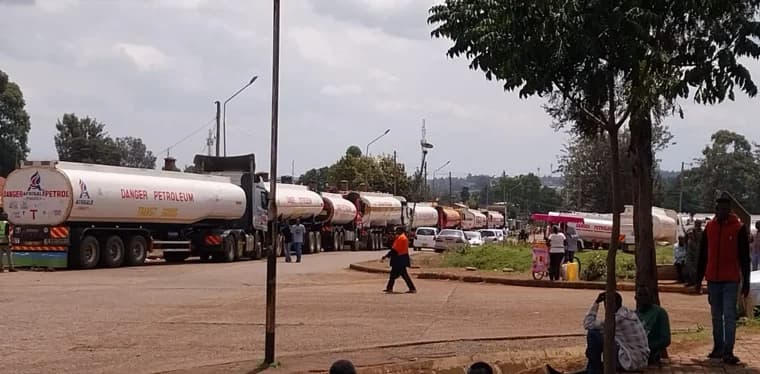
Rising international oil prices are increasing the cost of Kenya’s mineral-fuel imports and are expected to widen the current-account deficit in 2026, according to the Central Bank of Kenya (CBK),
During the CBK’s Monetary Policy Committee press briefing on October 8, Kenya’s goods imports were recorded to have risen to 15.8 percent in the 12 months to August 2026.
Kenya experienced higher imports of food, mineral fuels, intermediate goods, and capital goods during the 12 months.
The increase comes as international oil prices remain elevated and volatile amid supply disruptions linked to the conflict in the Middle East, putting additional pressure on Kenya’s import costs.
In July 2026, Kenya’s direct imports of mineral fuels, lubricants and related materials were valued at KSh108.6 billion, against total direct imports of KSh338.8 billion.
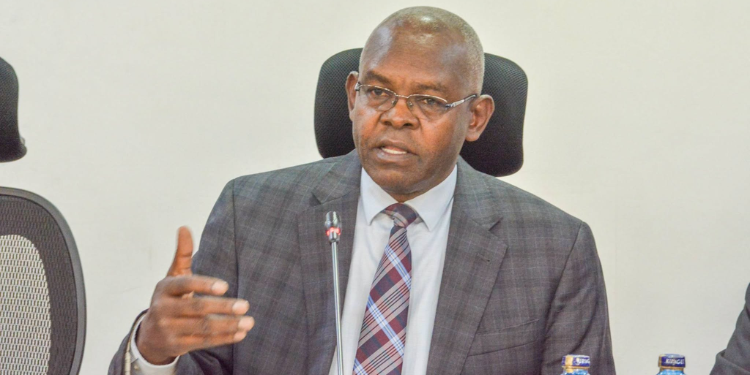
Speaking during the briefing, CBK Governor Dr Kamau Thugge explained that international oil prices would make imported petroleum products more expensive.
Further, the governor emphasized that Kenya may spend more on imports even if the physical quantity of fuel purchased does not increase by the same proportion.
“Turning to international oil prices, these have remained elevated and very volatile due to the continued supply disruptions arising from the conflict in the Middle East and owing to the heightened global uncertainties. Tied to the global economic growth outlook, the growth is projected to moderate in 2026,” the governor explained.
Account Deficit and Oil Costs
Kenya’s current account deficit reached 3.1 percent of Gross Domestic Product (GDP) in the 12 months to August 2026, up from 2.1 percent in a similar period in 2025.
Export earnings rose by 11.8 percent, mainly supported by horticulture, tea, machinery and transport equipment.
Additionally, services receipts rose 8.7 percent, driven by higher receipts from travel services. However, diaspora remittances declined by 1.3 percent during the period.
CBK expects the current account deficit to reach 3.2 percent of GDP in 2026, up from 2.1 percent in 2025.
Reserves Provide Buffer
Despite the pressure on the external account, CBK said Kenya’s balance of payments is expected to remain in surplus in 2026.
The current account deficit is projected to be more than fully financed by financial and capital account inflows, resulting in an estimated overall balance of payments surplus of USD2.426 billion.
Kenya’s foreign-exchange reserves stood at USD14.702 billion, equivalent to 5.9 months of import cover.
CBK explained that the reserves continue to provide adequate cover and a buffer against short-term domestic and external shocks.
CBK on Higher Oil Prices Threatening Inflation
Kenya’s overall inflation increased to 6.8 percent in September 2026 from 6.6 percent in August, according to the bank report.
Core inflation, which excluded some of the more volatile price components, rose from 3.4 percent to 4.0 percent.
The increase came as prices of several essential goods remained elevated, with food inflation at 5.8 percent, edible oils at 18.3 percent, cereals at 17.2 percent, and sugar at 14.7 percent.
Transport recorded annual inflation of 15.6 percent, while Food and Non-Alcoholic Beverages increased by 9.5 percent.
Further, Housing, Water, Electricity, Gas and Other Fuels recorded 3.2 percent inflation during the same period.
Kenya expects inflation to remain within its 5 percent target, with a tolerance range of plus or minus 2.5 percentage points, in the near term.
However, the Bank projects inflation to rise to about 7.2 percent in December 2026 before declining toward 5 percent around May 2027.
Follow our and X Account for real-time news updates.



Comments
No comments yet. Be the first to share your thoughts.