
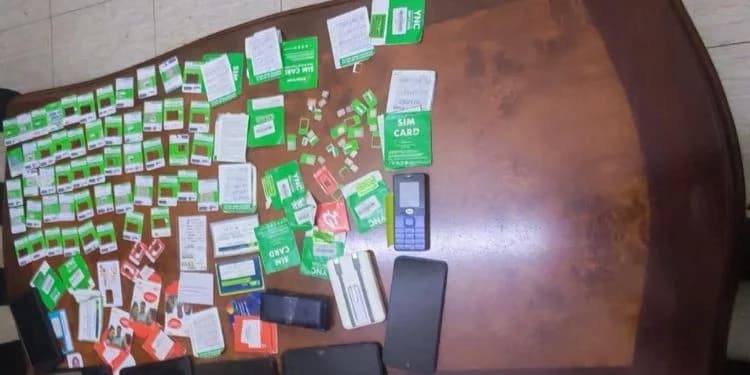
Millions of Kenyans risk losing inactive mobile numbers under a new plan by the Communications Authority of Kenya (CA) to deactivate and recycle dormant lines.
The regulator has unveiled draft procedural and technical safeguards for the deactivation and recycling of inactive telecommunication numbering resources, opening the proposals for public consultation.
According to a public notice issued by CA on September 1, the proposed framework aims to help the authority manage the country’s numbering resources more effectively while protecting the interests of consumers assigned the numbers.
The authority noted that the move is necessary to ensure efficient use of Kenya’s finite numbering resources amid growing demand for telecommunications services.
“The Authority has developed draft procedural and technical safeguards for deactivation and recycling of inactive mobile numbers,” the notice states.
The Communications Authority is responsible for regulating the information and communications sector in Kenya, including telecommunications, broadcasting, e-commerce, cyber security and postal services.
It also manages the country’s numbering and frequency spectrum resources and administers the Universal Service Fund.
Public Invited to Give Views
CA has invited members of the public and stakeholders to submit comments and memoranda on the draft guidelines before finalization.
Interested parties have until September 11, 2026, to submit their views through the email address numbering@ca.go.ke.
The authority said both the draft procedures and technical safeguards, as well as the submission format, are available on its website under the open consultations section.
The public participation process will allow consumers, telecommunications operators and other stakeholders to weigh in on the proposed rules before their adoption.
Once finalized, the framework is expected to guide how Kenya’s telecommunications sector deactivates and recycles inactive mobile numbers.
Existing Rules on SIM Card Deactivation
The proposed safeguards come against the backdrop of regulations that already give telecommunications operators powers to suspend and deactivate subscriber lines under specific circumstances.
According to the current regulations, operators can deactivate a telecommunications service if it has been suspended for 90 days, upon subscriber request, or if false information was provided during registration, as determined by the operator or the Communications Authority.
The rules also allow any person to lodge a complaint with the Communications Authority alleging that a subscriber used false information to acquire a mobile line.
The authority must investigate such complaints within 30 days and, if the allegations are substantiated, notify the operator of the intended deactivation.
Before switching off a line, operators must give affected subscribers an opportunity to respond to the allegations and be heard.
Telecommunications firms must also retain subscriber records even after deactivating a service.
The regulations further require SIM cards registered on behalf of children to be updated once the child attains the age of 18.
Failure to update the registration details within the prescribed period can result in suspension of the line.
Existing subscribers who fail to meet registration requirements may also have their services suspended under the regulations.
The proposed safeguards come about six months after the High Court ruled that a registered mobile phone number is a personal digital identifier that attracts constitutional privacy protection.
Court Ruling on Inactive Phone Numbers
In a March 19, 2026 judgment, Justice Lawrence Mugambi found that the unilateral deactivation and reassignment of numbers could expose former subscribers to privacy breaches, particularly where the numbers remain linked to banking, mobile-money, tax, social-media and other digital accounts.
The case was brought by prisoners who said their mobile lines were deactivated and reassigned while they were in custody, allowing third parties to receive communications intended for them.
The court directed the Attorney-General, Communications Authority, Data Protection Commissioner and other State agencies to develop a framework governing the deactivation and reassignment of telephone numbers by September 19, 2026.
The new CA consultation is therefore likely to attract close attention from consumers, mobile operators, banks and digital-service providers that rely on mobile numbers to authenticate customers.
Follow our and X Account for real-time news updates.




Comments
No comments yet. Be the first to share your thoughts.