
The United Nations Office at Nairobi (UNON) has become one of the UN’s most strategic global operational hubs, with nearly 6,000 employees.
Speaking in an interview on July 29, UNON Director-General Zainab Hawa Bangura said Nairobi is regarded within the UN system as the “golden gem” for operations, citing its cost-effectiveness, strategic location, modern infrastructure and ability to support global operations.
Bangura said the UN has invested USD340 million (approximately Ksh44 billion) in expanding its Nairobi facilities, describing it as the organization’s largest investment in Africa outside peacekeeping operations.
“USD 340 million is not a small investment. It is the highest contribution the UN has ever invested in Africa, with the exception of peacekeeping,” she said.
UN Explains Why Nairobi Is Considered Its ‘Golden Gem’
She also revealed that about 60 percent of UN staff based in Nairobi are Kenyans, underscoring the country’s significant contribution to the UN workforce.
According to Bangura, the Gigiri complex has experienced remarkable growth since its establishment in 1972, when the Kenyan government under founding President Jomo Kenyatta allocated land for the headquarters of the UN Environment Programme (UNEP), which began with just 300 staff.
She noted that former President Daniel Arap Moi later allocated an additional 40 acres to facilitate the establishment of UN-Habitat, which initially had about 30 employees.
The UN Director said that the compound now hosts 88 UN offices, up from a single agency at its inception, while Kenya as a whole is home to 97 UN offices, including those located outside the Gigiri complex.
What Is Different About Nairobi
Bangura attributed Nairobi’s rapid expansion to operational reviews conducted by several UN agencies following financial constraints and lessons learned during the COVID-19 pandemic.
She said agencies found Nairobi to be a more cost-effective location than traditional duty stations such as New York and Geneva due to lower operational costs, favorable weather conditions that reduce heating and air conditioning expenses, and the availability of a fully serviced UN compound.
“Nairobi allows staff to connect with colleagues across the world within a 12-hour period, making it an ideal operational base,” she said.
The reviews prompted several agencies to shift staff to Nairobi, with Bangura revealing that the UN Children’s Fund (UNICEF) now has more staff in Nairobi than in any other location globally, despite its headquarters remaining elsewhere.
She added that Nairobi’s role has also expanded because of its strategic importance in responding to regional crises.
The city serves as an evacuation and operational hub for multiple countries, including during the conflict in Sudan, when UN operations were relocated to Nairobi in coordination with the Kenyan government.
Bangura said the combination of operational efficiency, lower costs and Kenya’s strategic location continues to attract more UN agencies seeking to move functions to Nairobi, with UNON currently managing a growing list of relocation requests.
About UNON
The United Nations Office at Nairobi (UNON) is the UN’s only headquarters in Africa and the Global South.
It serves as the representative office of the UN Secretary-General in Kenya while providing administrative and operational support to the United Nations Environment Programme (UNEP), the United Nations Human Settlements Programme (UN-Habitat), and the UN Resident Coordination System (RCS) across 166 countries.
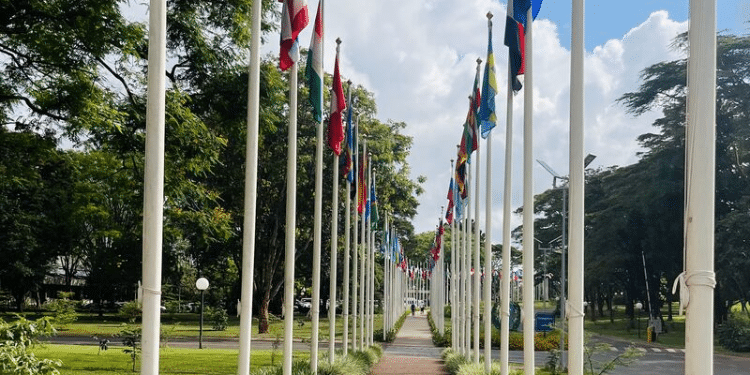
UNON also delivers shared administrative and common services to other UN agencies operating in Kenya. Situated on a 140-acre site in Gigiri, Nairobi, the complex is the largest UN compound in the world.
Follow our and X Account for real-time news updates.



Comments
No comments yet. Be the first to share your thoughts.