
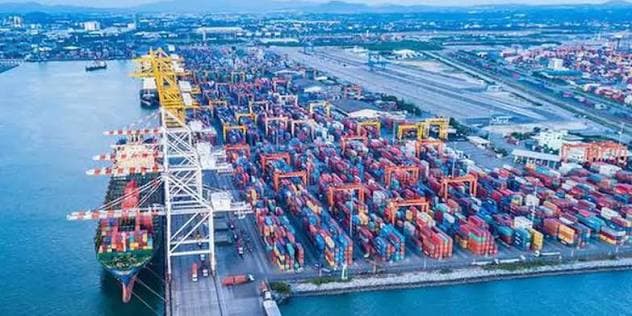
Essar Ports has acquired a 30-year concession to develop an 18.33-million-tonne multipurpose cargo terminal project at Tuna Tekra, Kandla, Gujarat, as part of a public-private partnership with Deendayal Port Authority.
Essar Ports Limited has been awarded the Letter of Award (LoA) for the development of a multipurpose cargo terminal at Tuna Tekra, close to Kandla in Gujarat, India. The project is estimated to cost ₹2,276.06 crore (US$240 million) and is intended to improve the capacity to handle cargo at Deendayal Port, an important maritime gateway on India’s western coast. This is as India continues to develop its maritime infrastructure with other ports including the Paradip Port in Odisha.
The award, announced on October 21, 2026, followed a competitive bidding process in which Essar Ports was the successful bidder. The terminal will be developed under a Build-Operate-Transfer (BOT) model through the Public-Private Partnership (PPP) model, with a 30-year concession period.
The proposed 18.33-million-tonne annual-capacity terminal will have four (4) 300-metre-long berths. It will also be able to accommodate vessels of up to 170,000 deadweight tonnes (DWT). The new terminal will provide additional capacity for multipurpose cargo and support the movement of commodities through Gujarat’s port infrastructure.
For Deendayal Port Authority (DPA), the project aligns with the goal of expanding maritime capacity. For Essar Ports, the award creates an opportunity to invest in the port infrastructure of an important port in Gujarat through a long-term concession.
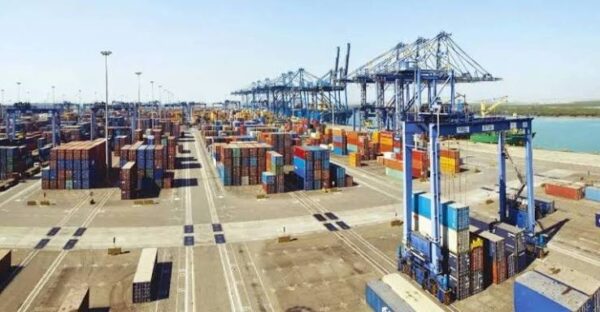
Tuna Tekra Terminal Project Scope and Technical Specifications
The Tuna Tekra terminal project will be located outside Kandla Creek. It will be on the east side of a separate mega-container terminal under development at Tuna Tekra by DP World. Additionally, the two facilities have different concessionaires and project scopes.
Essar Ports will be developing a multipurpose terminal. It will also include a dry cargo. The company’s 18.33-million-tonne annual-capacity project is expected to provide additional handling capacity for the movement of industrial commodities and other cargo.
The facility will comprise four (4) 300-metre-long berths, providing a total of 1,200-metre combined berth length. It will be capable of accommodating vessels of up to 170,000 DWT. Additionally, it will have a draft of up to 18 metres.
The new terminal will require both marine and landside infrastructure. Deendayal Port Authority will have an obligation to provide the specified common-user infrastructure, including dredging the access channel, berth pockets and turning circles, and a common approach road. The port authority’s facilities will support the operation of the terminal and the movement of cargo between the terminal and inland transport networks.
Essar Ports will develop and operate the terminal in accordance with the concession arrangements. The division of responsibility for shared infrastructure is a key aspect of the public-private partnership structure of the project.
Project Cost and Financing
The estimated cost of the project is ₹2,276.06 crore. According to the funding structure reported by Essar Ports, this comprises ₹1,552.57 crore (US$163 million) of investment by the company, and ₹723.49 crore (US$76 million) of contribution of common-user infrastructure by Deendayal Port Authority.
While the private investment will be supporting the terminal development, the port authority’s investment will be financing the provision of certain shared infrastructure. This represents a combination of private and public investment in facilities to support port operations.
Under the 30-year BOT concession, Essar Ports will be developing and operating the terminal during the concession period. This is also subject to the final contractual provisions and applicable regulations. The transfer arrangements will also be governed by the concession agreement.
Additionally, the project is aligned with India’s overall approach to attracting private investment in port infrastructure. By increasing handling capacity and supporting large vessels, the terminal is intended to improve the capacity for accommodating future cargo demand.
According Essar’s announcement, its existing port portfolio has approximately 60 million tonnes of annual operational capacity across India, Indonesia and the United Kingdom. The Tuna Tekra award adds another development opportunity to the company’s port infrastructure business.
Tuna Tekra Terminal Project Construction Timeline and Status
The Letter of Award marks the formal project-award milestone. Commercial operations are expected to commence by 2031.
However, the award announcement does not indicate the commencement of the main construction. Further milestones are to be expected. These include include the completion of the concession requirements and EPC appointments. Mobilisation and construction are also expected.
Marine works will be of particular importance to delivery of the project. Dredging of the access channel, berth pockets and turning circles will need to be coordinated with the construction and commissioning of the berths. The common approach road will also be required to support the movement of cargo between the terminal and inland destinations.
The main civil works contractor, engineering consultant, architect and terminal equipment suppliers have not been identified in the award information reviewed at the moment.
The project is also different from the DP World’s container terminal at Tuna Tekra.
Expected Impact on Port Operations and Trade
The new terminal is intended to increase the capacity to handle cargo at Deendayal Port. It will also help to accommodate demand for dry and multipurpose cargo. Additional berths can improve vessel-scheduling flexibility. These will also reduce pressure on existing facilities where capacity constraints exist.
The terminal’s deep-draft capabilities may also support calls by larger vessels. These can potentially improve shipping efficiency supported by cargo volumes, marine conditions and operational requirements.
Improved port capacity is also expected to benefit exporters, importers, shipping companies and logistics operators. This is through offering additional options for handling and transporting cargo. The project may also strengthen the connectivity between maritime trade routes and the industrial and commercial centres served by the port.
The construction and operations phases are also expected to generate employment and demand for transport, warehousing, cargo handling and other supporting services in Gujarat. The scale of the benefits will be dependent on the construction programme, future cargo volumes and the availability of supporting infrastructure.
Environmental compliance is expected to be another important consideration during project development and operation.
Tuna Tekra Terminal Project Outlook
The new Tuna Tekra terminal is a major planned addition to Deendayal Port’s multipurpose cargo infrastructure. With an estimated investment of ₹2,276.06 crore, four berths and a proposed annual handling capacity of 18.33 million tonnes, the project is designed to expand the port’s ability to accommodate future cargo demand and handle larger vessels.
The next important milestones will be the completion of the implementation requirements and confirmation of the construction and engineering contractors. This is while eyeing the expected commercial operations date of 2031. Delivery will also depend on the coordinated marine and landside works, construction execution and compliance with the concession and regulatory requirements.
If implemented as planned, the terminal can strengthen Kandla’s role in India’s western maritime trade network. It will also provide additional capacity for the movement of multipurpose cargo.
Tuna Tekra Terminal Project Fact Sheet
Project: Tuna Tekra Multipurpose Cargo Terminal.
Location: Tuna Tekra, Kandla, Gujarat, India.
Project type: Multipurpose cargo port terminal.
Owner / Port authority: Deendayal Port Authority.
Successful bidder: Essar Ports Limited.
Developer: Essar Ports Limited, under the concession arrangement.
Delivery method: Build-Operate-Transfer (BOT) under the Public-Private Partnership (PPP) model.
Concession period: 30 years.
Purpose: Expand the capacity of the port to handle cargo and improve operations for multipurpose cargo.
Annual handling capacity: 18.33 million tonnes.
Number of berths: Four.
Individual berth length: 300 metres.
Combined berth length: 1,200 metres.
Maximum vessel capacity: Up to 170,000 DWT.
Design draft: Up to 18 metres.
Estimated project cost: ₹2,276.06 crore.
Essar Ports investment: ₹1,552.57 crore.
Port authority contribution: ₹723.49 crore for common-user infrastructure.
Key shared infrastructure: Access-channel dredging, berth-pocket and turning-circle dredging, and a common approach road.
Project award milestone: Letter of Award announced on October 21, 2026.
Construction status: Awarded; main construction not started.
Expected commercial operations: By 2031.
Companies, Project Team and Stakeholders
Deendayal Port Authority (DPA): Port authority and awarding body responsible for specified common-user infrastructure.
Essar Ports Limited: Successful bidder and concessionaire. Also responsible for developing and operating the terminal under the concession.
Essar Group: Parent business group associated with Essar Ports.
Government of India Ministry of Ports, Shipping and Waterways


Comments
No comments yet. Be the first to share your thoughts.