
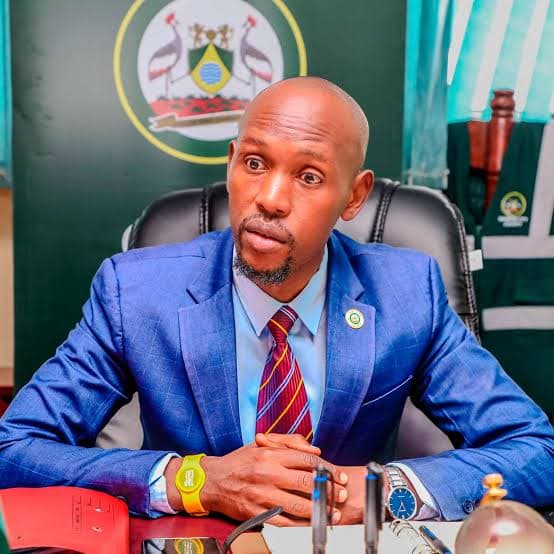
Geoffrey Mosiria is at a political crossroads. Sacked by Governor Johnson Sakaja ten days after declaring his intention to run for Nairobi Governor in 2027, he now faces a choice: chase the Governor’s seat and risk being framed as a disgruntled former employee, or pivot to a race where his strengths are undeniable. The smart move—the strategic move—is Dagoretti North. Here is why Mosiria should seriously consider vying for the MP seat.
In 2013, a 29-year-old Kisii politician named Simba Arati won the Dagoretti North parliamentary seat and built a political fortress. He became the face of the Abagusii community in Nairobi, a relentless ground campaigner whose survival was built on presence, not party machinery. When Arati left for the Kisii Governor’s mansion in 2022, he did not just vacate a seat—he vacated a power structure.
Mosiria is the natural heir to that structure. In July 2023, the Kisii Council of Elders installed him as the Abagusii community spokesperson in Nairobi County, with a mandate to speak for the community and coordinate the fielding of aspirants for elective posts. Sakaja himself attended the ceremony and praised Mosiria as “hard-working, steadfast and very practical”. That endorsement now reads like a political liability for Sakaja—but it is an asset for Mosiria in Dagoretti North.
Dagoretti North is a cosmopolitan constituency where Luhyas, Kikuyus, Luos, Kisiis and Kambas all hold significant blocs. The Kisii vote has historically been decisive when consolidated. Nairobi’s Kisii voter register is estimated at roughly 170,000 citywide, and even a fraction concentrated in Dagoretti North is enough to alter a parliamentary race decided by tens of thousands, not hundreds of thousands.
The electoral math is instructive. In 2022, Beatrice Elachi won with 52,515 votes, beating her closest rival Elijah Oenga (13,620). But Elachi is now vulnerable. A mid-2026 Mwelekeo Insights survey placed her a distant third with just 7.1% support, behind CPA Renny Ngeno (43.5%) and Mirimo Nyongesa (35.1%). The field is fractured. The incumbent is weak. And the Kisii bloc—if properly mobilised—could be the swing factor.
What Mosiria brings is not a party machine. It is something harder to manufacture: a reputation for showing up. His record as a county chief officer—the ICU at Mama Lucy, the war on illegal dumping, the constant presence in city estates—was built on visibility. He was the “Mr. Fix-it” of Nairobi, a bureaucrat who behaved like a ward representative. In Dagoretti specifically, he has already been on the ground: intervening in the Waruku bus accident, addressing illicit brews in Madiaba, delivering medicines to Gatina hospital.
He is also a media creature. Mosiria built his profile by engaging directly with Nairobi’s content creators, bloggers and TikTokers, turning county work into shareable content. That fluency gave him a reach no official communications budget could buy. In a parliamentary race where name recognition and narrative control matter, that is a weapon.
His sacking by Sakaja—whether intended or not—handed him the one thing every underdog needs: a grievance with a national audience. He is no longer just a former chief officer. He is the man who was punished for ambition, the whistleblower who refused to bend. In Dagoretti North, where the Kisii community watched one of their own removed from City Hall, that narrative will resonate.
Mosiria would not be walking into an empty room. Robert Alai declared his candidacy for Dagoretti North on August 1, 2026, framing it as a “job application” to residents. Alai is the sitting Kileleshwa MCA, a formidable digital mobiliser, and has demonstrated fundraising muscle, with reports of a Sh15 million haul.
Then there is Renny Ngeno, the surprise frontrunner, and Mirimo Nyongesa, both of whom have built early leads. The field is crowded, the incumbent is weak, and no single candidate has consolidated the community vote that Arati once commanded. Mosiria does not need to win a majority. He needs to consolidate the Kisii bloc, peel away a section of the undecided vote, and let the fragmented opposition split the rest. It is exactly the playbook Arati used in 2013.
Running for Governor in 2027 would be a vanity project. Sakaja has the incumbency, the City Hall machinery, and the ability to frame Mosiria as a disgruntled former employee. The gubernatorial race would be national, expensive, and stacked against him.
Dagoretti North is different. It is local, winnable, and historically significant. It is the seat that launched Simba Arati. It is where the Abagusii community in Nairobi has its deepest roots. And it is the position from which Mosiria can rebuild the community leadership structure the elders handed him in 2023—this time with an elective mandate, not a ceremonial one. A parliamentary seat would give him a platform with constitutional weight, a budget, and a direct line to the national stage.
The decision to pivot is not a retreat. It is a recalibration. It acknowledges a simple truth of Kenyan politics: power is built from the ground up, not from the top down. Arati did not become Kisii Governor by starting at the top. He became Governor by first becoming the indispensable MP for Dagoretti North.
Mosiria is now walking the same road. He has the community mandate, the media profile, the service record, and—courtesy of Sakaja—the sympathy vote. What he needs now is the ground game. Dagoretti North is where that game begins. But Alai is already there, and he is not going anywhere quietly.
The Governor’s seat can wait. Parliament is the prize that makes the next move possible—if Mosiria can win it. He should consider it seriously.
Comments
No comments yet. Be the first to share your thoughts.