
Ruto issues personal apology to family of Rex Masai over protest death

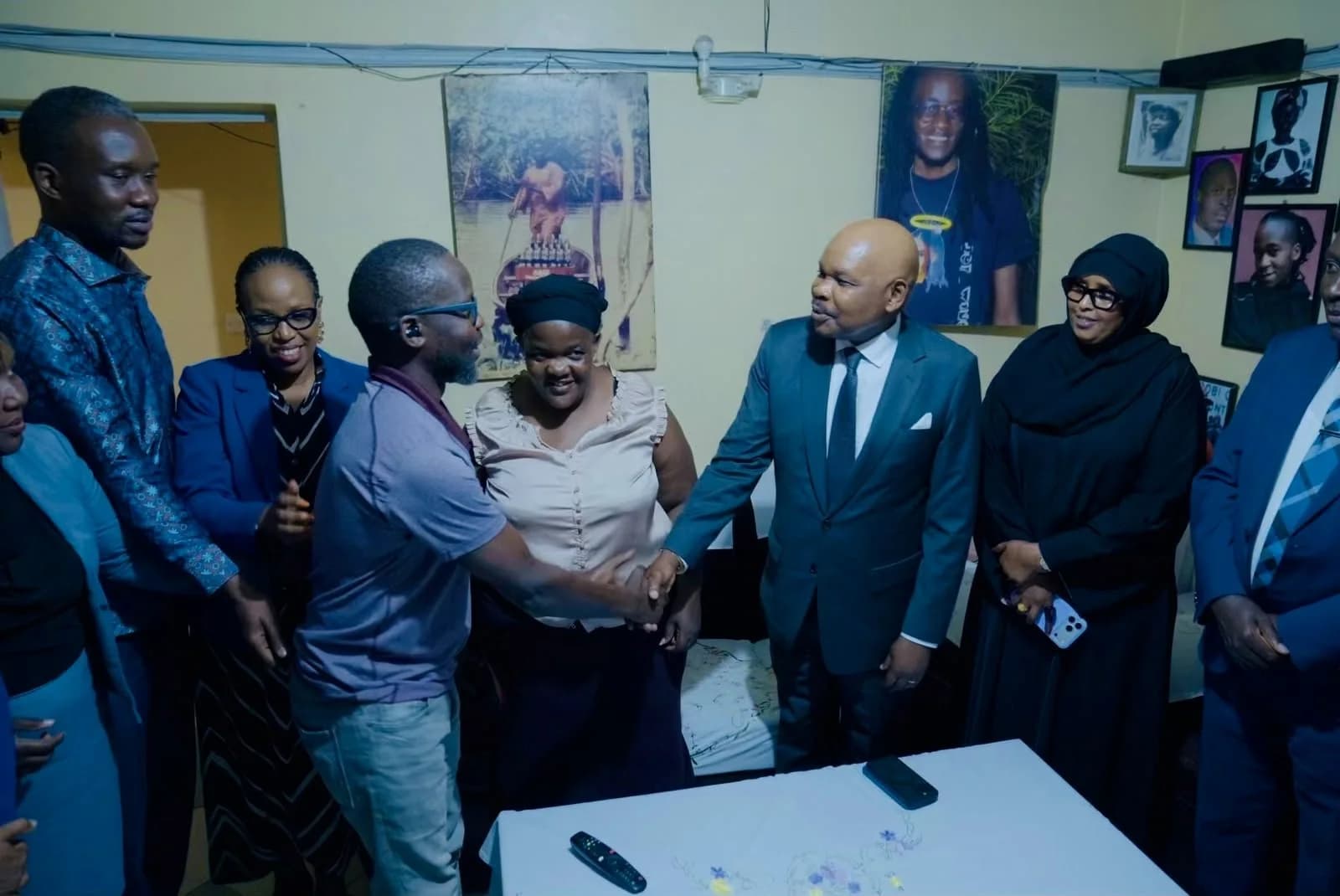
The apology was delivered on Thursday by a presidential panel led by its chairperson, Prof. Makau Mutua, during a visit to Masai’s mother, Mama Rex Masai, in Kayole.
President William Ruto has issued a personal apology to the family of Rex Masai over his death during anti-government protests in Nairobi in June 2024.
The apology was delivered on Thursday by the Panel of Experts on Compensation of Victims of Protests and Riots chairperson Prof Makau Mutua, during a visit to Masai’s mother, Mama Rex Masai, in Kayole.
In a post on X after the visit, the panel said it had conveyed both the President’s personal apology and that of the State to the family.
“Prof. Makau Mutua, Chair of the Panel, and the Panel members paid a visit to Mama Rex Masai in Kayole today, delivering the President's personal apology as well as the State's to the family for their loss,” the panel said.
The Panel was joined by representatives from the Independent Policing Oversight Authority (IPOA) and the Kenya National Commission on Human Rights (KNCHR).
The panel said the visit reaffirmed the importance of justice, healing, national reconciliation and the ongoing compensation process.
Latest Stories
- High Court declares Ruto’s 20 per cent housing allocation directive for teachers, police officers unlawful
- Basement supermarket could be sustaining survivors in Eastleigh rubble - rescue team
- KNCHR raises alarm over targeting of persons seeking sanctuary in Kenya
- DRC medics celebrate as final Ebola patient leaves Mongbwalu treatment centre
However, it did not indicate whether the family had received compensation under the State’s compensation programme.
A similar apology was issued to Mr Nigel Oduor Otieno in Mathare, who was injured during the 2023 cost-of-living protests.
Masai’s death, which occurred during the 2024 anti-Finance Bill protests, became a symbol of the dangers faced by protesters and the challenges of securing accountability for alleged police abuses.
It sparked unending public outrage and intensified calls for police accountability and justice for victims of violence during demonstrations.
A month after his killing, the Office of the Director of Public Prosecutions said identifying the person responsible for the fatal shooting had proved difficult because the available CCTV footage did not clearly identify the individual who fired the shot.
The office appealed to members of the public to provide information that could assist investigations.
The uncertainty surrounding the identification of the shooter further fuelled public demands for answers and accountability.
An inquest into Masai’s death was closed last month, more than two years after the incident, following testimony from a forensic expert who analysed CCTV footage presented by IPOA.
The expert, Mutua, told the court that the one-minute-and-15-second footage, retrieved by IPOA and stored on a flash disk, remained in its original form.
“The videos and all digital evidence presented before the inquest were as originally captured, without any form of intentional manipulation,” he testified.
He further told the court that his examination had found no evidence of technical or intentional alteration of the recordings.
“Your Honour, I further found that no technical or intentional alteration, insertion, deletion, duplication, splicing, or rearrangement of video content was identified during the examination,” Mutua said.
The presidential panel’s visit comes amid sustained calls for justice and accountability for people killed or injured during public protests, with Masai’s case remaining a significant reference point in the debate over police conduct and the State’s responsibility to protect the right to peaceful assembly.
Comments
No comments yet. Be the first to share your thoughts.