
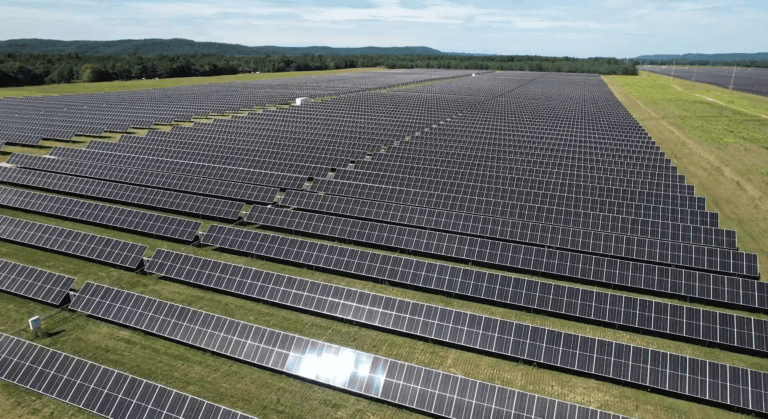
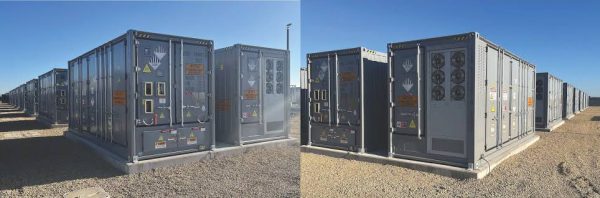
The Public Service Commission of Wisconsin approved two battery storage facilities for Alliant Energy to support its growing clean energy network. The projects include a 100-megawatt system in Grant County and a 75-megawatt system in Wood County.
Both facilities will sit directly next to existing utility-scale solar farms to capture excess energy during peak generation hours. The stored power will then discharge back into the grid when customer demand rises. These developments aim to strengthen regional electric reliability, prevent power disruptions, and help transition the state toward cleaner electricity.
Alliant Energy Gears Up its Power Infrastructure through Government Support
Alliant Energy is actively building out its power infrastructure in Iowa, Wisconsin, and across its broader utility networks to meet rapidly rising electricity demand. The company is constructing new natural gas power plants, rolling out utility-scale battery storage facilities, and upgrading local distribution grids. The newly closed $5.1 billion loan package from the U.S. Department of Energy gives Alliant Energy direct access to low-cost federal financing. This massive capital injection allows the utility to add over 2.6 gigawatts of reliable power generation and energy storage capacity.
By lowering long-term borrowing costs, the federal funding helps Alliant execute these large-scale grid enhancements while keeping energy affordable and dependable for nearly 1.8 million homes.
August 11, 2023
Madison-based , Alliant Energy reported that two battery energy storage facilities in the counties of Grant and Wood have been approved by the Public Service Commission of Wisconsin. This gives the all-clear to build batteries with a combined capacity of 175 megawatts.
When the sun isn’t shining or the wind isn’t blowing, battery storage devices allow people to access electricity. These systems store energy generated by renewable resources like solar and wind.
The devices will improve grid dependability and flexibility for supplying energy to customers, according to a news release from David de Leon, president of Alliant’s Wisconsin energy company.
When construction on the Alliant energy battery facilities in Wisconsin will begin
According to Alliant officials, construction will begin on both battery projects in early 2024. By the end of 2024, it is anticipated that the Wood County project, in Saratoga, will be up and running. According to officials, the Grant County project in the town of Potosi should be operational by the middle of 2025.
When the systems are finished, they will be able to power over 80,000 houses for four hours and 100,000 homes for four hours, respectively. Furthermore, FlexGen of North Carolina was chosen to supply the energy management system and battery energy storage machinery.
Company representatives stated that Alliant’s objectives are to employ cleaner and more efficient energy sources as part of its Clean Energy Vision and to reduce Wisconsin’s carbon dioxide emissions to zero through a number of statewide solar projects. Additionally, they aim to produce power with zero net carbon emissions by 2050. Battery storage is consistent with these objectives, the officials stated.
By the end of 2024, Alliant plans to add over 1,100 MW of solar energy to the state’s system. Three projects that the business finished in 2022 and became operational in Grant, Wood, and Rock Counties. In the southern section of the state, nine more are being built.
Factsheet: Alliant Energy Wisconsin Battery Storage Expansion
Developer: Alliant Energy (Wisconsin Power and Light)
Approving Authority: Public Service Commission of Wisconsin (PSCW)
Locations: Grant County and Wood County, Wisconsin
Combined Storage Capacity: 175 megawatts (MW) / 700 megawatt-hours (MWh)
Estimated Investment: $350 million
Project Breakdown
- Grant County Battery Project: 100 MW system co-located with the 200 MW Grant County Solar Farm.
- Wood County Battery Project: 75 MW system co-located with the 150 MW Wood County Solar Farm.
Key Operational Highlights
- Co-Located Solar Integration: Charges directly using excess clean electricity generated by adjacent solar farms during peak daylight hours.
- Grid Support: Discharges stored electricity during high-demand periods to prevent outages and keep power flowing reliably.
- Clean Energy Transition: Serves as a core step in Alliant Energy’s Clean Energy Blueprint to modernize regional energy storage.
Comments
No comments yet. Be the first to share your thoughts.