
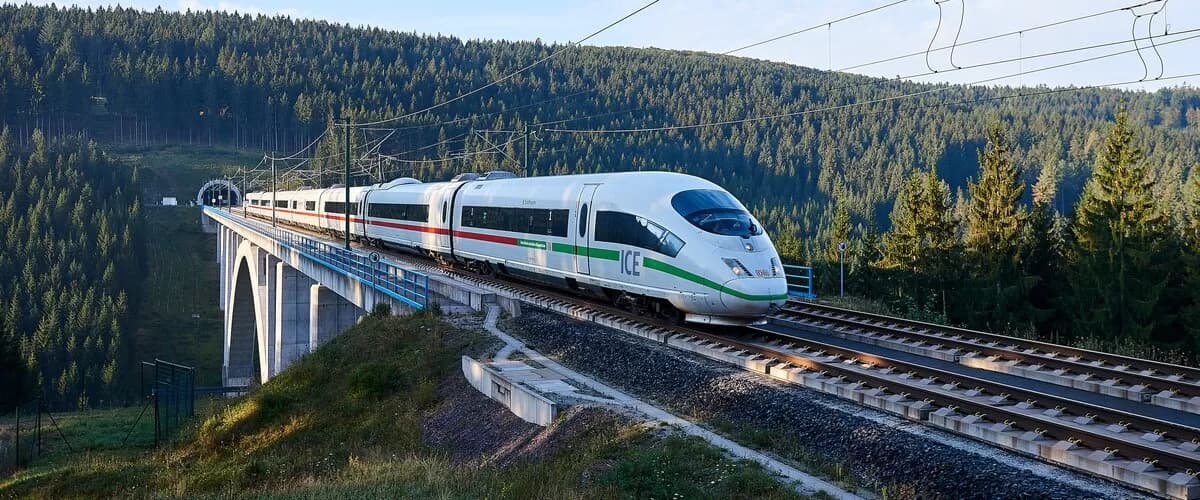
The Deutsche Bahn Rail Modernization Program is a massive, long-term infrastructure overhaul aimed at reversing decades of underinvestment in Germany’s rail network. While the operator originally identified a need for €150 billion over ten years to fully stabilize the system, recent legislative updates have solidified immediate funding. For 2026, Deutsche Bahn has announced a record €23 billion investment, supported largely by the federal government’s new “Special Fund for Infrastructure and Climate Neutrality” (SVIK). This capital is directed toward the “general renovation” of high-traffic corridors—following the completion of the Frankfurt–Mannheim (Riedbahn) upgrade in December 2024—with the Hamburg–Berlin line currently undergoing comprehensive renewal until April 2026. The initiative coincides with a major corporate restructuring (“Bahn Restart”) launched in January 2026 under new CEO Evelyn Palla to streamline operations and improve punctuality—a strategic overhaul that is now physically underway as Deutsche Bahn launches a mega renovation on the Hamburg-Berlin and Betuwe rail lines.
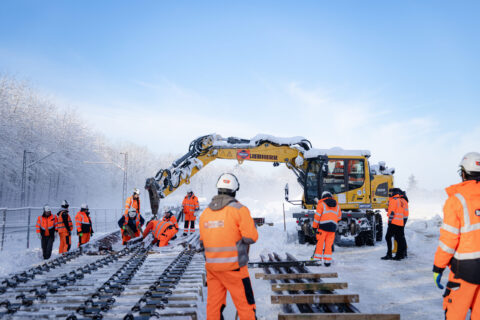
Hurdles faced over the infrastructure investment
Lutz’s remarks arrive at a critical time, just as Germany prepares for a new governing coalition composed of the conservative Christian Democratic Union (CDU), its Bavarian sister party the Christian Social Union (CSU), and the center-left Social Democratic Party (SPD). The coalition has signaled a significant pivot in infrastructure strategy, already approving a €500 billion national infrastructure fund. To make this possible, the German Bundestag passed reforms to the country’s strict borrowing rules, known as the “debt brake”. It enables the government to invest in long-term projects despite tight fiscal policies. Friedrich Merz, the CDU leader, is expected to be sworn in as chancellor on May 6, and his incoming cabinet is expected to prioritize rail reform as a top agenda item.
Project Overview
Location: Germany
Project Cost: €150 billion
Scope: repair and refurbishment of the existing network, expanding the system, building new routes, enlarging stations, introducing advanced rail technologies
Germany’s rail system, once a global model of efficiency and engineering, is now frequently criticized for delays, overcrowding, and aging equipment. In 2024, Deutsche Bahn reported that only 62.5% of its high-speed ICE and IC trains arrived within six minutes of their scheduled time. This figure is wellbelow public expectations. The company paid out €197 million in compensation last year alone due to delays and cancellations. This issue was especially prominent during Germany’s hosting of the UEFA Euro 2024 tournament, when thousands of fans, many visiting from abroad, experienced travel chaos while trying to attend games across the country. These mounting complaints have sparked a growing public demand for a more reliable and modernized rail service.
More on the German Deutsche Bahn
What makes this transformation even more ambitious is the scale of the network involved. Germany has the largest railway network in Europe, spanning nearly 34,000 kilometers. But much of it is decades old and ill-equipped to handle today’s volume and speed requirements. As part of the broader modernization plan, Deutsche Bahn hopes to introduce digital control systems, improve station accessibility and reduce carbon emissions. Furthermore, they plan to ultimately shift more passenger and freight traffic away from roads and onto trains. Lutz emphasized that without immediate and significant investment, the system risks further deterioration. “The railways are the backbone of our climate-friendly transport future,” he said. “But without upgrading our infrastructure, we won’t be able to deliver on that promise.”
Comments
No comments yet. Be the first to share your thoughts.