
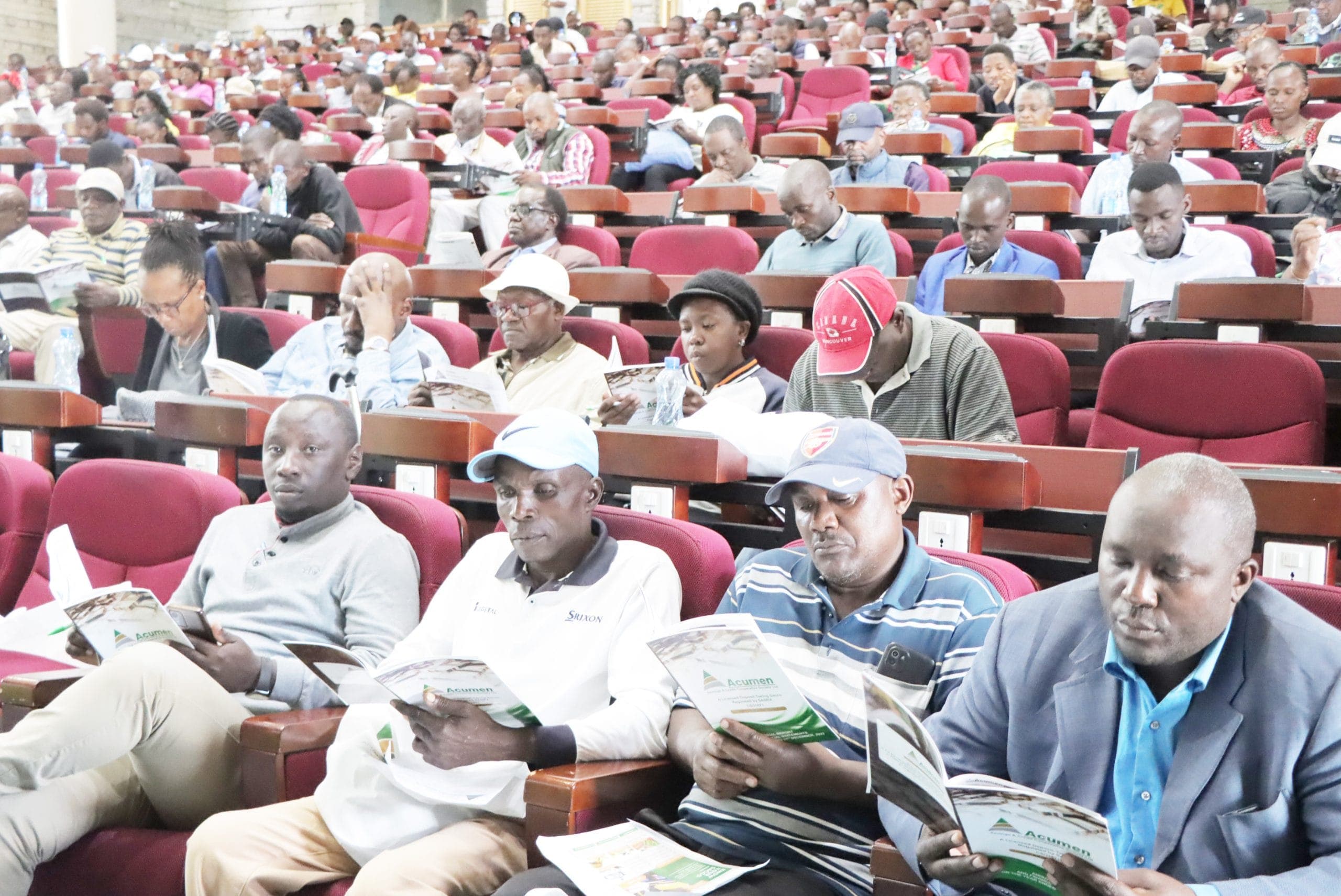
SACCOs (Savings and Credit Cooperative Societies) total assets grew by 12.50% in 2025 to reach to KSh 1.21 trillion from KSh 1.08 trillion in 2024, according to the latest Sacco Societies Regulatory Authority(SASRA) Annual Supervisory Report 2025, released this week.
This is even as competition intensifies in Kenya’s financial sector, pitting SACCOs against Commercial banks, Fintechs and digital lenders, all keen to catch the eye of the customer.
SACCO Membership also continued to expand, increasing to 7.87 million in 2025 from 7.39 million in 2024. This steady growth demonstrates the enduring confidence that Kenyans continue to place in Regulated SACCOs as part and parcel of the domestic financial service providers.
According to the report, SACCOs exhibited stability in their operations as depicted by key parameters of financial soundness indicators (FSIs) including capital, liquidity, and asset quality.
Encouraging is the observation that regulated SACCOs reported significant improvement in the quality of their loan books as compared to previous year.
“I am encouraged with the continuing mainstreaming of the financial soundness indicators (FSIs) of Regulated SACCOs into the country’s monetary financial statistics as periodically reported to the national and international financial institutions for the assessment of the country’s financial sector stability, thereby underscoring the critical role SACCOs play in the national economy,” said Jack Raguma, SASRA Board Chairman.
SACCO Industry legal and policy reforms in 2025
In 2025, there were significant policy and regulatory reforms that are expected to strengthen the resilience and competitiveness of the SACCO industry.
Most notably, the Government published the Sacco Societies (Amendment) Bill, No. 32 of 2025, which was subsequently introduced into the National Assembly.
The proposed bill seeks to operationalize the Deposit Guarantee Fund by addressing the existing legal gaps.
In addition, the Bill proposes the establishment of a Central Liquidity and Shared Services business hence creating a regulated framework through which primary societies will access common or shared services and liquidity support.
Once implemented, these reforms are expected to enhance depositor protection, improve operational efficiency, enhance service delivery and strengthen the overall stability of the industry.
SASRA confirms its readiness in implementing the provisions of this Bill once enacted and has put in place necessary structure to achieve this.
During the year, parliament enacted amendments to the SACCO Societies Act, which gave powers to the Authority to regulate and supervise regulated societies with regard to their AML/CTF/PF obligations.
This has now extended the Authority’s supervisory powers of regulating, supervising and enforcing compliance on to the matters relating to anti-money laundering, combating the financing of terrorism and proliferation financing within the industry.
Also of great importance is the designation of the Authority as the SACCO sub-sector Cyber Security Operations Centre (SOC) Computer Misuse and Cybercrimes Act (Cap 79C) by the National Computer and Cybercrimes Coordination Committee (NC4) which is chaired by the Principal Secretary responsible for Internal Security.
The designation is meant to enhance cybersecurity detection and mitigation against cyber threats within the industry, as well as provide a seamless coordination framework among players for escalation of any emergent or suspected cyber threats to the industry.
Legal and policy reform witnessed during the year aimed at strengthening the regulatory framework for the industry Alongside the above, the Cabinet Secretary, Ministry of Cooperatives and MSME Development commissioned a Committee of Experts (COE) in April 2025 to spearhead reforms in the industry aimed at strengthening governance and operational systems.
The committee was mandated to review the Sacco Societies Act and align it with national government priorities, propose reforms relating to the Deposit Guarantee Fund, the Central Liquidity Facility and Shared services as well as develop pathways for legal harmonization and regulation of all Societies.
“The Authority welcomes this important initiative and looks forward to the implementation of the Committee’s recommendations which are expected to further strengthen governance and promote operational efficiency, thereby positioning the industry for sustainable growth. The Cabinet Secretary commissioned a Committee of Experts (COE) to spearhead reforms in the industry,” said Ranguma.


Comments
No comments yet. Be the first to share your thoughts.