
London Marathon considers male pacemakers as Ruth Chepngetich's record faces scrutiny

The proposal could mark a departure from London’s recent approach of holding a women-only elite race, a format that has produced some of the fastest performances in women’s marathon history.
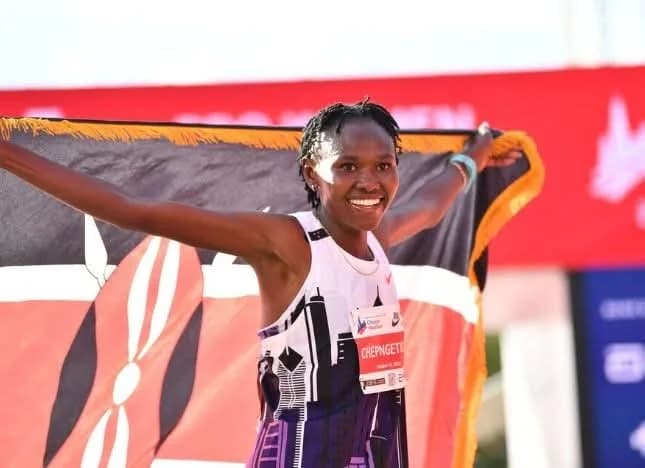
The London Marathon is considering reintroducing male pacemakers in its elite women’s race at the 2027 edition, potentially giving athletes a fresh opportunity to challenge Kenya’s Ruth Chepngetich’s controversial women’s marathon world record of 2:09:56.
Race director Hugh Brasher has confirmed that organisers are open to changing the format, with discussions ongoing with athletes about their ambitions and preferred racing conditions ahead of next year’s event.
The proposal could mark a departure from London’s recent approach of holding a women-only elite race, a format that has produced some of the fastest performances in women’s marathon history.
Ethiopia’s Tigst Assefa currently holds the women-only world record after clocking 2:15:41 at the 2026 London Marathon. However, she came close to challenging Chepngetich’s overall world record at the Berlin Marathon this year before suffering an Achilles tendon injury in the closing stages.
Assefa eventually finished in 2:11:04 despite the injury, in a performance that strengthened the possibility of a new world record under favourable conditions.
Brasher described the Ethiopian’s experience in Berlin as tragic, expressing sympathy for the athlete and acknowledging how close she appeared to breaking the existing mark.
Latest Stories
- Kenyan working for US child welfare agency arrested over alleged visa overstay
- Court summons Charles Kerich, Governor Sakaja over Sh76.7 million legal fees debt
- DCI arrests suspect accused of posing as traffic police to rob Kenyans moments after bank withdrawals
- Ulinzi, Police FC eye first wins in Thursday's 'Forces Derby' showdown
Speaking to The Independent, he said London was willing to explore different race formats while considering the goals of elite athletes.
“We’re prepared to mix it up. We very much talk to the athletes about what their goals are,” Brasher said.
He also questioned the credibility of Chepngetich’s record, which she established at the 2024 Chicago Marathon before being handed a three-year ban in 2025 for a prohibited substance violation.
“I think that world record is entirely dubious; if you study everything that’s been said, from the AIU, and what they believe, that’s a personal opinion,” Brasher added.
Despite the controversy surrounding the mark, Chepngetich’s time remains the recognised women's marathon world record.
The potential return of male pacemakers would not be unprecedented at London. In 2003, Britain’s Paula Radcliffe ran 2:15:25 with male runners in the race, while American Deena Kastor clocked 2:19:36 in 2006.
The discussion comes amid wider efforts within elite athletics to protect the integrity of competition, with Brasher among those advocating for cleaner sport across the World Marathon Majors.
He nevertheless stressed that the future format of the elite women’s race would be shaped by ongoing discussions with athletes as organisers assemble the field for 2027.
“We talk to the women, and what they want to achieve; those conversations are still going on about 2027,” he said.
Brasher added that organisers were still recruiting athletes and would announce the elite fields in January, promising strong competition across both the men’s and women’s races.
While London remains committed to preserving the importance of a women-only world record, Brasher indicated that organisers were willing to consider different approaches to elite racing.
“Will London, in the future, have a women’s-only record? Yes, I think that’s important,” he said, while noting that the event had experimented with different formats in the past.
The final decision on the 2027 elite women’s race has yet to be announced, leaving open the possibility that male pacemakers could feature as organisers seek to balance record-breaking ambitions with the significance of women-only competition.



Comments
No comments yet. Be the first to share your thoughts.