
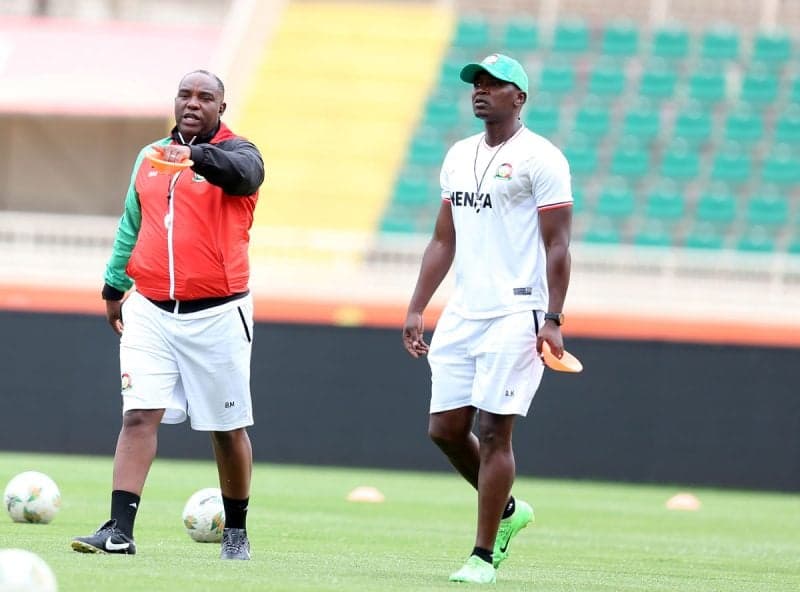
NAIROBI, Kenya, September 25, 2026 – When Harambee Stars head coach Benni McCarthy publicly drew his line in the sand, declaring that he would rather go to war with a limited, loyal soldier who would “take a bullet” for the team than a prolific goalscorer, he didn’t just spark a local debate about Moses Shumah.
He inadvertently exposed the central, unresolvable identity crisis of modern African national team football.
Who deserves to wear the national shirt? Is it the local warrior who endured the grueling qualifiers in heat, dust, and administrative chaos, or the elite dual-national born in Paris, London, or Brussels whose technical superiority can instantly elevate a nation’s fortunes?
Across the continent, from Kinshasa to Accra and Antananarivo, national team coaches are locked in a high-stakes balancing act between moral cohesion and pure competitive survival.

The DRC Model: Sébastien Desabre’s Continental Recruitment Drive
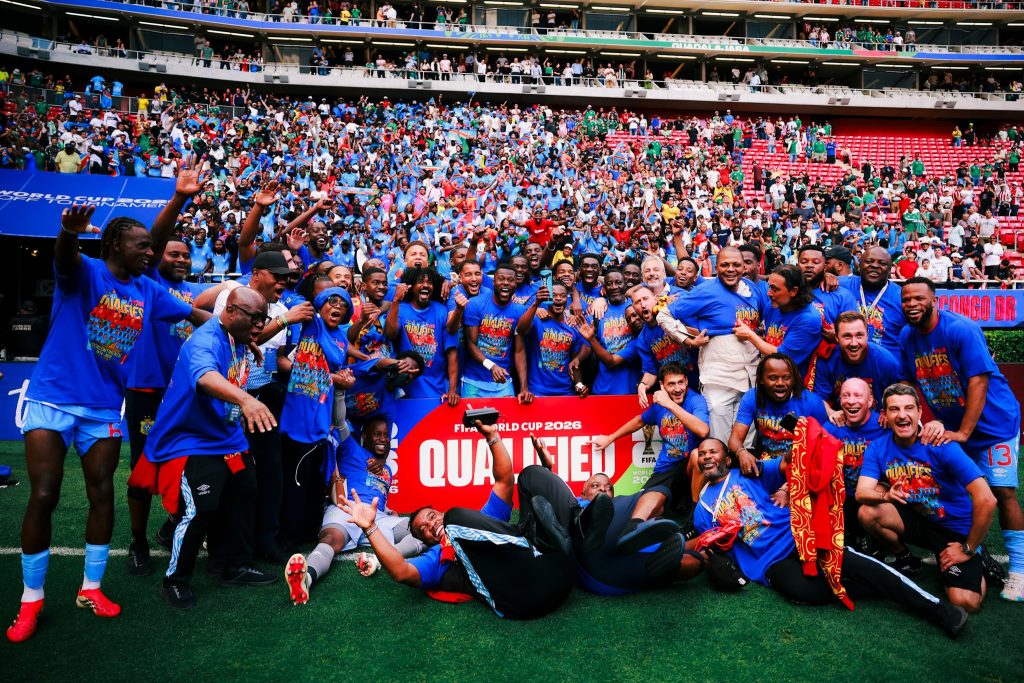
Few nations embody this dynamic quite like the Democratic Republic of Congo. Under head coach Sébastien Desabre, the Léopards have turned diaspora recruitment into a refined art form, continually scouting Europe’s top leagues to assemble a squad capable of challenging Africa’s heavyweights.
Desabre’s squad selection for the 2027 AFCON qualifying campaign and upcoming friendlies against Uganda serves as a masterclass in this strategy.
The roster is defined by a massive influx of dual-national talents committing their international futures to Kinshasa.
Former Belgian youth international Jorthy Mokio officially pledged his long-term allegiance to DRC, alongside French-born winger Junior Kadile and Dutch-born forward Anthony Musaba.
Dutch youth international Ezechiël Banzuzi completed his switch to join the senior squad, with French-born goalkeeper Brandon Ndezi also earning his debut call-up.
The squad list also features a wave of new faces honed in elite European setups, including Como and former Manchester United defender Willy Kambwala, Leicester City’s Stephy Mavididi, Paris Maghoma, Noah Mbamba-Muanda, Kevin Pedro, Nathan Ndibu Mukadi, and Stanis Idumbo Muzambo.
Yet, this recruitment drive is far from a one-way street.
Glad-tidings from Kinshasa don’t always guarantee a signature, as evidenced by FC Sion talent Winsley Boteli choosing to stick with Switzerland despite a late push from FECOFA.
Clarifying his decision to turn down the Léopards, Boteli highlighted the emotional tug-of-war dual nationals face when choosing between their birth nation and ancestral roots:
“When the Congolese national team contacted me, I was very proud and very happy… My decision is in no way a decision against Congo. It is simply the choice to continue the story I started with Switzerland at the age of 15. My roots are part of my identity and Congo will always have an important place in my heart,” Boteli said.
On paper, integrating players who cut their teeth at Ajax, Manchester United, or Leicester City is a brilliant competitive upgrade.
But inside the dressing room, it presents a delicate human puzzle.
When a player who developed in high-tech European academies steps straight into the starting eleven ahead of local stalwarts who navigated the preliminary rounds in grueling conditions, questions of fairness inevitably surface.
Is it a pragmatic path to glory, or an insult to institutional loyalty?
The Kenyan Reality: Benni McCarthy’s Uphill Battle for Overseas Caliber
Efforts by Harambee Stars head coach Benni McCarthy to recruit elite diaspora talent continue to face hurdles, particularly regarding UK-based defender Zak Vyner.
Despite personal pitch meetings in England involving the technical bench, the 29-year-old Wrexham center-back remains hesitant to commit.
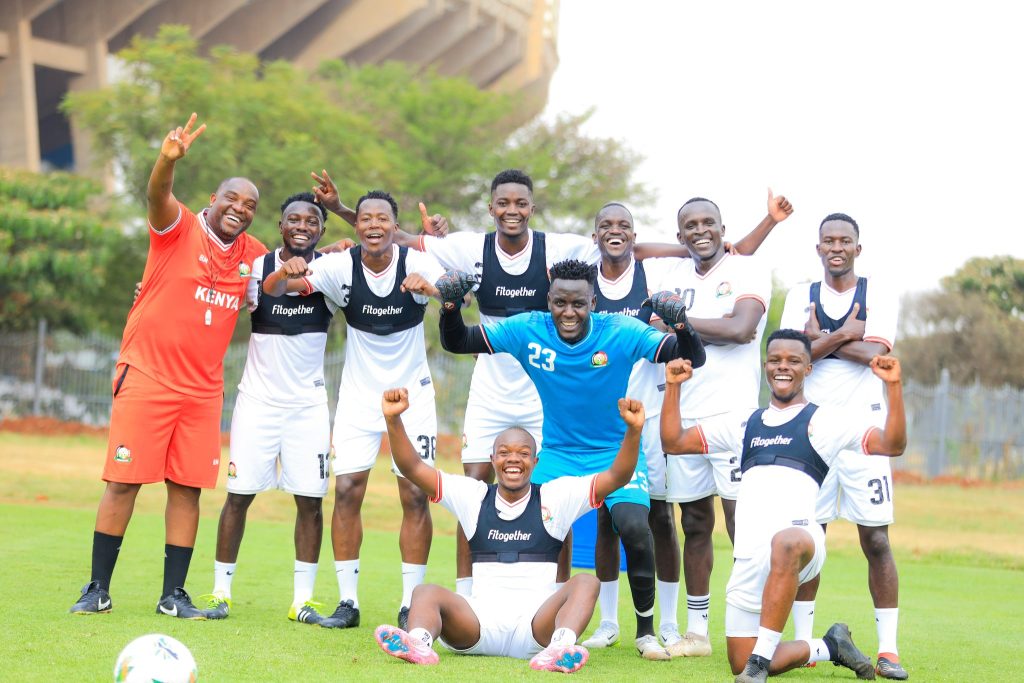
McCarthy revealed that lingering hesitation stems from a discouraging administrative experience during Vyner’s initial call-up under former manager Engin Firat, which left the defender reluctant to step back into the national team environment.
A similar dynamic surrounds FC Köln forward Linton Maina, who has also opted against honoring invitations to represent Kenya.
While McCarthy acknowledges the personal frustration of repeatedly pursuing non-committal targets, he maintains that securing players of such high European caliber is essential for elevating the national squad.
The technical team has successfully integrated several foreign-born players, such as Micah and Henry Obiero, Clarke Oduor, and Sam Henia-Kamau, and the South African tactician insists he will remain persistent in trying to convince top prospects to anchor the country’s international ambitions.
The Opportunism Trap: The Eddie Nketiah & Ghana Blueprint
The ethics of international switches become even murkier when timing enters the equation.
Prior to the 2022 FIFA World Cup, the Ghana Football Association successfully persuaded a wave of European-born stars, most notably Iñaki Williams and Tariq Lamptey, to switch allegiance to the Black Stars.
Meanwhile, players like former Arsenal striker Eddie Nketiah kept their options open for years, holding out for a senior England call-up before eventually considering the Black Stars once major tournament qualification was already secured.
When high-profile stars suddenly embrace their heritage just as a nation qualifies for the global stage, it triggers a fierce backlash from fans and players alike.
Former Ghana international Prince Tagoe famously voiced the frustration of domestic veterans, arguing that players who turn their backs on the national team during the grueling qualification journey shouldn’t be handed a golden ticket to the World Cup showcase at the expense of those who laid the groundwork.
When Identity Backfires: The Zacharie Boucher Precedent in Madagascar
If Ghana represents the temptation of technical upgrades, Madagascar provided the ultimate lesson in emotional boundary-setting.
Troyes goalkeeper Zacharie Boucher, a former France Under-21 international of Malagasy descent, found himself at the center of a national scandal after past remarks resurfaced in which he explicitly rejected representing the island nation.
In quotes that re-emerged ahead of Madagascar’s AFCON qualifiers against Nigeria and Tanzania, Boucher had stated:
“I’m French, I’ve never been Malagasy… Just look at my passport. It says ‘French’ on it. If the coach calls me up, the answer is ‘no’… I am French, proud to be French, and I have no intention of playing in the AFCON for anyone.”
When Madagascar’s football federation initially named him to the senior squad, public uproar exploded across Malagasy football circles.
The backlash forced the federation and head coach Corentin Martins to officially deselect Boucher from the squad.
Was dropping him an irrational, overly emotional reaction? Or was it a necessary act of national dignity?
In the realm of international football, where national anthems and flags are meant to represent sacrifice, perception is reality.
Why Is This “Passport Migration” Uniquely African?
To understand why this phenomenon overwhelmingly affects African football, one must look at global geopolitical migration patterns.
You rarely see a Spanish player born in France or Argentina choose to play for their birth country over Spain, because Western European nations possess self-sustaining, elite domestic pipelines that retain their talent.
Conversely, post-colonial diaspora movements created massive, highly talented African communities across Western Europe, particularly in France, Belgium, England, and the Netherlands.
For European nations, naturalized players, like Jamal Musiala choosing Germany over England, or Aymeric Laporte switching from France to Spain are isolated competitive decisions.
For African nations, recruiting from the diaspora is an entire structural strategy.
The debate over origin versus allegiance has divided the world’s most iconic managers:
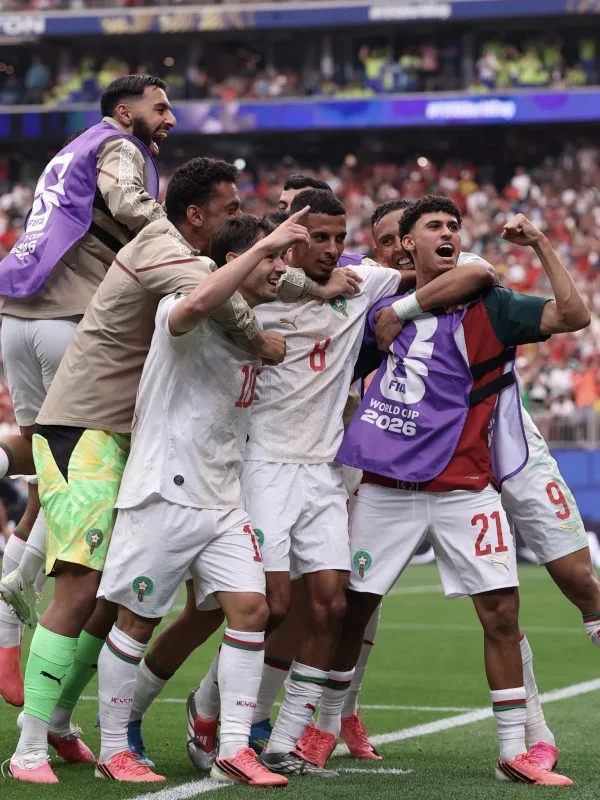
“If a player has the legal right and the emotional connection to represent a country, my job is to field the best team possible. Football at the international level is about quality and performance, not where you grew up,” Walid Regragui, Morocco head Coach (who famously led a heavily diaspora-built Moroccan squad to the 2022 World Cup Semi-Finals) said.
Immediate former France head coach Didier Deschamps also believes players should not choose which national teams to represent whenever the opportunity suits them.
“National teams cannot become a market where players choose depending on which opportunity suits them at the moment. You must feel the shirt. You cannot buy or substitute national pride,” Deschamps said.
The same is echoed by former Senegal head coach Aliou Cisse in light of controversial remarks by Napoli president Aurelio De Laurentiis in 2022.
“A club will never be above the national team. International football is not a transfer market. I have a lot of respect for Napoli, but I play for my country, Senegal. If a player doesn’t want to come because of his club, he shouldn’t be here. You don’t play for a club to avoid playing for your country,” Cisse said.
So, does loyalty win matches, or do elite, in-form players turn the tide when the world is watching?
There is no fixed formula.
Walid Regragui proved in Qatar that a squad composed largely of European-born diaspora players can achieve unprecedented global glory if unified under a clear tactical identity.
Conversely, Benni McCarthy and Aliou Cissé remind us that talent without emotional investment crumbles the moment a match devolves into a dogfight.
As Sébastien Desabre reshapes the DRC with foreign-born stars, Ghana navigates its European additions, and Kenya relies on McCarthy’s battle-tested brotherhood, one truth remains clear: a coach can import technique, speed, and tactical intelligence from Europe’s finest academies, but no passport switch in the world can manufacture soul, you either have ir or you don’t.
Comments
No comments yet. Be the first to share your thoughts.