
A star batter’s name can dominate pre-match conversation even when recent conditions favour the opposing attack. Reputation matters because it reflects past performance, but it becomes a problem when it displaces match-specific evidence. People searching for cricket betting online may find headlines built around favourites and famous players. A more useful approach is to identify which assumptions support the favourite’s status and which might not hold on match day.
Team strength is not a fixed number
Squad quality changes with selection, injuries, travel, rest and playing conditions. A side built around pace bowling may be exceptionally strong on one surface and less convincing on another. The availability of a reliable finisher can matter more in a high-scoring T20 chase than in a low-scoring match where early wickets decide the outcome. Rather than importing a single impression of team strength, consider the likely roles each selected player must perform. The closer the evidence is to the actual contest, the more useful it tends to be.
Head-to-head records need careful handling
A team’s historical advantage over another sounds persuasive but may combine matches played years apart with completely different squads and conditions. The sample size is sometimes tiny, especially when two international sides meet infrequently. A record of four wins from five games tells a different story if the decisive contests occurred on home pitches with several players now retired. Better context includes recent competitive performances against similar opposition and the format being played. Test success should not automatically be translated into T20 superiority.
The selection problem behind recent form
A sequence of victories can make a team look invulnerable, but the quality of its schedule matters. Five wins against rebuilding sides do not establish the same level of performance as five wins against elite opposition. Even a losing team can produce encouraging indicators: creating chances, maintaining good bowling lengths or recovering from difficult match positions. Analysts should also notice luck, such as dropped catches or close reviews, without assuming the next match will reverse them. The aim is to distinguish repeatable strengths from events that happen to have favoured one side recently.
Turn predictions into testable questions
Instead of asking which team will win, ask whether the leading bowler can exploit the new ball, whether the top order can handle wrist spin and whether the batting depth can absorb early wickets. These questions lead to observable evidence after the game. They also reduce the risk of inventing explanations after the result becomes known. A prediction that states its assumptions can be evaluated and improved; a vague claim that a favourite has ‘momentum’ can survive almost any outcome without teaching the reader much.
The toss changes choices, not talent
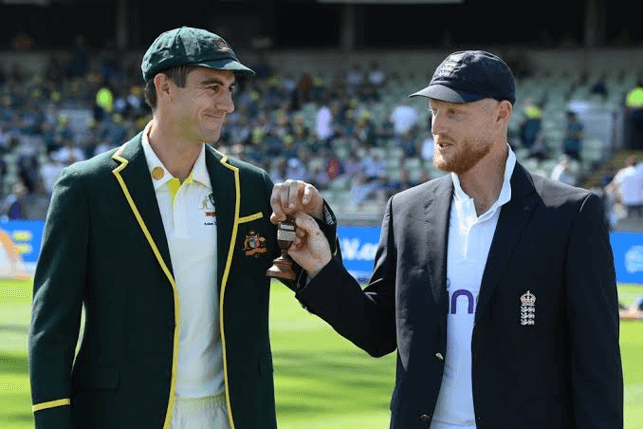
Pre-match narratives often treat the toss as the moment one team’s chances become clear. The decision to bat or field certainly matters, particularly when dew, weather or a deteriorating surface is expected. But a toss advantage can be exaggerated if teams have different strengths or if the forecast changes. A bowling attack with excellent new-ball control may benefit from moving first under helpful skies; a deep batting lineup may prefer to build a total. Neither strategy works unless the players execute it. Analysts should evaluate the toss as one input among many and revise assumptions in proportion to its likely effect. A useful pre-match article can outline what each captain might choose and why, then compare the actual decision against those scenarios. That is stronger reporting than retrospectively declaring the winning toss inevitable after the result.
Evidence before certainty
Cricket is more interesting when reputations are treated as hypotheses rather than verdicts. Anyone moving from sporting analysis to a betting website should verify site details and local requirements independently, and remember that no prediction eliminates the risk of losing money. The strongest forecast is the one that makes its uncertainty visible before the first ball.



Comments
No comments yet. Be the first to share your thoughts.