
For years, the Independent Electoral and Boundaries Commission (IEBC) has faced questions about the processes for clearing, disqualifying, or reinstating candidates in the weeks leading up to a general election.
The Commission has finally responded to these queries with the launch of the Pre-Election Dispute Resolution (Pre-EDR) Report for the 2022 General Election alongside a companion Case Digest, under the theme “Path to the Polls.”
The report provides the most detailed account yet of how the IEBC’s Dispute Resolution Committee (DRC) handled nomination disputes before the August 2022 General Election.
It covers several high-profile cases, including Mike Sonko’s bid for Mombasa governor, Johnson Sakaja’s degree controversy, and Jimi Wanjigi’s presidential candidacy.
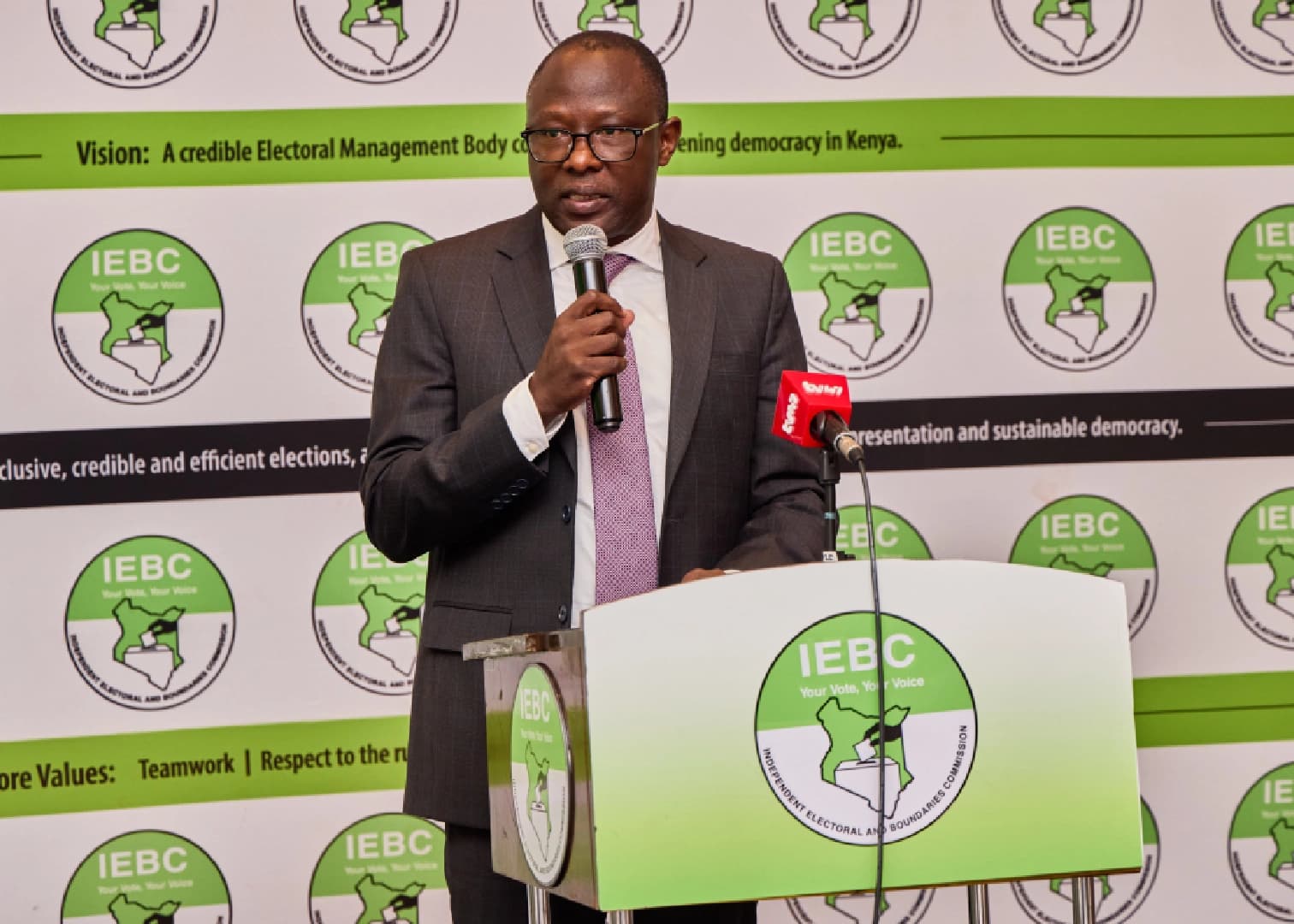
Commission Chairperson Erastus Ethekon put the report’s purpose plainly at the launch, saying,
“The Pre-Election Dispute Resolution Report reflects candidly on the Commission’s experiences during the 2022 General Election, documenting the challenges encountered, the lessons learned, and the reforms necessary to strengthen future electoral processes.”
Here is the 2022 General Election in numbers:
| Metric | Figure |
| Complaints heard and determined | 323 |
| Statutory deadline to decide | 10 days |
| DRC panels constituted | 3 |
| Rise in independent candidates since 2017 | ~64% |
| Predicted risk of election violence in 2027 | 84.1% |
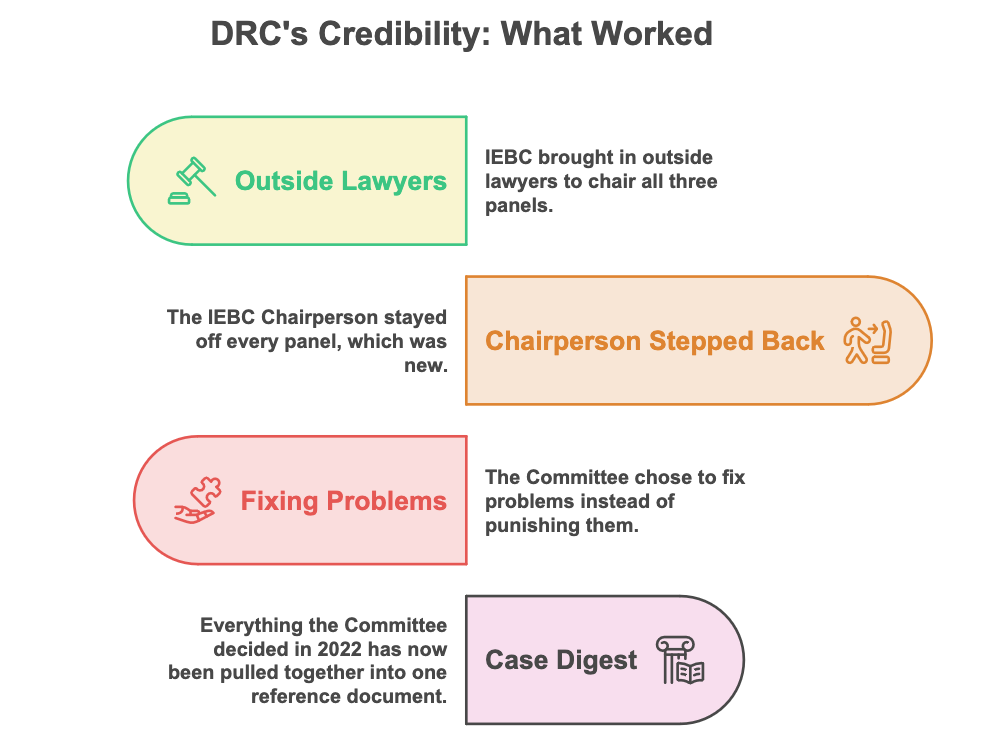
Much of the DRC’s confidence in the 2022 process came from one key decision. IEBC appointed independent lawyers to chair all three dispute panels instead of its own commissioners. For the first time, even the IEBC Chairperson stayed off every panel.
In 2013 and 2017, he served on the Committee as its only lawyer. In 2022, he stepped aside because he was named in several complaints related to the presidential election. If he had also chaired the Committee hearing those cases, it could have raised concerns about impartiality.
The Committee also focused on resolving issues rather than punishing candidates. When candidates made paperwork mistakes, they were usually given 48 hours to correct them instead of being disqualified over technical errors.
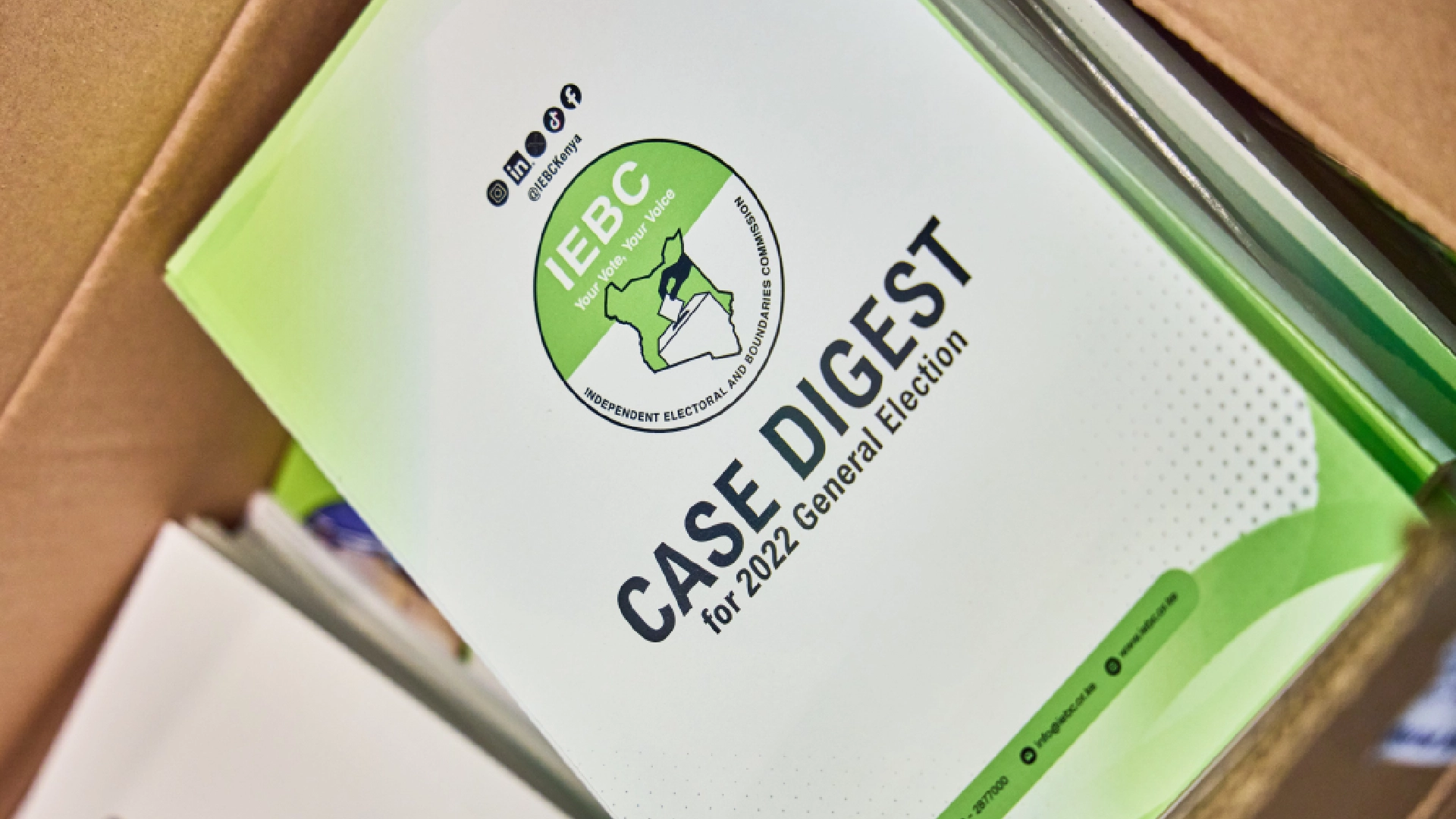
The Committee’s 2022 decisions have now been brought together in a single reference document called the Case Digest. Before this, there was no central record of past rulings, meaning each new Committee had to start from scratch.
Future Committees can now rely on previous decisions to help guide their work.
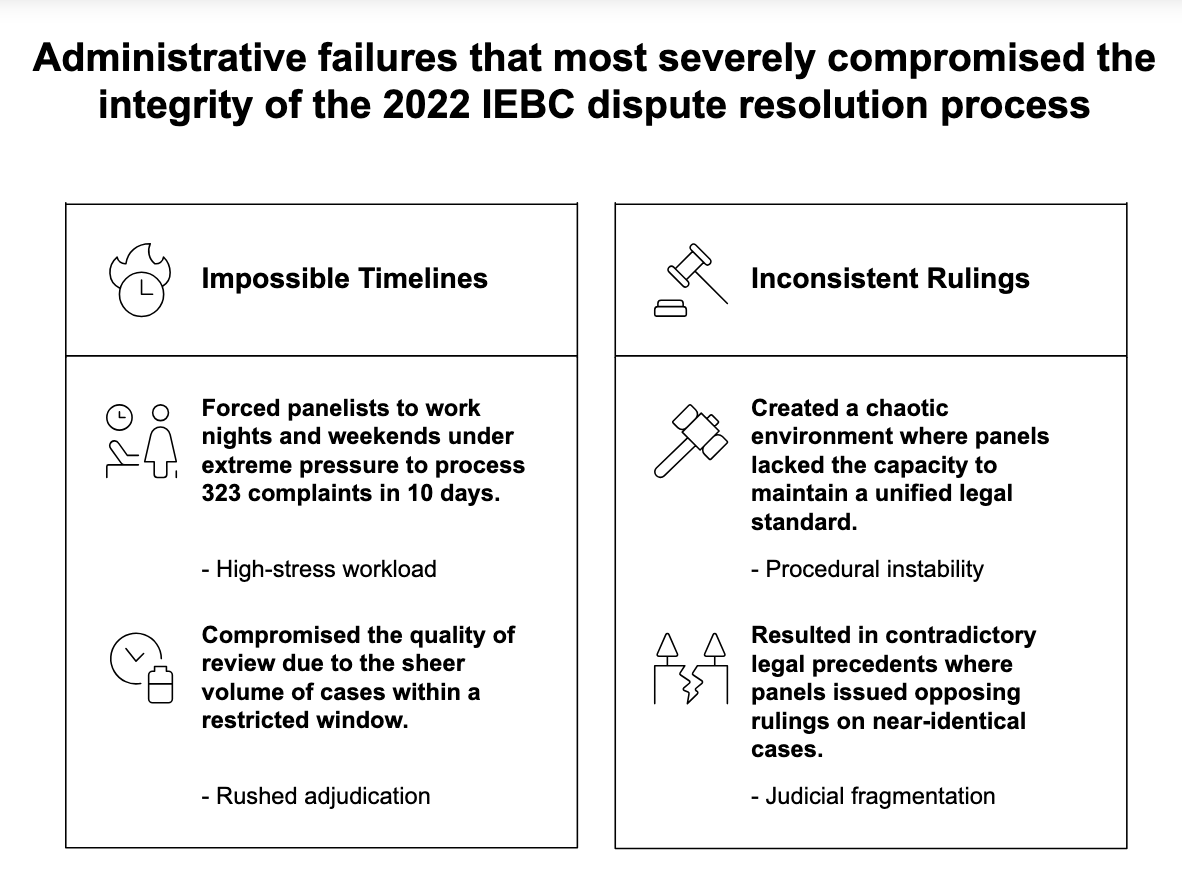
Ten days to resolve 323 complaints was an incredibly tight deadline. Panel members worked nights and weekends to meet the legal requirement, with the report describing the workload as being under “extreme pressure.”
In many cases, verification came down to trust. If a candidate said they had resigned from public service, the panel accepted their resignation letter because there was no reliable way to confirm whether it was genuine.
The panels also reached different conclusions on the same legal questions. The Political Parties Disputes Tribunal (PPDT) handles disputes within political parties.
In one case, a DRC panel ruled it had no authority to enforce a PPDT decision. On the same day, another panel considering a very similar case reached the opposite conclusion.
There was also widespread confusion over where complaints should be filed. Many people were unsure whether to go to the DRC, the PPDT, or their party’s internal dispute process. This was especially difficult for independent candidates, whose numbers were increasing rapidly.
Here are the proposed list of reforms that can be implemented from a legislative mandate or within the Commission itself:
| Legal Reforms (Need Parliament) | Administrative Fixes (IEBC Can Act Alone) |
| Extend DRC decision window from 10 to 14 working days | Deploy a legal case management system with virtual hearings |
| Extend complaint filing window from 24 to 48 hours | Standardize citation format across all DRC decisions |
| Require a certificate of service alongside resignation letters | Add Paybill as a nomination fee payment option |
| Clarify the legal definition of “nomination” | Build a public awareness campaign on DRC jurisdiction |
The report comes at a time of growing concern. A June 2026 Kenya country analysis by the Kofi Annan Foundation, published as part of its Electoral Vulnerability Index for 2026-2027, estimates an 84.1% probability of election-related violence in the 2027 General Election, compared with a Sub-Saharan African average of 51.1%.
At the same time, Kenya’s underlying risk score of 45.4% is lower than the regional average. The analysis points to the relatively peaceful 2022 election and the Supreme Court’s handling of the presidential petition as signs that the country’s institutions can work under pressure.
Even so, the report notes that Kenya has never experienced two consecutive peaceful election cycles. It also highlights new sources of uncertainty, including Raila Odinga’s death in October 2025 and youth-led protest movements that operate outside traditional party structures.
Two of the Foundation’s main risk factors, public trust in the IEBC and its technology, and confidence in the dispute resolution process, are directly addressed by this report.
If the pre-election process is seen as rushed or inconsistent, it does more than weaken legal decisions. It can also reinforce the belief that the outcome was decided before voters went to the polls.
These findings are already being incorporated into the IEBC’s Strategic Plan 2024–2029 and Election Operations Plan 2025–2027.
Their release also comes in the same week the Commission paused its online voter verification portal for a system upgrade, and just before the July 16 by-elections, which will provide an early test of some of the report’s recommendations.
If Parliament approves the proposed legal reforms, candidates will have more time to file nomination disputes, tribunals will have more time to make decisions, and stronger record-keeping could make fraudulent resignations harder to submit.
If the digital case management system and virtual hearings are introduced, they would mark the first major shift away from the Milimani-based model that has shaped DRC hearings since the committee was established.
Whether these changes happen now depends on how quickly the National Assembly passes the proposed reforms and how consistently the IEBC implements its own administrative commitments.
With the report identifying an 84.1% risk of election-related violence, the DRC’s effectiveness is no longer just about resolving candidate paperwork.



Comments
No comments yet. Be the first to share your thoughts.