

The Tourism Ministry has proposed a new framework for managing hotel levies that would separate revenue collection from the oversight and disbursement of the funds.
According to the Ministry, the Tourism Fund should retain the role of collecting levies while the Cabinet Secretary oversees the management of the funds.
Appearing before the Departmental Committee on Tourism and Wildlife on August 20, Tourism Cabinet Secretary Rebecca Miano said the changes were necessary to align the law with the realities of the modern tourism industry.
“We therefore need to amend and modernize the law so that it reflects the realities of the sector today, responds to emerging opportunities and provides a stronger foundation for its future growth,” Miano said.
She said the reforms would improve coordination between tourism institutions while creating a better environment for investment, innovation and sustainable growth.
Tourism Ministry Wants Cabinet Secretary to Oversee Hotel Levy Funds
Tourism Ministry Principal Secretary (PS) Julius Bitok compared the proposed arrangement to the relationship between the Kenya Revenue Authority and the Central Bank of Kenya, where separate institutions handle revenue collection and management.
“We are borrowing the approach underpinned by the Public Finance Management where KRA collects money through eCitizen and deposits the funds with CBK for allocation through Treasury,” Bitok said.
He said the proposed system would provide a more structured flow of tourism revenue and enable the Ministry to plan and implement programmes more effectively.
The Bill also proposes merging the Kenya Tourism Board with the Tourism Research Institute and restructuring selected semi-autonomous government agencies as part of wider efforts to streamline the sector.
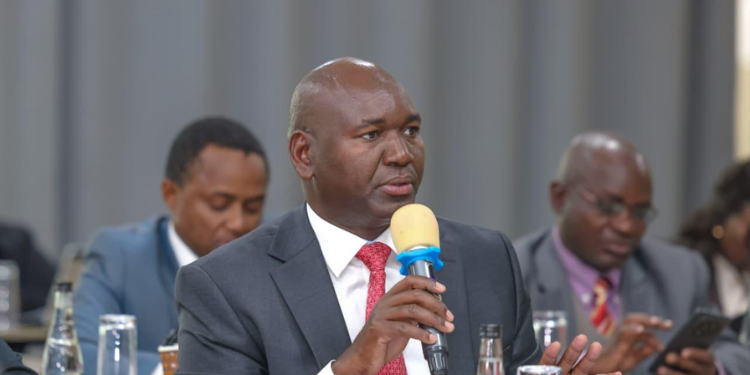
Committee chairperson Kareke Mbiuki said the proposed changes would undergo extensive public participation to build consensus among stakeholders.
“We are inviting all stakeholders and the public to present their views on the Bill. We want to have as much consensus as possible, including on sensitive areas around tourism,” Mbiuki said.
What the Tourism Amendment Bill States
The Tourism (Amendment) Bill, 2026 proposes to expand the mandate of the Tourism Fund to finance the development of tourism products, services, events and facilities, as well as marketing and branding Kenya in local, regional and international markets.
The Bill also seeks to allow the Fund to finance tourism safety and security programmes, research, data collection, tourism intelligence, training and capacity development in the tourism and hospitality sector.
It further proposes that the Fund support tourism innovations, develop industry standards and co-finance tourism projects with county governments and other partners through matching grants.
The proposed law would also allow the Tourism Fund to receive proceeds from the Air Passenger Service Charge as part of its revenue.
The Bill proposes transferring the functions, assets, liabilities, and ongoing affairs of the Tourism Research Institute (TRI) to the Kenya Tourism Board, effectively ending TRI’s existence as a separate institution.
Under the proposal, pending legal proceedings, licences, approvals, and applications handled by TRI would also be transferred to KTB, while its employees would be deployed to the Public Service Commission.
Another proposed change is the inclusion of proceeds from the Air Passenger Service Charge among the sources of money for the Tourism Fund.
The Bill is currently before the National Assembly’s Departmental Committee on Tourism and Wildlife, which is undertaking public participation before the legislation proceeds through Parliament.
Follow our WhatsApp Channel and X Account for real-time news updates.



Comments
No comments yet. Be the first to share your thoughts.