
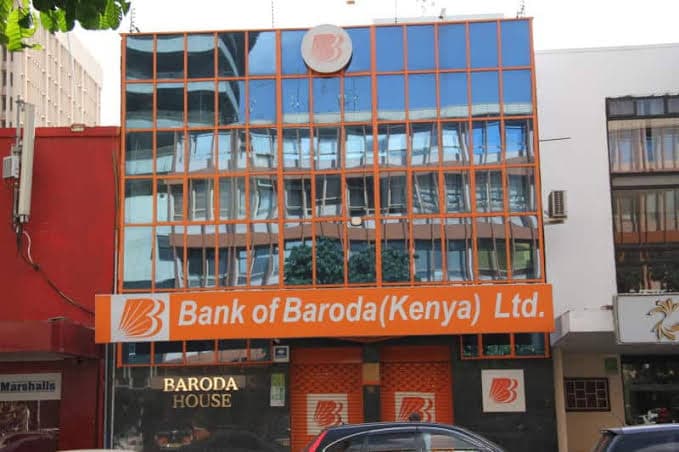
The High Court nullified the appointment of joint administrators over Infinity Industrial Park Limited, ruling that Bank of Baroda (Kenya) Limited improperly invoked insolvency laws in an attempt to take control of the company while a related commercial dispute remained unresolved.
In a judgment delivered at the Milimani Commercial Court, Lady Justice Dr. Freda Githiru Mugambi held that the bank’s decision to place the company under administration amounted to an improper use of the insolvency jurisdiction, and set aside the appointment in its entirety.
The ruling arose from an application filed by the company’s directors challenging the appointment of joint administrators made by the bank on August 10, 2026 over an alleged debt of sh2.07 billion.
The dispute stems from an earlier commercial suit in which Infinity Industrial Park sued Bank of Baroda over alleged indebtedness and a replacement charge relating to L.R. No. 31978.
The bank failed to file its defence within the prescribed time, leading to a default judgment in favour of Infinity Industrial Park in September 2025.
Its subsequent attempt to set aside that judgment was dismissed on July 31, 2026, with the court finding that the bank had been indolent.
The directors argued that the bank lacked a valid and enforceable qualifying floating charge and that the timing of the appointment suggested the insolvency process had been used as a strategic tool after the bank failed to reopen the earlier judgment.
Justice Mugambi identified the pending commercial proceedings as the central issue in determining whether the administration was lawful.
The directors argued that the bank lacked a valid and enforceable qualifying floating charge and that the timing of the appointment suggested the insolvency process had been used as a strategic tool after the bank failed to reopen the earlier judgment.
Justice Mugambi identified the pending commercial proceedings as the central issue in determining whether the administration was lawful.
The judge ruled that Infinity Industrial Park already held a subsisting judgment against the bank and that its claim could potentially equal or exceed the amount the bank sought to recover. Since both claims arose from the same banking relationship and security, the court held that the alleged debt had not crystallised.
“An insolvency debt therefore must be one that is due and ascertained, and not premature,” Justice Mugambi held.
“A debt is premature where its existence or its net amount depends on the outcome of pending proceedings between the same parties.”
The court further held that the bank had not demonstrated any urgency, such as dissipation of assets, that would justify displacing the company’s directors before the commercial dispute was concluded.
Justice Mugambi found that administration carries significant consequences, including removing directors from control, taking possession of company assets and records, and disrupting relationships with employees, customers and financiers.
In the circumstances, she concluded, those powers had been exercised prematurely.
“I am satisfied that the administration was not warranted at this time. This is, in my view, an improper use of the insolvency jurisdiction, and it cannot be allowed to stand.”
The judgment also resolved an application by the administrators seeking clarification of interim status quo orders issued on August 27, 2026.
The court clarified that although the administrators technically remained in office pending determination of the application, they were prohibited from taking any further steps beyond preserving the position that existed when the order was served.
Justice Mugambi declared the administration an improper invocation of statutory insolvency powers and set aside, annulled and terminated the appointment of the joint administrators.
The court also declared invalid the termination of employees’ contracts issued on August 11, 2026, and ordered the immediate return of all company property, including title documents, leases, logbooks, records, company seals, passwords, bank mandates, money and other assets taken during the administration.
Additionally, the Registrar of Companies, the Official Receiver and other relevant registries were directed to expunge any records indicating that Infinity Industrial Park is under administration.
The judge issued a permanent injunction restraining the bank and the administrators from implementing or relying on the impugned appointment, while preserving the company’s right to pursue damages, compensation and other consequential relief arising from the unlawful administration.
The bank was also ordered to bear the costs of the application, the costs occasioned by the administration and all reasonable restoration expenses, with the court directing that those costs must not be recovered from the company’s assets.
The court declined to determine several issues raised during the proceedings, including whether the bank held a qualifying floating charge and whether it had complied with the procedural requirements of the Insolvency Act.
Justice Mugambi held that those questions may become relevant after the conclusion of formal proof in the underlying commercial suit, and ruled that deciding them now could prejudice future proceedings.
Meanwhile, Bank of Baroda (Kenya) Limited is facing the possible auction of its movable assets after the High Court’s Commercial and Tax Division issued a warrant of attachment on September 15, to recover sh2,996,003,000 awarded to Infinity Industrial Park Limited.
The warrant authorised Moran Auctioneers to attach the bank’s movable property and sell it by public auction after the expiry of the statutory 14-day notice.
The notice expires on October 1, meaning the auction may proceed if the bank fails to settle the decretal sum.



Comments
No comments yet. Be the first to share your thoughts.