
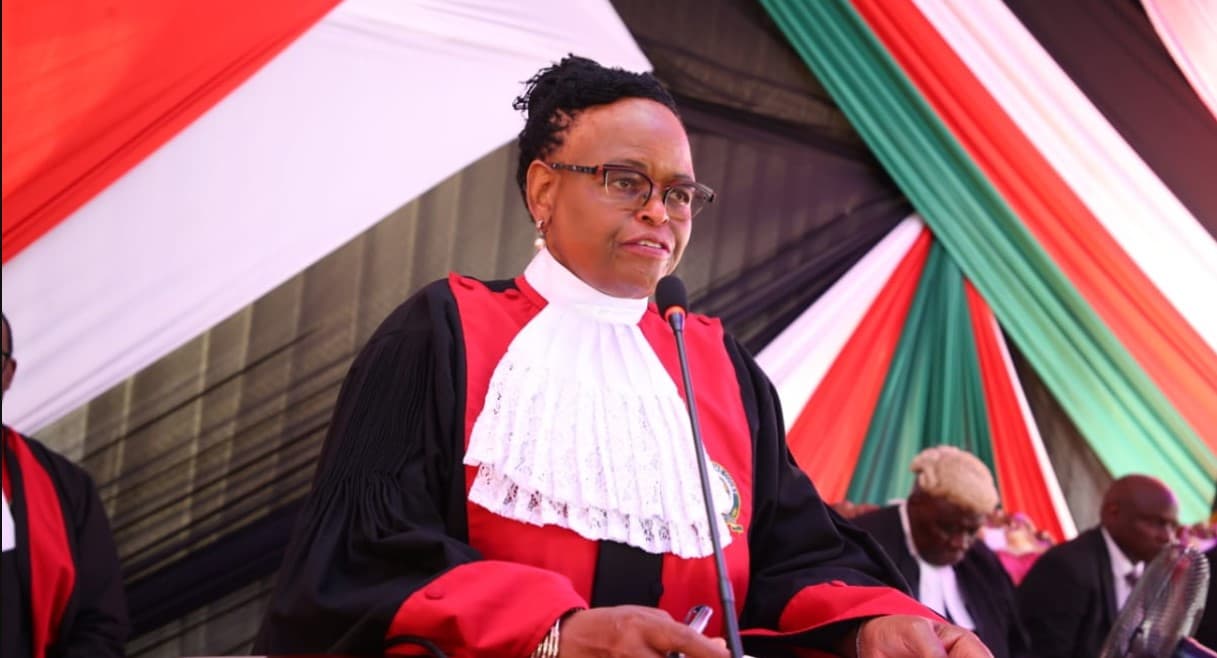
The Judiciary has begun preparations for the 2027 General Election, with Chief Justice Martha Koome announcing plans to train more than 400 judges and judicial officers to strengthen the resolution of electoral disputes.
The training programme, spearheaded by the Kenya Judiciary Academy and the Judiciary Committee on Elections (JCE), is aimed at ensuring election-related cases are handled competently, impartially and within the timelines prescribed by law.
In a statement outlining the preparations, Koome said the initiative would enhance the capacity of courts to deal with disputes arising before and after the elections, including election petitions and cases involving emerging electoral technologies.
“The programme is designed to strengthen the capacity of our courts to resolve electoral disputes competently, consistently, impartially and within the timelines prescribed by law,” she said.
The programme follows the completion of a specialised Training of Trainers exercise involving 40 participants who will support the wider training of judicial officers ahead of the polls.
The training will cover the constitutional and statutory framework governing elections, court jurisdiction, pre-election disputes, election petitions and the strict timelines within which electoral cases must be determined.
Particular emphasis will be placed on digital evidence, electoral technology and active case management as the Judiciary prepares to handle disputes that may arise from the increasing use of technology in election processes.
“Modern elections increasingly involve electronic records, digital communication and technology-based results management systems. Our Judges and Judicial Officers must be adequately equipped to assess digital evidence,” Koome said.
Beyond training, the Judiciary is strengthening its operational preparedness by reviewing case management procedures, registry operations, filing systems and hearing schedules to minimise administrative delays and safeguard litigants’ right to a fair hearing.
The institution is also assessing its human resource, financial and logistical requirements to ensure courts have adequate personnel and functional registries to handle the anticipated workload during the electoral period.
Koome said public communication would form part of the preparations, with the Judiciary seeking to engage the media and the public to counter misinformation and improve understanding of the electoral dispute resolution process.
She further reaffirmed the Judiciary’s commitment to independence and impartiality, saying courts would determine electoral disputes based on the evidence presented and the applicable law rather than political considerations or public pressure.
“Every case that comes before our courts will be considered on its merits, based on the evidence presented and the applicable law. Every litigant, regardless of political affiliation, status or position, is entitled to equal treatment,” she said.
The Chief Justice cautioned against attempts to influence judicial proceedings through political contests or public opinion, maintaining that all parties appearing before the courts would be accorded equal treatment.
She also called on the media to exercise responsibility in covering electoral disputes by distinguishing allegations from established facts and political commentary from judicial determinations.
“The Judiciary remains firmly committed to doing its part in safeguarding constitutional democracy and the rule of law,” Koome said.
She assured Kenyans that the courts would be prepared to handle electoral disputes brought before them in accordance with the law, as the country approaches the 2027 General Election.


Comments
No comments yet. Be the first to share your thoughts.