
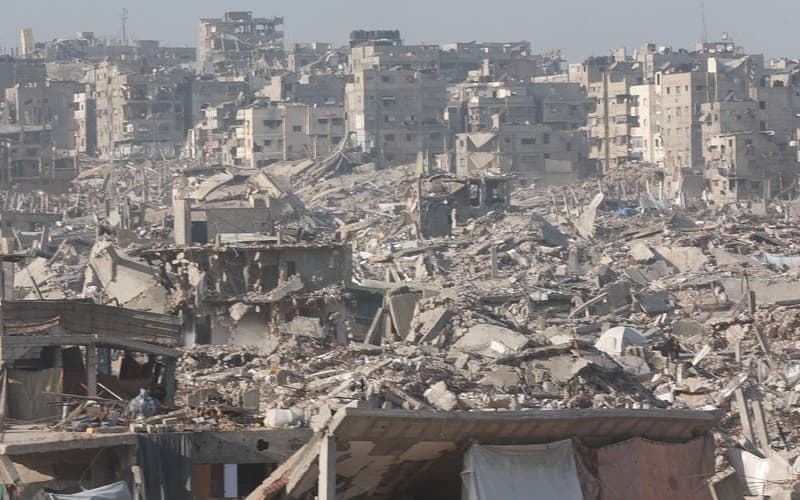
Dockworkers in more than 100 ports across 22 countries staged strikes and demonstrations on Friday, seeking to prevent civilian shipping facilities from being used to move weapons and military equipment to conflict zones, including those linked to Israel’s war in Gaza.
The coordinated action brought together more than 25 trade unions representing workers in ports across Europe and beyond.
The unions called for an end to the wars in the Middle East and opposed the growing use of transport infrastructure to support military operations, while also demanding better pay, safer workplaces and protection against job losses caused by automation.
The protests, reported in Turkey, France, Italy and Greece, among other countries, were part of an international campaign that sought to turn dockworkers' control over the movement of cargo into pressure against arms shipments. The level of disruption differed between locations, with organisers reporting both full-day strikes and shorter walkouts.
The campaign is based on a declaration adopted at the Third International Meeting of Dockworkers’ Unions in Istanbul on May 18 and 19.
Unions from more than 35 ports used the meeting to agree on coordinated action against the use of civilian infrastructure to support wars. In the declaration, the unions accused powerful governments and military alliances of seeking to involve port workers in the transport of weapons for conflicts.
“The governments, the USA, NATO, the EU and the monopolies want to make workers accomplices in the transport of weapons and military material destined for the slaughter of peoples,” the declaration stated.
The document called for an end to the killing of Palestinians, humanitarian access to Gaza and recognition of an independent Palestinian state within the 1967 borders, with East Jerusalem as its capital. It also opposed the US-Israeli war against Iran and other military interventions in the Middle East.
“Ports must not be used for the transport of weapons, ammunition, military equipment and troops. We call on unions to strengthen vigilance, to inform workers, to expose the cargoes of war, and to organise mass collective resistance with all our rightful available means and our struggle,” the unions said.
The declaration also linked opposition to military spending with workers' livelihoods, demanding higher wages, secure employment, better pensions and improved safety standards. It also called for public resources to be directed towards healthcare, education and other social needs rather than armaments.



Comments
No comments yet. Be the first to share your thoughts.