
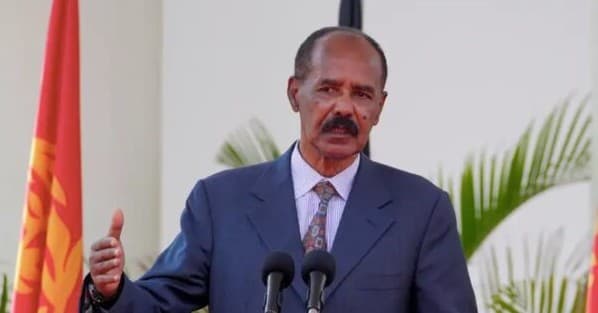
Eritrea accuses UK of pushing forced repatriations amid migration row

The Eritrean Embassy in London criticised the UK Home Secretary's proposed “corrective visa actions”, dismissing the move as a political gesture.
Eritrea has rejected claims by the United Kingdom (UK) that it abruptly withdrew cooperation on the return of its nationals, accusing the British government of politicising its asylum system.
In a statement issued on October 15, the Eritrean Embassy in London said Asmara had repeatedly communicated its opposition to forced returns to British officials and sought constructive dialogue on the dignified return of its citizens.
“Eritrea does not accept the forced return of its citizens and has duly communicated this fact to British government officials on various occasions,” the embassy said.
The statement was issued in response to remarks made by UK Home Secretary Shabana Mahmood on October 14, alleging that Eritrea had abruptly withdrawn cooperation on the “enforced and escorted return” of its nationals.
The embassy accused British authorities of failing to engage in meaningful discussions despite repeated requests from Eritrea.
“Despite Eritrea's repeated requests for constructive discussion with relevant UK authorities on the dignified return of its citizens, the UK has shown no interest in engaging in meaningful and appropriate dialogue,” the statement said.
Latest Stories
- African countries could save billions by cutting air pollution and greenhouse gases at the same time
- Nominated Senator Crystal Asige joins Winnie Odinga and Jalang’o in Nairobi Senate race
- Tusker FC suffer home defeat as Singida strike puts CAF Confederation Cup hopes at risk
- Ecuadorian priest dies after giant wooden crucifix crashes down on him during live-streamed Mass
It added that Britain continued to insist on enforced repatriation, which the embassy said contradicted the UK's own Country Guidance Policy on Eritrea.
The embassy also accused British authorities of failing to disclose that some returnees were convicted criminals serving prison sentences and of describing returns as voluntary when, according to the Eritrean government, they were not.
It said these practices prompted Eritrea to suspend the escorting of nationals whose returns were described as voluntary.
The embassy further criticised Britain's asylum policy, alleging that the government was granting blanket asylum to people claiming to be Eritrean in an attempt to undermine Asmara. It also claimed the policy encouraged migration to the UK and allowed some non-Eritrean asylum seekers to misrepresent their nationality.
The diplomatic mission criticised the UK Home Secretary's proposed “corrective visa actions”, dismissing the move as a political gesture.
“While the Home Secretary's current decision to impose ‘corrective visa actions’ is regrettable, the act is nothing more than a perfunctory political gimmick,” the embassy said.
It also claimed that Britain had not issued a visa to an Eritrean official since 2023.
“The fact is, the UK has not issued a single visa to an Eritrean official since 2023,” the statement said.

Comments
No comments yet. Be the first to share your thoughts.