
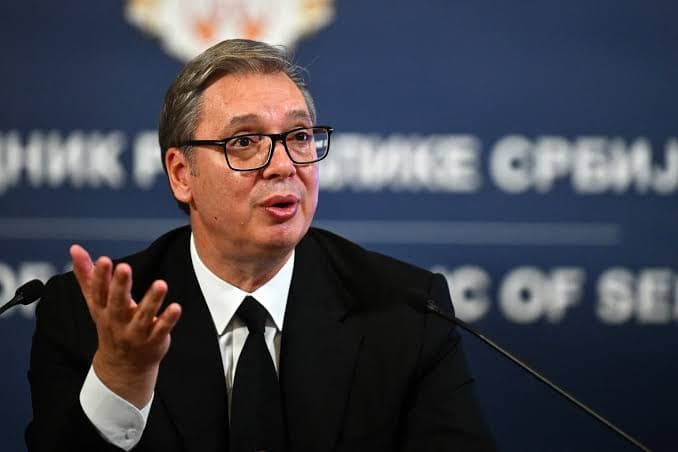
Aleksandar Vučić formally submitted his resignation as President of Serbia on Sunday, September 27, 2026, during a public address. He announced the decision during an interview with Radio Television of Serbia, stating he would submit his resignation around 8 p.m. local time.
Vučić stepped down in order to run for the position of Prime Minister in the upcoming snap parliamentary elections. He is the candidate for the ruling Serbian Progressive Party (SNS). He was serving his second and final presidential term and was constitutionally barred from seeking a third.
Following the resignation, Ana Brnabić, the Speaker of the National Assembly, assumed the role of acting president until a new head of state is elected. Under the Serbian Constitution, the acting president can serve for a maximum of 90 days.
Snap parliamentary elections are scheduled for October 25, 2026. These will be the 15th parliamentary elections since the introduction of the multi-party system in Serbia. Vučić dissolved parliament on September 9, 2026, to call the early elections.
Under Serbian law, a presidential election must be held within three months of the resignation, meaning voters will go to the polls twice this year. Vučić stated the presidential election would be called more than a month after the parliamentary vote.
In one of his final acts as president, Vučić used his constitutional powers to pardon 49 people. Of those, 23 were students and party loyalists suspected of offences related to the protests. Vučić said he made the decision despite opposition from security services.
He also excluded 12 people from the so-called “Novi Sad group” and pardoned 11 individuals who had attacked protest participants.
The resignation comes after more than a year of student-led protests and growing public discontent over allegations of government corruption. A major catalyst was the collapse of the Novi Sad railway station’s roof on November 1, 2024, which killed 16 people.
The reconstruction of the railway station was part of a capital state project based on a bilateral agreement between Serbia and China, not subject to the Law on Public Procurement. Public outrage pointed to shoddy construction and suspected corruption, forcing Construction Minister Goran Vesic to resign.
Protests began with student-led blockades of educational institutions on November 22, 2024. Every day at 11:52 am — the time the station roof fell — protesters halted traffic for 16 minutes of silence to honour the 16 lives lost. By early 2025, the anti-corruption protests had spread to over 400 towns and cities in Serbia, becoming the largest grassroots uprising in decades
Sustained pressure led to the resignation of Prime Minister Miloš Vučević and the Mayor of Novi Sad on January 28, 2025. Protesters continued their action, with their key request being a call for snap elections

Comments
No comments yet. Be the first to share your thoughts.