
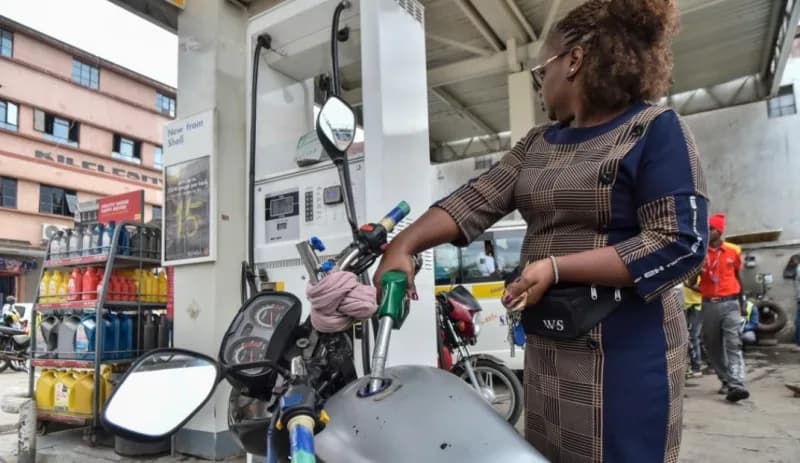
A Shell Petrol station in Nairobi

Kenya is expecting fresh deliveries of petroleum products at the Port of Mombasa this week.
This offers relief to consumers worried about fuel shortages as geopolitical tensions in the Middle East and rising global demand put pressure on international oil markets.
A shipping schedule by the Kenya Ports Authority (KPA) shows at least seven merchant vessels calling at the port, carrying petrol, diesel and other petroleum products.
The expected arrivals come against a worsening international oil-market outlook, with attacks on energy infrastructure and shipping routes in the Middle East raising supply risks and freight costs.
Early this week, the chief executive of the Energy and Petroleum Regulatory Authority (EPRA) told Parliament earlier this week that a cargo destined for Kenya had been attacked by a drone.
The disclosure has raised questions about the vulnerability of petroleum supply chains to the escalating conflict in the Middle East.
The development follows EPRA's latest fuel-price review, which pushed up pump prices and reignited debate over the cost of living and the broader economic consequences of expensive energy.
At Shimanzi Oil Terminal, the M.T. Bellatrix is carrying more than 21,000 tonnes of Shell V-Power petrol.
The V-Power consignment is destined for Vivo Energy Kenya, which exclusively imports and distributes the premium Shell-branded fuel in the country.
The company operates more than 350 service stations nationally and transports the product from Mombasa to Nairobi using Kenya Railways Corporation's rail tankers.
The largest shipments include the M.T. Torm Sublime and M.T. Maria, carrying 85,000 tonnes and 40,000 tonnes of diesel, respectively, for discharge at Kipevu Oil Terminal II.
The M.T. Pis Rinjani is also scheduled to discharge 85,000 tonnes of petrol at the terminal.
The M.T. Bow Lynx has 4,900 tonnes of base oil.
Together, the four petroleum-product cargoes account for at least 231,000 tonnes of petrol and diesel, excluding the base oil shipment.
The port is also scheduled to receive two vessels, M.T. Arctic Tern and Melati 3, carrying palm oil.
The supply disruption amid heightened demand has further pushed up global prices.
Brent crude prices climbed to a five-month high on Thursday, with the benchmark rising to $111.24 per barrel as attacks by Yemen's Iran-aligned Houthis heightened fears of disruptions to oil shipments around the strategically important Bab el-Mandeb shipping route.
The escalation is adding to concerns over the security of regional energy infrastructure and maritime trade.
The International Energy Agency (IEA), in its October Oil Market Report, said renewed hostilities had undermined the recovery of Middle Eastern oil supplies.
Brent futures had risen 13 per cent since the beginning of September to around $107 per barrel, while the North Sea Dated physical benchmark climbed to $134 per barrel.
The agency also warned that diesel markets remained under severe pressure as disruptions to Middle Eastern and Russian exports reduced supplies ahead of the Northern Hemisphere winter.
Global diesel exports in September were about 700,000 barrels per day lower than a year earlier, while combined net exports from the Middle East and Russia fell by more than 60 per cent year-on-year.
The approaching winter is particularly important for Europe, where households and businesses typically increase heating-related energy consumption.
The IEA says falling inventories and seasonal demand are tightening diesel markets, with supply constraints potentially extending into 2027.
The pressure is not confined to crude oil.
The IEA's gas-market assessment found that the conflict disrupted liquefied natural gas shipments through the Strait of Hormuz, which had accounted for almost a fifth of global LNG supply.
The disruption drove European and Asian gas prices to their highest levels since the 2022–2023 energy crisis.
The international turmoil is already feeding into Kenya's domestic fuel prices.
In its latest monthly review, EPRA raised Nairobi's maximum petrol price by Sh12.93 per litre to Sh226.96, diesel by Sh9.90 to Sh227.76 and kerosene by Sh28.49 to Sh219.87.
The increases threaten to raise transport and logistics costs, adding pressure to food prices, manufacturing expenses and the cost of distributing goods across the country.



Comments
No comments yet. Be the first to share your thoughts.