
The Trump administration has preemptively filed a lawsuit seeking to block certification of Alaska’s US Senate election if the Republican incumbent Sen. Dan Sullivan loses in the critical contest which could decide the balance of power in the Senate.
The lawsuit represents the latest attempt of the Trump Justice Department to insert itself in the administration of elections, running up against the minimal role the Constitution gives the Executive Branch. It alleges that a candidate named Daniel J. Sullivan could confuse voters and wants a court to potentially delay the certification of the election if Sen. Sullivan is defeated next month.
The lawsuit is based on a “strange and unusual” legal theory, said Derek Muller, an election law professor at Notre Dame Law School. It’s also unclear, he said, how a court could intervene the way the DOJ proposes.
The battle for control of the Senate could come down to Alaska, where there has been little reliable polling but where Dan S. Sullivan, the incumbent senator, and Democrat Mary Peltola have campaigned in a close race. Democrats need to net four seats in November to win the Senate, and Alaska is one of several Republican-held states that Democrats are hoping to flip.
The presence of the second Sullivan has brought additional controversy to the race and has already been a source of litigation, as Republicans have alleged he is running a spoiler candidacy designed to confuse voters.
Daniel J. Sullivan is a registered Republican, but state election officials listed him on the ballot without a party affiliation. Sen. Sullivan is labeled on the ballot as “Registered Republican” and “incumbent.”
In the primary, the incumbent Dan Sullivan won 68,726 votes. Daniel J. Sullivan won 4,107.
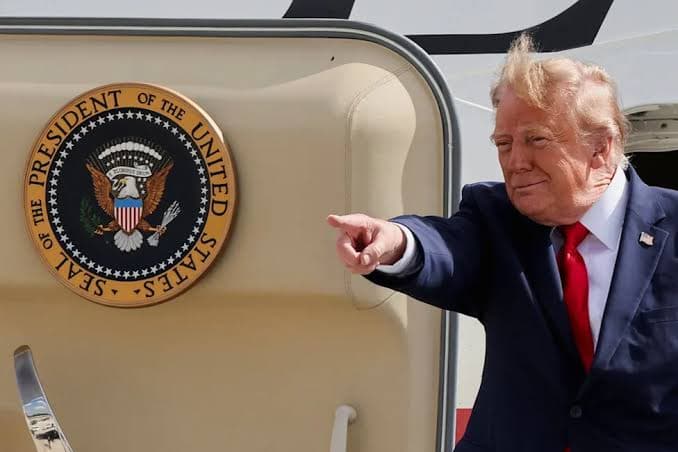
President Donald Trump suggested earlier this week that his administration might take legal action over the issue, complaining in a Truth Social post that having a second Dan Sullivan on the ballot amounted to cheating in the election.
“It’s ridiculous that the Court didn’t stop this SCAM. Even 1, 2, or 3% could make the difference,” Trump wrote. “We are looking at powerful legal options to remove the fraudulent Daniel J. Sullivan Jr. from the Ballot, and holding the Democrats accountable for their Election Interference, in the pursuit of Justice and Fairness.”
Trump this month also held a rally in Wasilla, Alaska.
“It’s just cheating,” he said of the ballot having two Dan Sullivans. “They found a guy named Dan Sullivan. They put him up to get a little confused.”
The lawsuit points to the preface of a federal law setting guardrails on states’ voter registration procedures that protects the “integrity of the electoral process” as giving the court the power to intervene.
“The United States likewise suffers an injury when the certification of the election for a federal office is tainted by a frivolous candidacy because that undermines confidence in the make-up and workings of the federal government,” the lawsuit says.
Muller said he had never seen an attempt to use the introductory federal voter registration law in the way the DOJ is now.
“They’re just plucking from the preface and saying this gives them a free-wheeling right to enjoin operations in a state, and I just don’t think a court is going to buy that,” Muller said.
Under Alaska’s voting system, the top four candidates from the primary, regardless of party, advance to the general election. On the general election ballot, voters have the option to rank the candidates in order of preference. If no candidate gets a majority of first choice votes, voters’ other rankings come into play. In each round of the tabulation, the candidate with the fewest votes is eliminated, and their votes are reallocated to whoever those voters ranked next highest. That process continues until there’s a winner.
DOJ alleges there is a possibility that voters intending to cast ballots might not rank the incumbent senator at all, or will rank Daniel J. Sullivan over him, resulting in the challenger’s votes going to the Democratic candidate if the race goes into additional rounds of tabulation.
“Even if a majority of Alaskans wish to vote for Senator Sullivan, Daniel J. Sullivan’s presence on the ballot will result in a victory for Peltola,” the lawsuit states.
However, a ranked-choice system could help reduce the impact of this kind of confusion.
Unlike in a traditional election where voters can only pick one candidate, an Alaska voter who wanted to vote for the incumbent could simply rank both Sullivans first and second, in any order. Assuming Peltola doesn’t win a majority of first choice votes, their vote would eventually go to the incumbent, who is likely to have much more support.
In June, ahead of the state’s primary, the Alaska state Supreme Court ruled that Daniel J. Sullivan should be included on the ballot after the state’s Division of Elections had removed him.
Muller noted that Alaska election officials “went out of their way” to reduce voter confusion, by including on the ballot the candidates’ middle initials, identifying Dan S. Sullivan as the incumbent, and leaving off the GOP party designation of the other Daniel Sullivan.
“This is friendly fire, this is suing Republicans in Alaska, I don’t know that is going to be taken by state officials,” Muller said.
The administration is asking the court to declare unlawful the certification of a result that was “impacted by voter confusion” and to block election officials from certifying that result until there was an “investigation” into whether voters meaning to vote for the incumbent had cast ballots for other Sullivan.
But because ballots would be co-mingled, it is not clear how such an investigation would identify which voters may have cast ballots for a Dan Sullivan they didn’t intend to voter for.
“This is just the stuff that is just impossible to measure after the fact,” Muller said.
Alaska election officials expect to start the ranked-choice tabulation process on November 18, more than two weeks after Election Day, following the deadline for overseas ballots to arrive. The new case has been assigned Judge Sharon L. Gleason, who was appointed by President Barack Obama. The administration has not yet made any emergency requests for the court to take an immediate action.
Ben Ginsberg, an election law attorney who once the Republican National Committee’s top election counsel, said that there are many legal reasons why a federal court wouldn’t be inclined to grant what the administration wants. That includes Thursday afternoon’s ruling from the Supreme Court freezing a court ruling blocking a New Hampshire voter ID policy, under the theory that federal courts shouldn’t change voting policies when elections are near.
Ginsberg also noted that, like a recent DOJ lawsuit seeking the segregation of California ballots, this case was filed by offices of political appointees in Washington who do not normally spearhead this type of litigation.
“I think they must have a client who is demanding it,” Ginsberg said. “There is not a rational legal reason to do it.”
By CNN


Comments
No comments yet. Be the first to share your thoughts.