
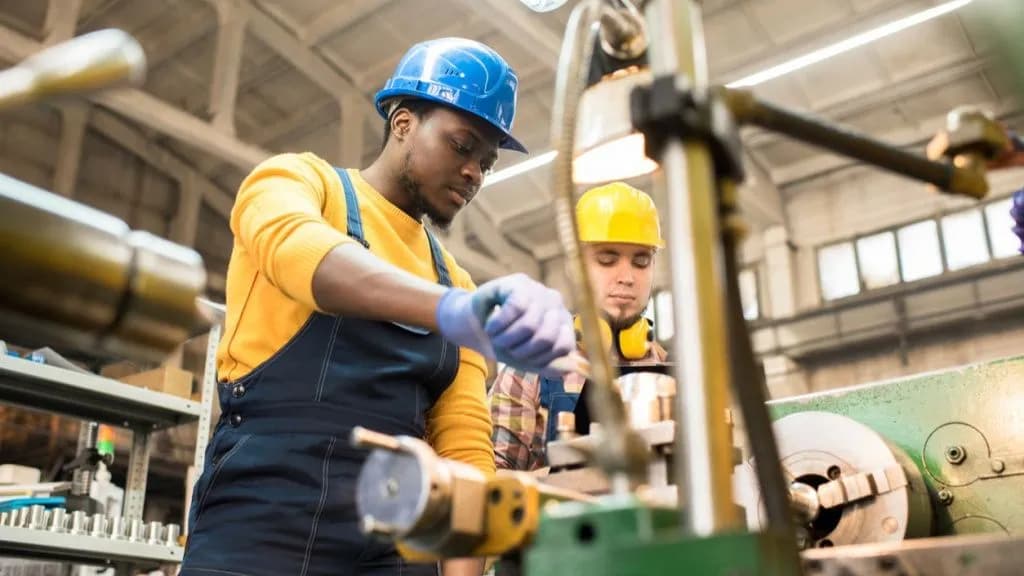
From commodity trade to industrial cooperation
The Third Russia–Africa Economic and Humanitarian Forum will take place in Moscow on 28–29 October 2026. TV BRICS is an international media partner of the forum. One of the key objectives of the economic agenda is to identify which areas of cooperation can move beyond trade and individual infrastructure projects to generate a long-term industrial impact.
For Russia, such a transition means an opportunity to develop sales markets, supply equipment and technologies, create service infrastructure and participate in investment projects. For African countries, it means expanding their industrial base, increasing the share of raw-material processing, developing engineering expertise and strengthening national businesses. At the same time, the interests of the parties do not always coincide: a supplier may find it more profitable to export finished products, while the recipient country is interested in localising production and transferring technologies.
Both African countries and Russia have changed in recent years. The concept of healthy protectionism is gaining momentum on the continent – the drive to establish greater sovereignty over resource extraction, extend production chains and localise raw-material processing. The slogan “Made in Africa for Africans” is becoming an economic reality. This means that it is no longer enough for Russian companies simply to act as suppliers: market demand is shifting towards the creation of ecosystems in which several operators work simultaneously within one country – from industry and energy to logistics, payment systems and education.
The economic outcome therefore depends on whether the commercial logic of a project can be aligned with the development objectives of the host economy. African partners need to assess what proportion of added value will remain within the continent’s economies. Russian companies need to take into account localisation costs, demand characteristics and investment payback periods. Financial institutions need to understand which cash flows will be used to service debt.
At the same time, Africa is not a single market. Egypt, Ethiopia and South Africa – BRICS member countries – have different production capacities and face different economic challenges. Nigeria and Uganda participate in BRICS+ as partner countries. Regional organisations, including the Common Market for Eastern and Southern Africa (COMESA), the Southern African Development Community (SADC) and the African Continental Free Trade Area (AfCFTA), can expand market opportunities, but they do not eliminate differences in infrastructure, regulation and purchasing power.
Trade: mutual demand as a basis for industrial cooperation
Trade remains the foundation of Russia–Africa economic ties. Russia’s trade with African countries in 2025 exceeded US$27 billion. Grain, mineral fertilisers, energy resources and metals account for a significant share of Russian exports. Imports in the opposite direction include coffee, cocoa, tea, fruit and vegetables, nuts, seafood and certain types of mineral raw materials.
The structure of trade needs to change on both the export and import sides. According to Kinfu Tafesse Zenebe, President of the Union of African Diasporas in Russia, and the Association of the Ethiopian Community in Russia and the CIS, imports from Africa currently consist primarily of raw materials and agricultural products, but this needs to change:
“Imports from Africa should be encouraged in other segments – niches should be identified for supplies of African textiles, wood products and processed agricultural products, rather than only unprocessed goods,” he stated.
For Russian companies, this opens up opportunities to participate in the creation of processing facilities in Africa, with the prospect of subsequently supplying finished products to Russia and EAEU markets.
For African countries, imports of food and manufactured goods help meet domestic demand. However, the long-term objective for many of the continent’s economies is not only to secure supplies but also to develop their own production, processing and technological capabilities. For Russian exporters, in turn, expanding cooperation may mean moving from one-off transactions to sustainable relationships with local enterprises and customers.
This interconnection is particularly evident in the agricultural sector. Grain supplies help meet market demand, but in themselves do not create local capacity for producing flour, vegetable oils, animal feed and finished food products. Developing processing can increase the share of value generated within African economies and create additional demand for equipment, technical services and skilled labour.
Fertiliser, in essence, represents an entry point into a service-based model. By 2030, Africa’s fertiliser market could grow to US$20 billion.
However, the availability of raw materials and consumer demand does not in itself mean that constructing a processing plant will be profitable. It is necessary to assess supply stability, energy costs, access to working capital and the ability to sell finished products on a regular basis. If the domestic market is insufficient, the project’s economics may depend on exports to neighbouring countries. If transport costs are high, they can offset the advantages of local processing.
For an investor, it is essential to distinguish between trading margins and returns on a productive asset. The former arise from a particular transaction, while the latter depend on capacity utilisation, fixed costs and the sustainability of cash flows over many years.
Localisation: where partners’ interests converge
Localising production is not a universal solution. Its feasibility depends on the size of the market, the cost of capital, the technological complexity of the product and whether the advantages of local production can offset additional costs.
Localisation in resource industries faces a systemic problem. In Zambia, for example, foreign suppliers dominate the market for goods and services for mining companies. Local businesses are unable to compete because they lack access to long-term capital and production technologies and, most importantly, because of electricity shortages. Localisation requirements or supplier programmes will not work unless these underlying problems are addressed at the same time. For Russian companies, this means that a localisation project in the mining sector should include not only equipment supplies but also solutions related to energy efficiency and financing for local partners.
The first model is the export of equipment with technical support. A Russian company supplies products and provides installation, servicing and staff training. The African partner gains access to technology without having to finance the creation of its own production facility immediately. Such a model makes it possible to test demand and gradually develop local expertise, although it may preserve dependence on imported components and external technical support.
The second model is local assembly. It requires a production site, warehouses, personnel, quality control and working capital. For the host country, this is an opportunity to increase the share of local operations and create jobs. For the supplier, it means bringing production closer to the customer and potentially reducing some logistics costs. However, if demand is limited, the additional costs of organising assembly may make the products more expensive than imported alternatives.
The third model is joint production with regional reach. Partners share capital expenditure, production functions and commercial risks. The African side can provide local infrastructure, market knowledge and links with national enterprises, while the Russian side can contribute equipment and technological expertise. The sustainability of such a model depends on agreements concerning technology rights, quality requirements, component supplies and revenue distribution.
Regional integration can work through demand aggregation. One example is the joint procurement mechanism being developed by AfCRA and the United Nations Economic Commission for Africa. It involves pooling demand from several countries for the procurement of medicines and medical equipment. This is critically important for localising pharmaceutical production in Africa: aggregated demand from several countries creates the scale required to make local production commercially viable. For Russian pharmaceutical manufacturers, this means that entering African markets may require participation in joint procurement mechanisms.
Certification remains a critical barrier. Russia intends to bring standards and certification approaches used by Russian and African authorities closer together. For an investor, this means that a production project must take into account the technical regulatory requirements of the recipient country from the outset: without this, products will not reach the market even if production has been localised.
Regional integration can make joint production more attractive by expanding the potential market. However, a country’s participation in COMESA, SADC or AfCRA does not in itself guarantee unrestricted access to all markets within these groupings. Before an investment decision is made, rules of origin, tariff conditions and certification requirements need to be examined.
Potential differences in interests also need to be taken into account. An African state is interested in creating jobs and acquiring technology, while an investor seeks to preserve competitiveness and achieve an acceptable payback period. The task of a joint project is to determine a level of localisation at which the national economy gains new capabilities while the enterprise remains commercially sustainable.
Egypt: energy and the development of industrial expertise
Egypt is of interest as an independent participant in industrial and infrastructure development. The country seeks to increase productivity, expand its industrial base and create skilled jobs. Russian companies can participate in these processes through equipment supplies, engineering services, energy projects and cooperation with local enterprises.
One of the largest-scale examples is the construction of the El Dabaa Nuclear Power Plant with the participation of Rosatom. The project includes four power units with VVER-1200 reactors and a total capacity of 4,800 MW. For Egypt, the plant is important for the development of its energy system and the training of national specialists. For the Russian side, the project involves a long-term cycle of cooperation encompassing equipment supplies, technical solutions and personnel training.
The economic outcome of such projects is determined not only by initial capital expenditure and future electricity generation. For the host country, the reliability of operations, the facility’s life-cycle costs and the ability of national organisations to participate in infrastructure maintenance are important. For the supplier, the key factors are the quality of project implementation, fulfilment of obligations and the sustainability of long-term cooperation.
Developing local service capabilities can gradually expand the participation of Egyptian enterprises in maintenance and other operations. However, the level of localisation must comply with safety and quality requirements: in capital-intensive sectors, premature substitution of imported components can increase costs and risks.
Egypt’s example shows that technology transfer generates an economic effect when it is integrated into the development of national capabilities. For the Russian side, this requires taking into account the customer’s long-term needs, while for Egypt it means identifying which functions local specialists and enterprises will be able to perform independently on a sustainable basis.
Ethiopia: food security and agricultural technologies
For Ethiopia, agricultural development is linked to employment, food supply, incomes and the resilience of the domestic market. The vulnerability of some regions to drought and limited storage infrastructure increases the importance of technologies capable of improving productivity and reducing losses.
Russia–Ethiopia cooperation in this area may include supplies of agricultural machinery, irrigation development, crop storage, processing and the exchange of agronomic expertise. For Ethiopia, the desired outcome is more sustainable production and broader opportunities for local enterprises. For Russian partners, it is demand for equipment, technological solutions and services suited to local agricultural conditions.
Cooperation in agriculture is not limited to supplies of machinery and fertilisers. The Russia–Ethiopia agenda also includes supplies of veterinary vaccines, breeding and seed production. These areas require the transfer of technologies, specialist training and certification.
Additional opportunities are opening up through the use of digital and geospatial technologies in agriculture. Earth remote sensing data can be used to monitor crops, assess vegetation conditions and observe water resources. However, their practical value depends on integration with agronomic data, the availability of infrastructure and the ability of local specialists to apply monitoring results when planning production. For Russia–Ethiopia relations, this represents a potential area for further cooperation.
The economic value of such technologies depends on their practical application. Crop monitoring can improve harvest forecasting, while information about water resources can help plan irrigation. However, this requires high-quality data, connectivity, trained specialists and organisations capable of using monitoring results in operational decisions.
A separate area is space technologies. Russia intends to cooperate with the African Space Agency, including through joint research and information exchange. For Russian companies, this opens up a niche in providing Earth remote sensing data processing services – from monitoring agricultural land to managing natural-disaster risks. However, the commercial effect depends on the availability of ground infrastructure and trained specialists capable of interpreting the data.
Nuclear projects are not limited to power generation. Ethiopia is considering the creation of a Russian-designed Centre for Nuclear Science and Technology. For the host country, this represents a growth point for capabilities: specialist training, the development of nuclear medicine and scientific research. For Russian partners, it means a long-term presence in education and science that creates demand for equipment and services for decades to come.
Energy can provide a foundation for industrial development. The Russia–Ethiopia agenda includes the modernisation of hydropower plants with the installation of high-tech equipment, followed by the construction of industrial facilities based on this energy potential. For an investor, this means that an energy project should be assessed by the types of production it makes possible – from raw-material processing to cold-storage facilities.
Agricultural processing complements the technological dimension. Plants producing flour, oils, animal feed and finished food products can increase the share of added value generated within the country. However, investment is justified only where there is a raw-material base, affordable energy, working capital and confirmed demand. Regional markets in East Africa can expand sales opportunities, but their accessibility needs to be confirmed through calculations relating to logistics, certification and product competitiveness. The prospects for cooperation in Ethiopia are linked not to importing technologies as such, but to their contribution to agricultural productivity, reducing losses and developing national enterprises.
South Africa: industrial services and regional markets
South Africa has industrial and port infrastructure, while its participation in BRICS and the Southern African Development Community (SADC) provides a basis for discussing cooperation with a regional reach. For South Africa, increasing productivity, developing technological capabilities and strengthening national industry are important. Russian companies may be interested in cooperating with local manufacturers, supplying equipment and creating service solutions.
One potential model is the joint maintenance and repair of industrial equipment, the supply of selected components and the training of technical specialists. For South African enterprises, this provides an opportunity to broaden their capabilities and gain access to new technological solutions. For Russian companies, it offers a way to develop a service base closer to customers and build more sustainable relations with industrial partners.
South Africa’s example highlights the importance of the capabilities already present within African enterprises. The most productive model of cooperation does not assume that local industry is starting from scratch but rather complements its existing capabilities with new technologies, equipment and joint service solutions.
Financing and payments: risk allocation
The transition from trade to production requires a different financing model. An export contract may involve a relatively short payment cycle, while establishing an enterprise requires capital investment before revenue is generated. Sources of financing, investment repayment periods, loan collateral and the allocation of risks between the state, banks and private investors therefore need to be agreed in advance.
The institutional framework for this is already being created. VEB.RF and the Russian Ministry of Economic Development have developed a concessional lending instrument for investment projects in Africa. VEB.RF’s approved participation in a single project can reach US$100 million. The funds are intended to cover capital and operating expenditure by Russian investors. For businesses, this means that a concrete support mechanism is emerging at the project-entry stage, although the final decision still depends on commercial preparation and risk assessment.
Industry experts also point to the limitations of exclusively bilateral mechanisms. According to business, education and Global South expert Raymond Matlala, a multilateral framework is important for capital-intensive projects:
“Institutions such as the New Development Bank and the African Export-Import Bank could play an important role in supporting infrastructure development, industrial investment and trade finance,” Raymond Matlala stated.
Alongside financial mechanisms, the human factor can also be an important tool for reducing risks. According to expert Kinfu Tafesse Zenebe, President of the Union of African Diasporas in Russia, the diaspora can serve as a connecting link: “Diaspora representatives can help companies analyse markets, identify partners, and launch and localise pilot projects – similar to the approach China has long been using.”
For enterprises in African countries, access to long-term capital on terms that correspond to project cash flows is important. Russian companies need predictable payments and the ability to control costs. Banks require transparent ownership structures, confirmed demand and sufficient cash flows to service debt.
Currency risk is particularly important. If an enterprise sells products in local currency but purchases equipment or repays obligations in a foreign currency, exchange-rate movements can weaken the financial result even when sales remain stable. The financing currency should, therefore, wherever possible, correspond to the structure of revenues and expenditure, while available risk-management instruments need to be assessed before the main contract is signed.
The financing challenge in Africa has both commercial and political dimensions. This concerns high debt burdens, the cost of capital and limited access to concessional financing. African countries are seeking reform of multilateral development banks and greater representation in international financial institutions. For Russian banks and investors, this means that participation in projects can be accompanied by political support for African initiatives aimed at changing the global financial architecture, which could reduce country risks over the long term.
Project economics can also change through state-support instruments. One example is the increase in reimbursement of transport costs for dairy products to 100 per cent. For exporters, this has provided an incentive to enter African markets. However, such support needs to be linked to a long-term strategy: transport reimbursement can help at the initial stage, but it does not solve the challenge of localising production and creating added value.
A separate aspect of the challenge is the financing of working capital within supply chains. This involves instruments that allow suppliers to receive payment before the buyer’s payment deadline, reducing liquidity gaps. According to the United Nations Conference on Trade and Development, Africa accounted for 1.9 per cent of the global volume of supply-chain finance in 2022 (US$2.2 trillion), making the continent the least developed market in this area. For Russian banks and investors, this means that participation in such mechanisms could become a separate niche, although it requires credit-risk assessment and counterparty due diligence.
Settlements in national currencies can reduce dependence on particular payment channels, but they do not in themselves eliminate conversion challenges, liquidity shortages or mismatches between the currencies of revenues and liabilities. The effectiveness of such mechanisms is determined by the availability of banking channels, transaction volumes, transfer costs and regulatory compatibility.
Digital payment solutions and electronic document management can reduce administrative costs and transaction-processing times. However, their commercial rationale depends on the number of users, system interoperability and a sustainable flow of transactions. For African banks and enterprises, integrating new instruments with existing infrastructure is important. For Russian participants, predictability of settlements and compliance with applicable requirements are key considerations.
Human resources: conditions for long-term technological independence
Technology transfer produces long-term results when specialists in the host country are able to operate equipment independently, carry out maintenance and develop production processes. For African countries, this is a matter of creating skilled employment and strengthening national capabilities. For Russian partners, it is a condition for the reliable operation of the solutions supplied.
Targeted training programmes are becoming an effective mechanism for aligning interests. Today, 37,000 African students study at Russian universities – more than during the Soviet period. Behind this figure are specific economic models. For example, Rosatom has already trained more than 300 African specialists who are being integrated into national nuclear projects in Egypt, Rwanda, Ghana, Nigeria and South Africa. Increasingly, the African side itself acts as the customer. For example, one of Ghana’s largest corporations commissioned Patrice Lumumba Peoples’ Friendship University of Russia (RUDN University) to train 121 agronomists and environmental specialists. In this case, personnel training becomes part of the investment project, supporting its long-term operation.
At the same time, Raymond Matlala points to the limitations of traditional scholarships and academic exchanges.
“Cooperation should move beyond traditional scholarships and academic exchanges towards practical industrial training, joint research, internships and technology transfer,” expert Matlala said.
In his assessment, the criterion for success is the ability of African specialists to manage industries independently.
“Ultimately, the success of Russia–Africa cooperation should be measured not only by the infrastructure created or investment attracted but also by the number of African specialists equipped with the skills to manage these sectors independently and develop them further. This would mark an important step – a transition from technological dependence to sustainable industrialisation in Africa,” commented Raymond Matlala, Founder and Chairman of the South African BRICS Youth Association.
The institutional foundation for this is already taking shape. Plans envisage the development of the Russian-African Network University and expanded cooperation between Russia and the Pan African University. For Russian companies, this means an opportunity to use these network structures to commission the training of specialists for specific production tasks – from engineering to digital skills.
Another area is the local provision of educational services. Branch campuses of Russian universities are planned in African countries. For investors, this reduces dependence on visa and logistics constraints: specialists for a specific enterprise can be trained directly in the country where the project is being implemented, with the programme adapted to local conditions and equipment.
Personnel training should be two-way. According to Kinfu Tafesse Zenebe, President of the Union of African Diasporas in Russia, partnership requires systematic work in both directions:
“Russians should study at African universities, while concepts, project solutions, infrastructure facilities and business plans should be developed directly on the ground,” the expert said.
Adapting projects to local conditions cannot be merely formal: without an understanding of the local context and the training of specialists on the ground, the risk of errors increases.
Training requirements differ by sector. Energy requires long-term programmes and strict safety standards; agriculture requires expertise in processing, irrigation, storage and digital monitoring; industry requires engineers, technologists, maintenance teams and quality-control specialists.
Training outcomes should be assessed not by the number of courses delivered but by the ability to apply skills in practice. Relevant indicators include the share of local specialists in technical services, the ability to carry out maintenance independently, reductions in repair times and the participation of national enterprises in the production chain.
For the host country, it is important that training corresponds to the needs of the economy and is linked to real jobs. For the technology supplier, trained specialists need to ensure safe operation and maintain service quality. In this case, personnel training becomes part of the project’s economic model rather than a separate humanitarian component.
From agreements to investment decisions
In a joint statement by Russia and the African Union following consultations on 7 July 2026, the parties expressed their intention to adopt a new action plan for 2027–2029. The document is expected to define areas for further cooperation and help deepen interaction in fields of mutual interest. The specific content of the new plan therefore still needs to be agreed.
The practical significance of the plan will depend on how successfully broad priorities can be linked to specific projects. For African countries, it is important to align cooperation with national objectives in industrialisation, food security, energy and human capital development. For Russian companies, it is important to have clear conditions for working with local partners and the ability to assess commercial prospects before making an investment decision.
Banks and investors need well-prepared projects with identified customers, sources of financing, timelines and risk allocation. One criterion for the effectiveness of the summit should therefore be the advancement of initiatives from declarations to financial close, construction and sustainable operation.
BRICS+ can serve as a platform for exchanging experience and coordinating areas of cooperation, while the African Union and regional organisations can help align bilateral initiatives with the objectives of continental development. However, a multilateral framework cannot replace commercial preparation: each project requires an individual assessment of demand, infrastructure, regulation and financial sustainability.
Looking towards 2027–2029, the most realistic areas are agricultural processing and storage, servicing of energy and industrial equipment, the digitalisation of trade and production, as well as local assembly where the scale of demand justifies additional capital expenditure.
For African countries, the results should include growth in local added value, stronger national enterprises, the creation of skilled employment and greater economic resilience. For Russian companies, they should include solvent demand, long-term contracts and acceptable returns. For both sides, the objective is a functioning model of financing and production capable of remaining sustainable after the initial investment phase has been completed.
Progress should be assessed using measurable indicators: the number of operating joint ventures, the share of local production operations, the participation of national suppliers, capacity utilisation and the competitiveness of products in regional markets. For capital-intensive projects, the ability to service financial obligations and resilience to changing currency conditions are also important.
The Russia–Africa Summit, as well as the Third Russia–Africa Economic and Humanitarian Forum, can give this process political momentum, but its long-term significance will be determined by the quality of the projects implemented. A sustainable partnership emerges where African states gain new industrial and technological capabilities, Russian companies gain promising markets and reliable partners, and joint investment generates a measurable economic effect for both sides.
Courtesy/TV BRICS


Comments
No comments yet. Be the first to share your thoughts.