
By Prof. Luis G. Franceschi
NAIROBI, Kenya, Oct 29 – Trust is like a calabash. It is cheap and found everywhere, yet it carries the most important things in life: palm wine at weddings, milk in many of our communities, water for a guest, offerings at ceremonies. One fall is enough to crack it. A cracked calabash may be mended…but it never holds water quite the same way again.
Almost ten years ago, I wrote in my Daily Nation column that every democracy, sooner or later, faces the triple ‘T’ test: Time, Truth and Trust.
Time, because societies grow weary of long-staying leaders. Today’s politics and economics demand change, agility and speed; our governance systems were not designed for them. Our youth want solutions now, or at least an explanation of why change cannot come now. We ask them to be patient. They answer with the old prayer: “Lord, give me patience…and I want it now!” Instead, we offer them some of the longest-serving presidents in the world. Truth, because citizens read between the lines. They know who steals, how much, and who lies. In the age of social media, integrity is audited in real time. When truth is manipulated, conspiracy theories multiply and trust breaks.
Trust, because that is what Kenya’s Constitution was built for. Devolution was meant to bring accountability to the people’s doorstep, to close the gap between the governor and the governed, and to let citizens judge leaders by what they deliver. Then we sold our birthright. We allowed Parliament to water down Chapter Six on Leadership and Integrity.
Truth and trust travel together. Where truth is missing, we pay to replace trust: auditors in companies, grills on our windows, padlocks on our bicycles … and guns in society. Scale that up to nations and you get bloated ‘defence’ budgets and an arms race. The less trust, the more conflict.
The New Calabash
In 1945, humanity found a new calabash. The United Nations was born, the world promised ‘never again war’, and in 1948 the Universal Declaration of Human Rights sealed that hope. It soon cracked. Justice was eroded by an arms race that always called itself ‘defence’. Truth was bent by a political discourse that first ignored slavery, then justified colonisation and extraction for quick profit. Friendship was betrayed, and still is, in the treatment of migrants, many of them victims of modern slavery cartels.
Today the cracks show in steel. Global military expenditure rose by 41%, to a record USD 2.89 trillion in 2025. International arms transfers grew by 9.2% in 2021–2025; transfers to Europe rose by more than 210%. When great powers stop trusting one another, the factories run at full capacity…and what they produce must go somewhere.
When trust collapses, at the top or at the bottom, weapons fill the vacuum. They flow to where the vacuum is deepest. Today, that is Africa.
Less guns but more conflicts?
Curiously, Africa’s recorded arms imports fell by 41% over the same period. Yet the wars multiply. In 2025, Africa recorded 29 state-based armed conflicts, against an annual average of about 12 in the 2000s. That is nearly 45% of all such conflicts in the world. And all this with decrease rates of arms import?
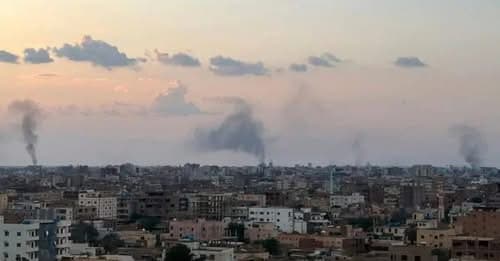
What does not come through the front door comes through the back. UN investigators have traced military supplies to Sudan’s warring parties through Chad, south-eastern Libya and Puntland. Drones consistent with the Bayraktar series have appeared in Sudan, eastern DRC and Ethiopia. War no longer stops at the front line. Between January and May 2026, drone strikes in Sudan killed more than 1,000 civilians.
The Arms Trade Treaty and our own Nairobi Protocol exist to stop this. But a treaty is a promise, and promises hold only where there is trust. If we look at distrust as the disease; then weapons are the symptom. We cannot keep just treating the symptom.
Mending the calabash
The calabash is broken. Can we mend it?
Globally, we need a courageous Secretary-General who can bring parties back to the table and return the United Nations to what it was founded for: peace. In Africa, we need deeper regional dialogue, where mediation is not a contest of winners and losers. In Kenya, we need to drive back to 2010 and pick up the constitutional momentum we dropped along the road.
As the Government of Kenya convenes its conference on trust, I would offer three takeaways, one for each ‘T’.
A new look at the ‘T’s
Time. Give our youth a seat and a timetable. A standing national dialogue with young people, with public deadlines for answering what they raise, would tell them that they are heard today, not someday.
Truth. Lifestyle audits of public servants, greater transparency on expenditure and procurement, swift action on irregularities reported by the Auditor General, scrutiny by and of Parliament. What can be seen can be checked; what can be checked can be trusted.
Trust. Restore Chapter Six. Integrity standards must have teeth, and those who fail them must not hold public office. Alongside this, we need permanent national and county peace structures where grievances are heard before they reach for a gun. This is particularly important as we enter an election year.
A broken calabash cannot be bought back. It must be mended, patiently, by many hands. We all have our part to play. I pray that we may have the courage to begin.The author is Kenya’s Special Envoy on Mediation and immediate past Assistant-Secretary General of the Commonwealth.

Comments
No comments yet. Be the first to share your thoughts.