
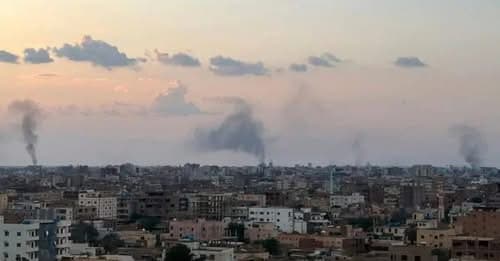
NAIROBI, Kenya, Oct 29 — Saudi Arabia’s role as a mediator in Sudan’s war is facing renewed scrutiny over allegations that it has provided military support to the Sudanese army, raising questions about how Riyadh’s security interests align with its efforts to negotiate an end to the conflict.
The kingdom has played a prominent diplomatic role since fighting erupted in April 2023 between the Sudanese Armed Forces (SAF) and the paramilitary Rapid Support Forces (RSF), co-hosting negotiations in Jeddah aimed at securing a ceasefire and facilitating humanitarian access.
However, allegations of arms transfers to the army have raised questions about the extent of Saudi Arabia’s involvement and whether its relationships with the warring parties could complicate efforts to secure a lasting peace.
The claims remain independently unverified and do not establish that Riyadh is responsible for prolonging the war.
They nevertheless highlight the challenges facing regional powers seeking to mediate conflicts while maintaining political, economic and security ties with actors involved.
The Jeddah process produced a May 11, 2023, Declaration of Commitment to Protect the Civilians of Sudan, under which the warring parties pledged to protect civilians and facilitate humanitarian assistance.
Subsequent ceasefire efforts failed to secure a lasting end to hostilities, with fighting continuing despite repeated diplomatic initiatives.
In July 2026, the Global Institute for Strategic Studies (GISS) published an investigation alleging that military equipment had been transferred from Saudi Arabia to the Sudanese army through an air bridge linking Riyadh and Port Sudan.
According to the report, the alleged supplies included three batteries of M777 155mm howitzers, ammunition and related equipment, alongside training arrangements for Sudanese personnel.
The investigation cited flight-tracking data, shipping records and other material in support of its claims.
However, the reported flights and logistical links do not, by themselves, establish what was transported, who authorised any transfers or whether the alleged weapons deliveries occurred as described.
The report also alleged that military assistance benefited armed groups fighting alongside the army, including the Al-Baraa Bin Malik Brigade. Those claims also require independent corroboration.
If substantiated, the reported transfers would raise questions about the extent of Saudi military involvement in Sudan and the implications for diplomatic efforts to end the war.
They would also invite scrutiny of whether external assistance has affected the balance of power between the army and the RSF, potentially influencing the incentives facing both sides during negotiations.
Sudanese army chief General Abdel Fattah al-Burhan has maintained that territory held by the RSF must be recaptured, rejecting proposals that would leave the paramilitary force in control of areas it occupies.
However, there is insufficient evidence to conclude that alleged Saudi military support directly explains the army’s negotiating position or the failure of ceasefire efforts.
The humanitarian stakes remain severe.
The United Nations estimated that 33.7 million people in Sudan would require humanitarian assistance in 2026, underscoring the urgency of securing sustained aid access and a political settlement.
A separate development reported by Reuters in April 2026 offers a more complicated picture of Riyadh’s position.
Reuters reported on April 20, citing two Pakistani security sources and a diplomatic source, that Pakistan had placed a proposed $1.5 billion weapons and aircraft deal with Sudan on hold after Saudi Arabia requested that the agreement be terminated and withdrew plans to finance it.
The report said the deal had been nearing completion and had previously been brokered by Saudi Arabia, although Riyadh’s financing role had not initially been disclosed.
Saudi Arabia’s reported intervention complicates any portrayal of its policy as uninterrupted military backing for the Sudanese army.
It also suggests that its approach has been shaped by changing strategic calculations and external diplomatic pressure.
The development does not resolve the separate allegations of earlier weapons transfers.
Rather, it underscores the need to distinguish between reported diplomatic decisions, financial arrangements and claims about military assistance that have yet to be independently verified.
Saudi Arabia’s position is therefore best assessed through specific transactions and decisions, rather than assumptions that all its engagement with Sudan serves a single military objective.
The debate over Saudi Arabia’s role in Sudan extends into a wider regional environment where maritime security, military cooperation and competing political interests overlap.
Saudi Arabia has longstanding security and diplomatic relationships across the Red Sea and the Horn of Africa, a strategically important corridor for international shipping and trade.
In July 2026, Riyadh hosted an international meeting on its proposed Multinational Maritime Defence Alliance, an initiative intended to strengthen cooperation in protecting shipping lanes and international commerce.
According to the Saudi Press Agency, representatives from 43 countries and a European Union delegation attended the meeting. Fourteen countries subsequently issued a joint declaration supporting the initiative, including Saudi Arabia, Egypt, Sudan, Djibouti and Somalia.
The initiative reflects Riyadh’s stated interest in strengthening collective maritime security.
However, security partnerships in the region also operate against a backdrop of competing alliances and strategic interests.
Saudi Arabia’s involvement in Yemen illustrates the difficulty of separating military engagement from diplomacy.
The kingdom led a coalition intervention in March 2015 to support Yemen’s internationally recognised government after Houthi forces seized Sanaa and advanced into other parts of the country.
The prolonged conflict has involved multiple domestic and foreign actors, while shifting alliances have complicated efforts to secure a political settlement.
The experience highlights a broader regional challenge: military relationships and strategic partnerships can shape perceptions of a country’s diplomatic role, particularly when its security interests intersect with an ongoing conflict.
Nevertheless, developments in Yemen and the wider Red Sea region do not, on their own, establish a coordinated Saudi strategy linking its involvement across these conflicts.
The competing claims over Saudi Arabia’s role in Sudan expose a central tension between its diplomatic ambitions and the security relationships it maintains in the region.
Critics argue that military assistance to a party in a conflict can undermine confidence in a mediator’s impartiality, particularly if that support strengthens the party’s position on the battlefield.
But allegations of arms transfers must be established through independently corroborated evidence, while the consequences of any assistance must be assessed separately from the political positions of the parties involved.
A clearer assessment of Riyadh’s role would require verification of the reported weapons transfers, scrutiny of financing and logistical arrangements, and responses from Saudi authorities and the Sudanese military.
For Sudan, the immediate priority remains a sustained ceasefire, unhindered humanitarian access and negotiations capable of ending the war.


Comments
No comments yet. Be the first to share your thoughts.