
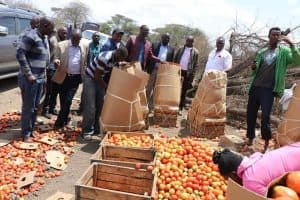
The government of Kenya in collaboration with Kenya Agricultural and Livestock Organization (KALRO) has started a Sh9m post-harvest training programme for tomato farmers in the country to help them reduce post-harvest losses from 50 per cent to 20 per cent.
According to KALRO’s post-harvest physiologist Dr. Margaret Muchui, most post-harvest losses incurred by tomato farmers in the country is as a result of poor handling rather than storage issues as most of them always believed.
She advises that tomato farmers should harvest their crop early in the morning and not during the day to reduce sunlight exposure that tears off the tomato skin exposing them to germs besides making the produce look undesirable in the market.
“We advise farmers to apart from checking on their handling issues, they should also use better seed varieties, for instance, those that yield fruits with hardy skin that can resist wears and tears during transport,” said Muchui.
Kenya is among 15 countries under the South Korean project that seeks to reduce tomato post-harvest losses from 50 per cent to 20 per cent in the continent in the coming years.
According to a 2015 research by ResearchGate on Post-Harvest Losses in Tomato Production in Africa, post-harvest losses have been found to be either an on-farm or off farm problem.
On-farm losses are caused by improper harvesting stages, excessive field heat, improper harvesting containers, poor farm sanitation, and improper packaging materials.
On the other hand causes of off-farm losses includes lack of access roads, inappropriate transportation system, lack of processing factories and lack of reliable market information.
Photo: Tomato farmers in Kajiado County packing their produce to market. Most farmers incur post-harvest losses either an on-farm or off-farm .Courtesy.

Comments
No comments yet. Be the first to share your thoughts.