
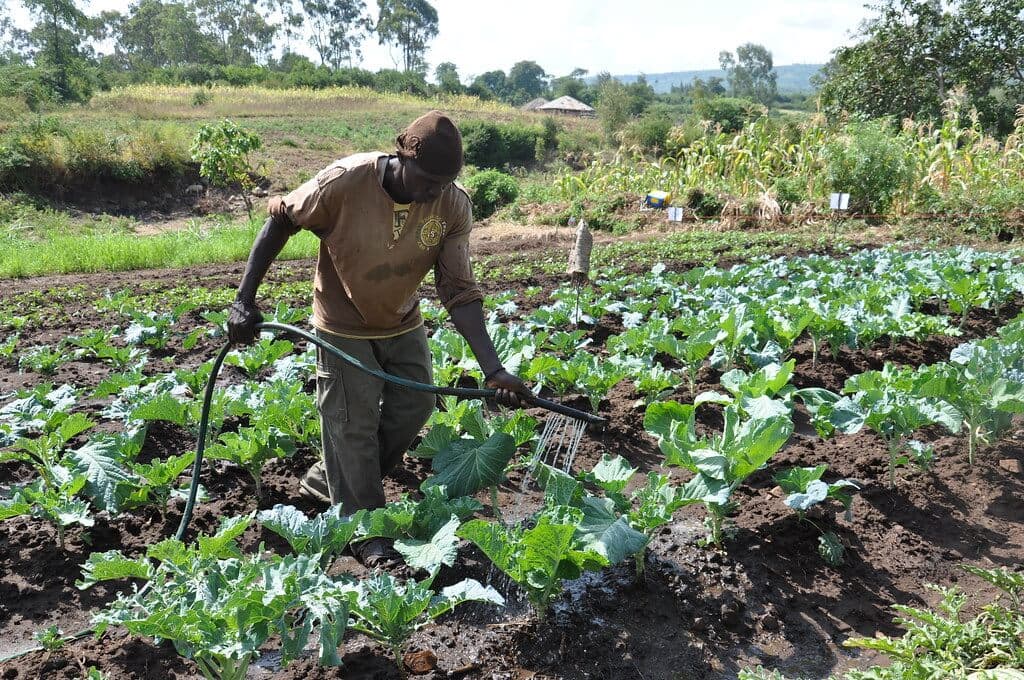
By George Munune, FarmBizAfrica.com
The Agriculture and Food Authority (AFA) on Thursday (19th September 2024) issued a statement that the KS1758 horticulture standard, which lays out some of the world’s harshest farm regulations, will be optional for Kenyan farmers, following reporting by FarmBizAfrica.com of the authority’s plans to make the standard mandatory.
Earlier the same day, Farmbizafrica had reported that the high costs of the farming practice standard would have prevented more than three million farmers from selling vegetables, fruits, herbs, and spices in Kenya. Its implementing organisations had previously stated across multiple forums and in publicly available documents that it was to be mandatory for all Kenyan farmers in the country. But the authority has now issued a statement announcing the standard will instead only create a new option for consumers to buy produce grown to its rigorous requirements: and will be absolutely optional for farmers, traders and food processors and outlets.
Presented publicly as a food safety measure, the standard applied over 500 new rules for farmers that would have cut off the supplies of over 90 per cent of the country’s locally consumed fruit and vegetables.
These farming rules would have meant only large farmers, companies, and importers would have been permitted to supply fruit and vegetables in Kenya, with any trader buying produce from uncertified farmers facing stiff penalties.
With the 55-page KS1758 Kenyan standard requiring some hundreds of measures that would have been prohibitive to small and medium-sized farms, AFA also announced on September 19th that the full requirements would be for large farms only.
One of the most contentious of these was that farmers would have been required to apply for NEMA licences to grow vegetables at a minimum cost of Sh10,000 per licence.
AFA through its Director General Bruno Linyiru however said that this would now be limited to ‘large-scale farmers’ whose farming activities can affect the environment.
FarmBizAfrica.com has asked the Horticultural Crop Directorate and FPEAK, which leads the KS1758 implementation committee, for the criteria that will be applied in deciding which farms are large and which farms are small.
In its full form, the standard requires farmers to carry out soil and water analyses at a cost of Sh2,500 to Sh5,000, pay for certification with a national or international standards certifier, and prepare dozens more records, including analysing the nutrient content of any compost or manure they use.
In an interview with FarmBizAfrica.com, spokesman for the Horticultural Crop Directorate (HCD) of the Agriculture and Food Authority (AFA) Collins Otieno confirmed that all farmers would have been obliged to adhere to the standard, which also required farmers’ IDs, plot records, and growing records to be kept and submitted to every produce buyer.
However, international agricultural NGO CABI reported in July that it would not be possible for any individual farmers to cover the cost of the certification. Its conclusions followed an aid-funded project that gained certification for the only farmers’ groups yet to be certified, accounting for around 70 of Kenya’s 4.5m farmers. Rough estimates suggest the cost of the full measures is likely to exceed Sh250,000 per farmer.
Horticulture is the largest agricultural sub-sector in Kenya. In a FarmBizAfrica national survey of 155 farmers in January 2024, 78 per cent reported growing at least one horticultural crop on their farm. According to an analysis of Kenyan smallholder farmers, these crops earn the country’s farmers an average total monthly income of Sh21,115.39 a month.
The new rules, in their full form, have been laid out in the Kenya Standard 1758: 2016 (KS 1758) Horticulture Industry Code of Practice.
FarmBizAfrica.com has asked for the documentation of the second standard as soon as it is ready laying out the elements of KS1758 that will be required from small farms for them to gain certification.
Pending the publication of the reduced requirements for small farms, farmers looking to adopt the new standard will be required to apply fertiliser only after conducting ‘regular’ soil, water, or plant tests. The tests typically cost a minimum of Sh2,500 for a soil analysis and Sh4,700 for water tests from the Kenya Forestry Research Institute. If they use animal manure or compost they will be required to calculate its nutrients and analyse the impact it had on their crop yields.
To use pesticides on their farms, horticulture farmers would also be required to prove they had recently attended a course on using pesticides, or hire someone trained in mixing and handling pesticides. To get a certificate in pest control in Kenya requires a two two-week course, which costs Sh60,000.
Under the full standard, farmers are also required to keep records of two annual mandatory medical checkups that include samples of blood cholinesterase levels for anyone handling pesticides. There will also be a requirement that trained first aid personnel be located within the farm. According to St John Ambulance College, first aid training costs in Kenya costs Shs2,000 to Sh15,000. A refresher course is expected every two years.
To sell their produce in local markets, as KS1758-certified produce, farmers will have to be logged into the National Horticulture Traceability System (NHTS). This mobile application developed by the Agriculture and Food Authority (AFA) and USAID in 2023 will record information such as their name, ID, their farm ID, the farm’s location and block number, a record of the inputs they used, i.e., fertiliser, pesticides, and their supplier, the harvest date, the best before date, and the quantity and weight of produce they’re looking to sell, among other details.
NHTS, which will be available to download on Google Play store will require farmers to put labels with Quick Response (QR) codes on their farm produce that will contain all the information above and can be scanned and retrieved by buyers or consumers.
The KS 1758 certifications themselves will be done by national and international certification bodies, including Bureau Veritas. No information is yet available on the direct cost of the final certification process per farmer. But AFA, which is charged with regulating and developing the value chains of scheduled crops, has acknowledged that compliance with KS1758 was set to be costly, and urged farmers to consider applying for the certification in groups, in order to share the costs.
Malindi farmer finds low-cost entry into rich commercial farming with okra
Nigeria, Kenya horticulture farmers raise incomes 20% through cold storage
Horticulture body launches guide for avocado, beans & peas export farmers
Engineer builds horticulture empire in city
Are you a farmer looking to grow the most profitable crop on your farm, with or without irrigation. Use FarmBizAfrica’s HarvestMAX on https://harvestmax.farmbizapps.com and it will tell you in less than a minute what the highest income-earning crops are for your weather, soil type and this season, based on your seasonal weather forecast. Don’t make weather losses ever again, and more than triple your income.

Comments
No comments yet. Be the first to share your thoughts.