
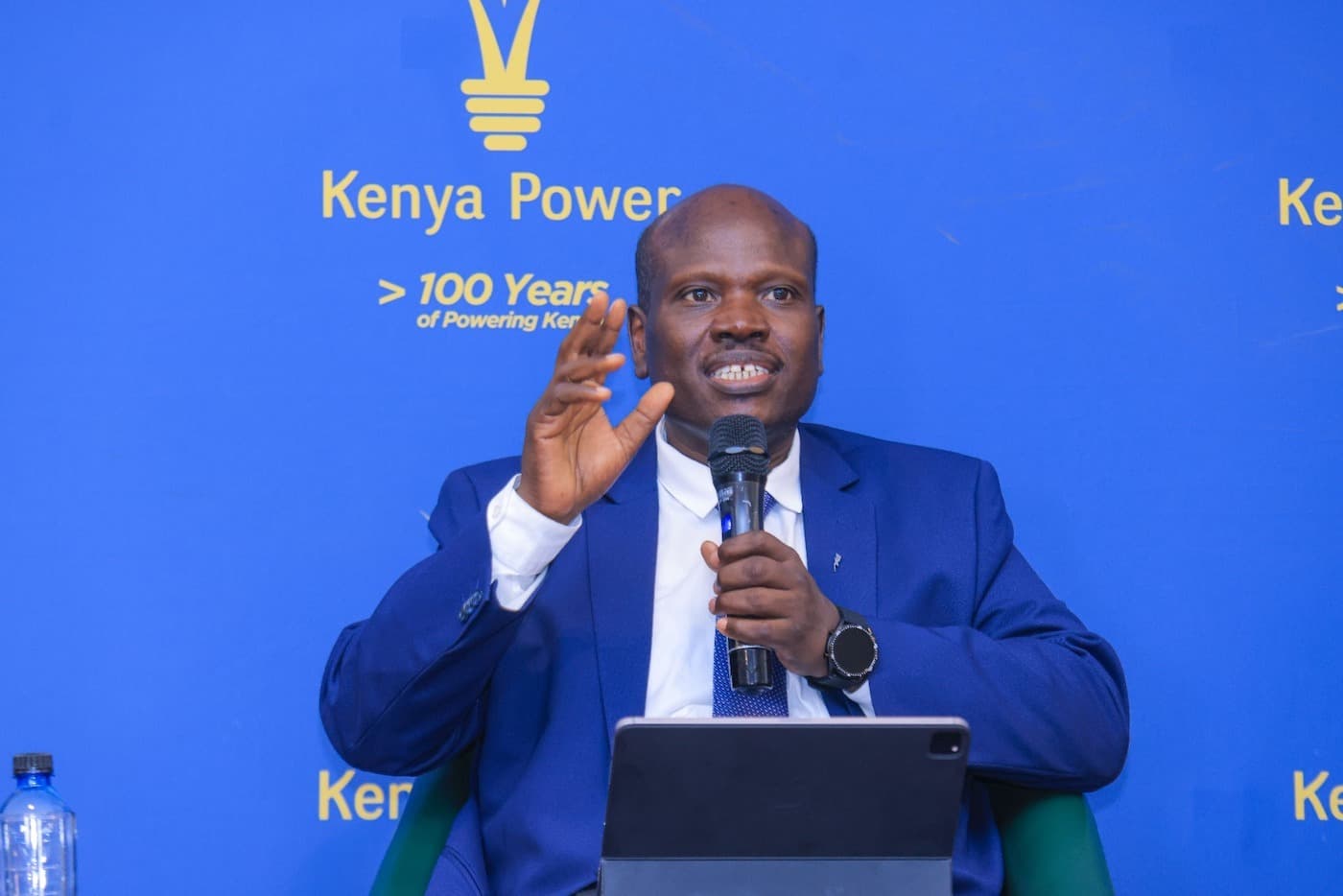
Kenya Power delivered another successful year, with Net Profit rising by KSh 522 Million to KSh 24.9 Billion, a headline 2.1% growth.
However, here is a more nuanced earnings picture for the power utility firm.
While Revenue and Gross Profit grew strongly, operating cost growth absorbed much of the improvement before substantially lower finance costs supported the utility firm’s bottom line.
Kenya Power Revenue grew to KSh 238.24 billion from KSh 219.29 billion in financial period ended 30th June 2025, a growth of 8.64%. The top line continued to expand, supported by stronger electricity sales. Electricity sales increased 12% to 12,777 GWh. Thus, Kenya Power Revenue increase was supported by growth in units of electricity sold, rather than the firm riding purely on the function of increased cost of electricity supplied to consumers.
Kenya Power also connected 411,710 new customers during the 2026 financial year, taking its customer base to approximately 10.4 million. The firm attributes part of the rise in electricity sales to these additional connections.
The Power Utility’s Gross Profit grew to KSh 85.59 billion in 2026 from KSh 74.62 billion in 2025, a growth of 14.7% faster than the growth in Revenues. This lifted the gross margin from 34% to 35.9%.
In the economics of electricity distribution system, Kenya Power retained more gross profit from each Shilling of Revenue before Operating Expenses.
The firm is exposed to movement in the Kenya Shilling exchange rate against the US Dollar. A stable Kenya Shilling/ US Dollar exchange rate ensured that power-purchase costs remained predictable.
The firm’s operating costs, the main pressure point, grew to KSh 53.75 billion from KSh 42.42 billion in 2025 financial year, a growth of 26.7%. Operating costs, thus, grew at more than three times the rate of revenue growth of 8.64%.
Consequently, improvement in gross profit did not translate into operating profit growth, which instead declined 2.3% from KSh 39.47 billion to KSh 38.57 billion in 2026. Operating margin therefore declined from 18% to 16.2%.
So in assessing the quality of Kenya Power earnings, the underlying electricity business generated stronger gross profit, but higher operating costs prevented this gain from moving up the operating profit.
The firm’s finance costs declined to KSh 3.08 billion from KSh 4.72 billion, a decline of 34.7%. It is this significant reduction in finance costs that Kenya Power pre-tax profit was up 1.8% to KSh 36.01 billion.
Therefore, the firm’s earnings were not purely due to stronger operating profit but also lower financing costs that played a meaningful role in protecting the bottom-line.
Kenya Power net profit grew to KSh 24.99 billion from KSh 24.47 billion, a growth of 2.1%, with net profit margin of approximately 10.5%. The result is therefore one of modest bottom-line growth rather than a major earnings acceleration.
Kenya Power Cash declined by 3.9% to KSh 38.2 billion
Cash generated from operations declined 3.9% to KSh 38.22 billion from KSh 39.77 billion. Operating cash generated therefore weakened slightly despite the increase in reported profit. This is worth monitoring because KPLC is a capital-intensive utility with substantial infrastructure requirements and financial obligations.
The firm posted meaningful improvements in the balance sheet size, with Total Assets rising 8.3% to KSh 421.49 billion while Shareholders’ Equity grew 20.6% to KSh 131.8 billion. Current assets stood at KSh 121.9 billion, a growth of 4.65% while current liabilities closed at KSh 120.01 billion, a growth of 2.2%.
The 20.6% increase in shareholders’ equity materially exceeded the 8.35 increase in total assets, including a strengthening of the equity base. KPLC is not simply growing its asset base, its equity cushion has also expanded.
The Board has proposed a KSh 1.20 final dividend compared to KSh 1.00 in 2025, representing a 20% increase. This dividend declaration indicates the Board’s willingness to increase shareholder distributions despite modest growth in net profit.
Investment analysts say KPLC is generating substantial earnings from a growing electricity market, while financing pressures have eased.
All eyes are now on whether improvements in gross profit can eventually overcome operating cost growth and produce sustained growth in operating profit and cash generating rather than relying on lower finance costs to support net profit.
KPLC has a Net Debt position of KSh78.05 billion. The questions remain whether the firm can continue to generate sufficient cash to service this debt and progressively reduce its obligations? How much of this debt remains vulnerable to Kenya Shilling exchange rate depreciation? Are financing pressures falling or reversing?


Comments
No comments yet. Be the first to share your thoughts.