
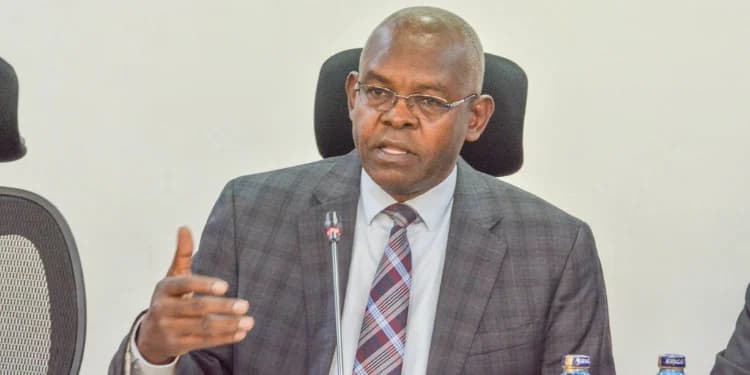
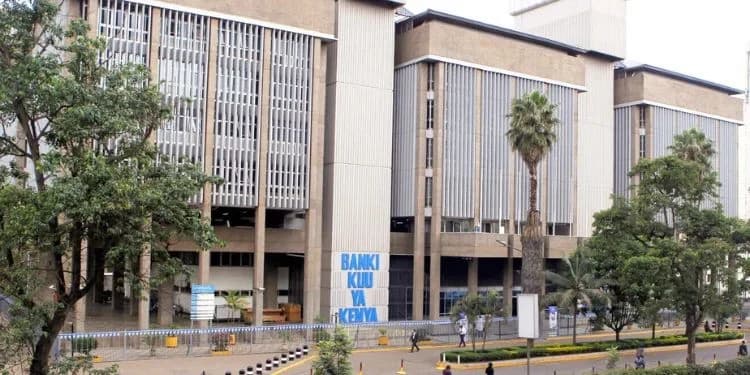
Central Bank of Kenya (CBK) Governor Kamau Thugge has defended the proposed Banking Fees Regulations, 2026, stating that the changes are necessary to modernize an outdated fee structure and strengthen the regulator’s oversight of the banking sector.
Appearing before the National Assembly’s Committee on Delegated Legislation on July 30, Thugge said the current fee framework has remained unchanged since 1994 despite significant growth and transformation in Kenya’s banking industry.
However, MPS warned that the new framework could increase the cost of banking services and expose the regulations to court challenges.
The draft regulations seek to replace the current flat annual licensing fee, which is based on the number of bank branches, with a levy equivalent to 0.15 percent of a bank’s gross annual revenue.
Committee Vice-Chairperson Robert Githinji questioned the legal basis of the proposal, arguing that the Banking Act does not define the term “banking fees,” leaving the regulations vulnerable to litigation.
“You need to create a term called ‘banking fees’ because Section Five of the Act does not contain that term. Without it, the regulations could be vulnerable to legal challenge,” Githinji said.
CBK Moves to Replace Flat Banking Fees With Revenue-Based Levy
Lawmakers also sought clarification on how gross annual revenue would be determined and if it will affect consumers.
Thugge told the committee that customer deposits are liabilities rather than revenue and clarified that the levy would be calculated using audited interest income earned from lending activities and investments in government securities.
The committee further questioned provisions requiring newly licensed banks to pay annual fees based on projected revenue, arguing that the regulations do not provide safeguards against unrealistic financial projections submitted by applicants.
In response, Thugge said newly licensed banks are required to pay the fee before commencing operations and, in the absence of audited financial statements, projected revenue remains the most practical basis for calculating the initial levy.
MPs also criticized a proposed 100 percent penalty for banks that fail to pay the annual fee by December 31.
They argued that institutions could effectively be punished twice through both the financial penalty and the possibility of losing their operating licences.
Thugge defended the proposed penalties and the revised fee structure, saying the additional revenue would strengthen the Central Bank’s supervisory capacity in areas including cybersecurity, artificial intelligence and anti-money laundering.
He added that enhanced oversight would support Kenya’s efforts to exit the international financial monitoring grey list.
The committee said it will continue scrutinizing the draft regulations before tabling its report in the National Assembly and indicated it may seek views from banks, industry stakeholders and consumers before making its recommendations.
The Banking Act 2026
The Central Bank of Kenya (CBK) has introduced new Banking (Fees) Regulations, 2026, replacing the 1994 framework and updating the fees paid by financial institutions to the regulator.
Published through Legal Notice No. 81 of 2026 on May 8, 2026, the regulations set a new annual fee structure based on a percentage of an institution’s gross annual revenue.
Under the new rules, licensed banks and other institutions regulated under the Banking Act will pay annual fees equivalent to 0.13 per cent of their gross annual revenue for the 2026 financial year, rising gradually to 0.15 per cent from 2028 onwards.
The regulations define gross annual revenue to include income from interest on loans, advances, government securities and placements, fees and commissions on loans and advances, dividend income, foreign exchange trading income, and other income reported in audited financial statements.
Institutions licensed after the regulations take effect will pay annual fees based on their projected average gross annual revenue for the first three years after commencing operations.
The fees will be paid to CBK as a lump sum by December 31 of each applicable financial year.
Failure to pay the required fees within the stipulated period will attract a penalty, with institutions required to pay double the annual fee within 90 days after the due date. Continued non-payment could result in revocation of the institution’s licence.
The regulations also set the application fee for institutions seeking a banking licence at KSh5,000.
Follow our WhatsApp Channel and X Account for real-time news updates.

Comments
No comments yet. Be the first to share your thoughts.