

President William Ruto has ordered an immediate crackdown on Chinese nationals running small businesses in Kenya, directing that businesses operating in areas reserved for Kenyan entrepreneurs be shut down.
The directive, issued during his address on Wednesday, September 2, 2026, comes amid growing concerns over competition between foreign traders and Kenyan small-scale businesses.
“As a government, we cannot allow people to come from China and set up shops here selling the same products that MSME traders sell. I will ask for a brief on this, and if there are Chinese-owned shops, we will close them down,” said Ruto.
Ruto Directs Action Against Chinese Traders
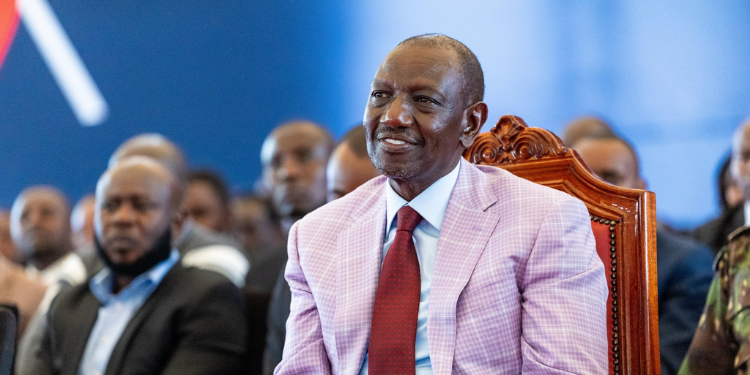
Speaking at the State House on Wednesday, while hosting Micro, Small, and Medium Enterprise (MSME) traders, Ruto said his administration would no longer allow foreigners to run businesses that Kenyan citizens can do, particularly at the small-business level.
The President’s remarks place renewed focus on the presence of Chinese nationals in Kenya’s retail and small-business sector, an issue he has addressed previously.
In 2022, while campaigning for the presidency, he said Chinese nationals involved in businesses such as selling mobile phones and roasting maize were engaging in activities meant for Kenyans. He promised to deport foreigners involved in such businesses
The announcement comes at a time for Kenyan traders, who have been facing increased operating costs and pressure from imported goods.
Kenyan Traders Raise Competition Concerns
Small-scale traders have repeatedly complained about competition from foreign businesses, particularly in sectors such as retail, electronics, clothing and general merchandise.
The issue has also featured in recent protests by Kenyan traders over changes to customs valuation and import costs.
On August 28, police used tear gas to disperse traders protesting Kenya Revenue Authority decision that increased the minimum customs benchmark for consolidated 40-foot containers from KSh2.5 million to KSh3.2 million. Traders argued the changes would increase their costs and hurt businesses that depend on consolidated imports.
The government has said enforcing customs rules is necessary to prevent under-declaration and undervaluation of imports, which it says disadvantages compliant businesses and local manufacturers.
In June 2026, the President launched the Revised MSME Policy 2026, with the government saying it aims to create a more supportive environment for Kenyan entrepreneurs, improve access to finance and markets, and increase the competitiveness of local businesses.
Ruto Orders KRA to Restore KSh2.5 Million Benchmark
The Head of State has also ordered the Kenya Revenue Authority (KRA) to review the Sh3.2 million customs benchmark imposed on consolidated cargo and restore the previous Sh2.5 million threshold, as he moved to ease the burden on small importers.
Ruto directed KRA to prepare and communicate a clear list of high-value goods that will not qualify for consolidation, saying traders should know in advance which products are excluded from the arrangement.
The President said the measures would allow small traders to continue combining their consignments in containers while ensuring high-value goods are subjected to appropriate customs treatment.
“I want us to agree here. The people from KRA should give us high-value items which do not qualify for consolidation. It is one, two, three, four, five. Let it be known to these consolidators,” Ruto said.
Follow our and X Account for real-time news updates.

Comments
No comments yet. Be the first to share your thoughts.