
Prime Cabinet Secretary (PCS) and CS for Foreign and Diaspora Affairs Musalia Mudavadi promised to place tech diplomacy at the centre of Kenya’s diplomatic engagement and regional integration.
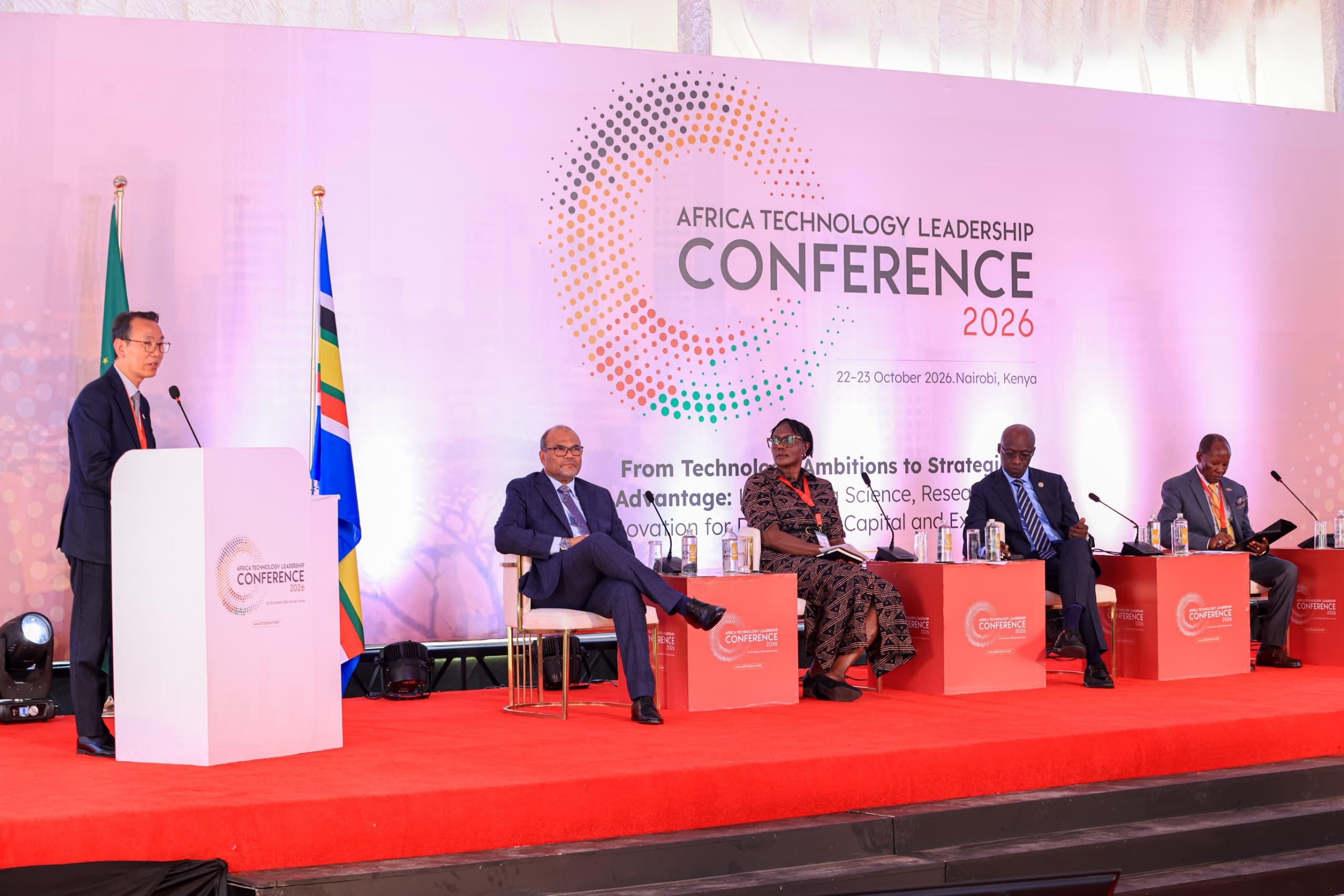
Speaking during the two-day Africa Technology Leadership Conference (ATLC) 2026 that ended at Eka Hotel, Nairobi, on Friday, October 23, PCS Mudavadi noted that Africa must move from adopting technology to building and stimulating technological power.
“We cannot build technological sovereignty on imported knowledge alone. Every economy that has led in advanced technology has invested consistently in researchers, universities, laboratories and institutions that move knowledge from discovery into action,” said Mudavadi.
He was far from flattered by the continent’s main predicament: promising research and tech ambition that often stall before gaining market traction, investment, or global influence.
“Through coordinated public-private partnerships and shared regulatory frameworks, we ensure that digital transformation fosters inclusive resilience and prosperity across every African state,” he said.
Delegates examined how African countries can coordinate their positions on Artificial Intelligence (AI), data governance and digital standards, which increasingly shape trade, investment and diplomatic leverage.
Additionally, central priority is narrowing the gap between research and commercial application in agriculture, health, energy, manufacturing and digital services. That means connecting universities and research institutions with technology-transfer systems, intellectual-property frameworks, patient capital and routes to market.
“The conversations convened here at Eka Hotel move beyond aspiration towards rigorous execution and measurable socio-economic impact, cementing Kenya’s status as a leader in technology diplomacy,” said Prof. Shaukat Abdulrazak, Principal Secretary, State Department for Science, Research and Innovation.
According to Dr. Kenneth Rotich, Chief Executive Officer of INVIGENCE Ltd, the conference’s organizer, priorities will be to build the institutional and strategic bridges that turn raw African ingenuity into scalable, market-ready, and globally competitive ventures.
“As artificial intelligence reshapes global economies, Africa must not be left behind or forced into generic models that overlook our rich linguistic and cultural diversity,” said Rotich.
The conference is meant to turn dialogue among public institutions, investors and industry into practical cooperation, with Nairobi as the convening point. At the end of the event, three initiatives were launched:
Continental Innovation Center: a hub for market access, research commercialisation and deep-tech venture building. INVIGENCE is inviting corporate partners, venture funds, financial institutions, development agencies and research organisations to join as strategic partners. Applications for the first cohort are open to AI researchers, data scientists, software developers and start-ups across Africa
Kenya Languages and Context-Aware AI Challenge: The Sauti Umoja AI Challenge is an initiative to incentivise and fund the development of large language models built for African indigenous languages, local dialects and socio-economic realities. This is in partnership with GSMA’s ATLA Umoja AI.
The ATLF Leadership and Diplomacy Programme and ATLC 2027 Conference: a roadmap for year-round policy labs and stakeholder dialogues through 2026–2027 and a continental convention in Kenya in 2027. The Africa Technology Leadership Forum is inviting stakeholders to join a planning coalition to co-host it.
The programme spans technology diplomacy and leadership; capital and infrastructure; research commercialisation; institutional capability and execution; and trust, data and technology resilience.



Comments
No comments yet. Be the first to share your thoughts.