
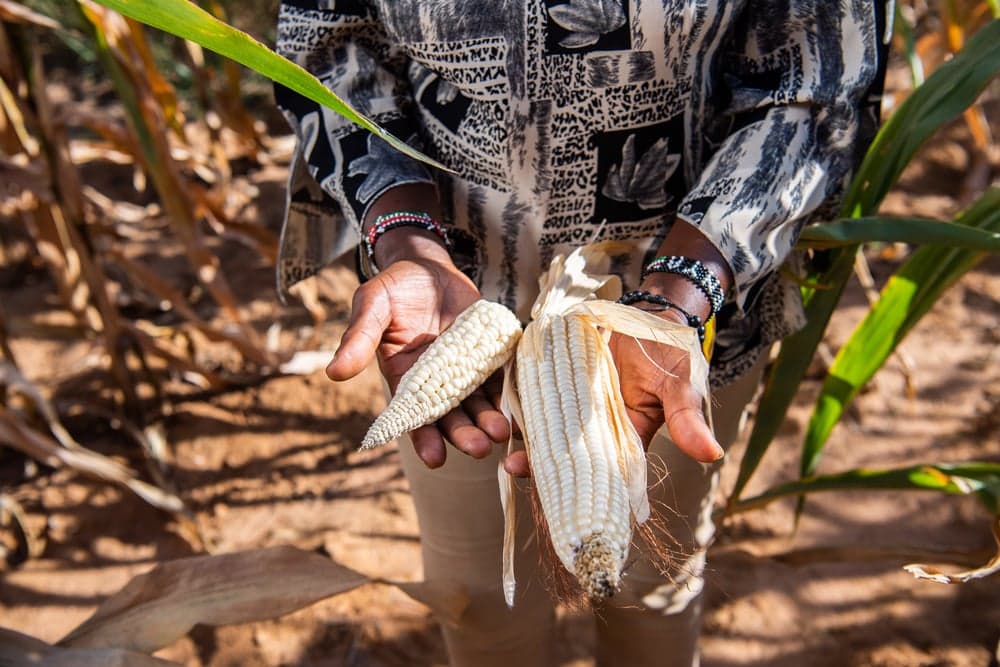
NAIROBI, Kenya, Oct 26 – Kenyan farmers could increase profits by an average of 37.8 per cent by adopting agroecological farming practices that reduce spending on synthetic fertilisers and pesticides, according to a new ActionAid International report.
The report, Transforming Food Systems in Africa – The Case for Investing in Agroecology, says practices such as composting, recycling organic waste and using natural pest-control methods can lower production costs while improving soil health.
The findings are based on a study conducted in three Kenyan counties, which found that farmers recorded higher profits after transitioning to agroecological farming over one to three years.
In Murang’a County, farmers growing amaranth using agroecological methods recorded yields 45 per cent higher than those using conventional farming, while kale yields were 34 per cent higher.
The report warns that dependence on synthetic fertilisers exposes farmers to global price fluctuations and supply disruptions linked to conflicts and other market shocks.
“Farmers cut the costs of synthetic fertilisers and pesticides when switching to on-farm composting, recycling of organic waste and natural biopesticides,” the report stated.
It added that healthier soils retain water for longer, reducing the need for irrigation and creating further savings for farmers.
The report cites long-term comparative trials conducted by the Research Institute of Organic Agriculture in Kenya, Bolivia and India as evidence that organic farming systems can improve yields while delivering environmental benefits.
However, it cautions that the transition takes time, with farms potentially requiring up to three years to achieve yields comparable to conventional systems, depending on soil conditions, farmers’ knowledge and available support.
ActionAid says the government should increase funding for farmer training, agroecological research and locally produced agricultural inputs alongside existing fertiliser subsidy programmes.
Reducing reliance on imported agricultural inputs could also lower the country’s fertiliser import bill and ease the cost of government subsidies.
ActionAid International Secretary-General Arthur Larok said agroecology could strengthen economic resilience, improve farmers’ incomes and help address climate change.
“Farmers are improving yields and income while reducing dependence on costly imported inputs and protecting the soils and ecosystems on which food production depends,” Larok said.
The report reviewed agricultural research and experiences from 10 African countries, including Kenya, Ethiopia, Ghana, Nigeria, Tanzania, Uganda, Zambia and Zimbabwe.



Comments
No comments yet. Be the first to share your thoughts.