
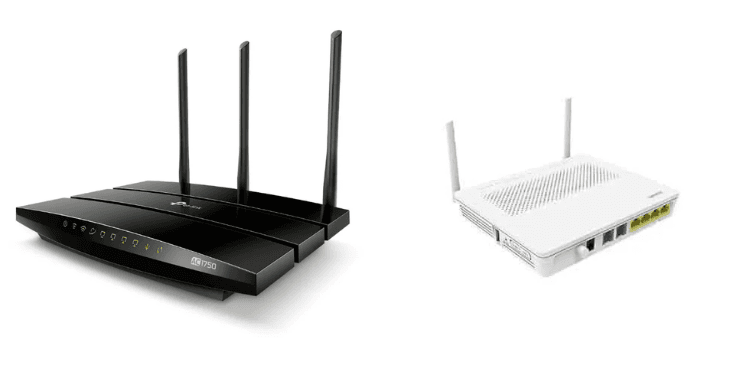
Kenyan households and businesses are increasingly upgrading their WiFi routers as demand for faster internet continues.
According to ICT retailer TDK Solutions Limited, many internet users fail to achieve the speeds they pay for because they continue using outdated routers that cannot support modern fiber packages or handle multiple connected devices efficiently.
The company states that the routers have become a critical part of internet performance as more Kenyans embrace remote work, online learning, cloud computing, video conferencing, smart home technology and high-definition streaming.
“Despite this progress, many internet users face a common challenge: their router, the gateway of their internet connection, often limits speed, range, and reliability. Whether you are a Kenyan homeowner in Nairobi or a small business in Mombasa, selecting the right router is crucial to unlock your full internet potential,” the company notes.
WiFi Routers For Homes
For users with basic internet needs such as browsing, social media, and standard-definition streaming, affordable routers remain sufficient.
However, the ICT company states that households subscribed to fiber packages exceeding 100 Mbps are encouraged to invest in dual-band gigabit routers capable of delivering higher speeds and supporting several users simultaneously.
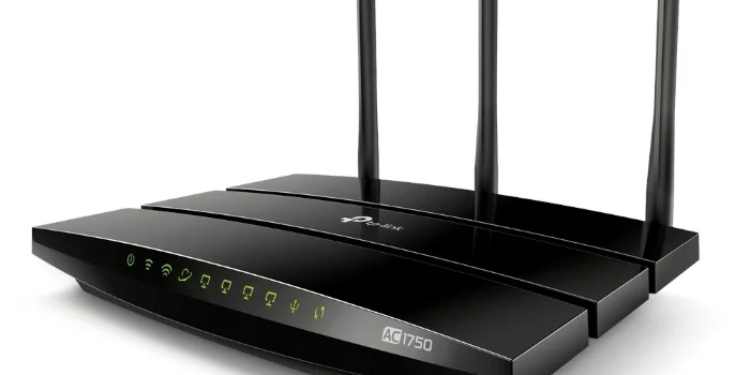
They further recommend devices such as the TP-Link Archer AC and AX series and the D-Link DIR series, which support WiFi 5 (802.11ac) and WiFi 6 (802.11ax) technologies.
Unlike older routers, these models feature Gigabit Ethernet ports, dual-band connectivity, MU-MIMO and beamforming, enabling smoother 4K streaming, online gaming, video conferencing and faster downloads.
TDK Solutions says upgrading to WiFi 6 also helps future-proof home networks as the number of connected devices continues to increase.
Routers For Businesses
For businesses, networking requirements extend beyond internet speed. Companies increasingly require routers capable of supporting Virtual Local Area Networks (VLANs), Virtual Private Networks (VPNs), bandwidth management, multiple wireless networks and enhanced cybersecurity.
The retailer notes that MikroTik and Ubiquiti remain among the preferred networking brands for Kenyan SMEs, schools, hotels and internet service providers because they offer centralized management, scalability and advanced routing features.
Meanwhile, Cisco continues to dominate larger enterprise environments where organizations require high-capacity routers capable of supporting complex network infrastructure.
Most Kenyan fiber internet providers install an Optical Network Terminal (ONT) during installation to convert fiber signals into Ethernet connections.
However, TDK Solutions notes that while the ONT enables internet access, many of the supplied devices offer limited WiFi performance, particularly in larger homes or offices.
The company recommends connecting the ONT to a dedicated dual-band gigabit router to improve wireless coverage, increase network stability, and support more connected devices without sacrificing speed.
Prices
The following are prices of some of the routers according to City Telecommunication Centre (CTC).
Features buyers should prioritize
As consumers shop for routers, TDK solutions advise focusing on features that will remain relevant as internet speeds continue to increase.
Among the key considerations are:
- Gigabit Ethernet ports for fiber connections above 50 Mbps.
- Dual-band WiFi (2.4 GHz and 5 GHz) to balance range and speed.
- WiFi 6 support for improved performance and network efficiency.
- Mesh WiFi compatibility to eliminate dead zones in large homes and offices.
- WPA3 encryption and guest network support to strengthen cybersecurity.
Follow our and X Account for real-time news updates.



Comments
No comments yet. Be the first to share your thoughts.