
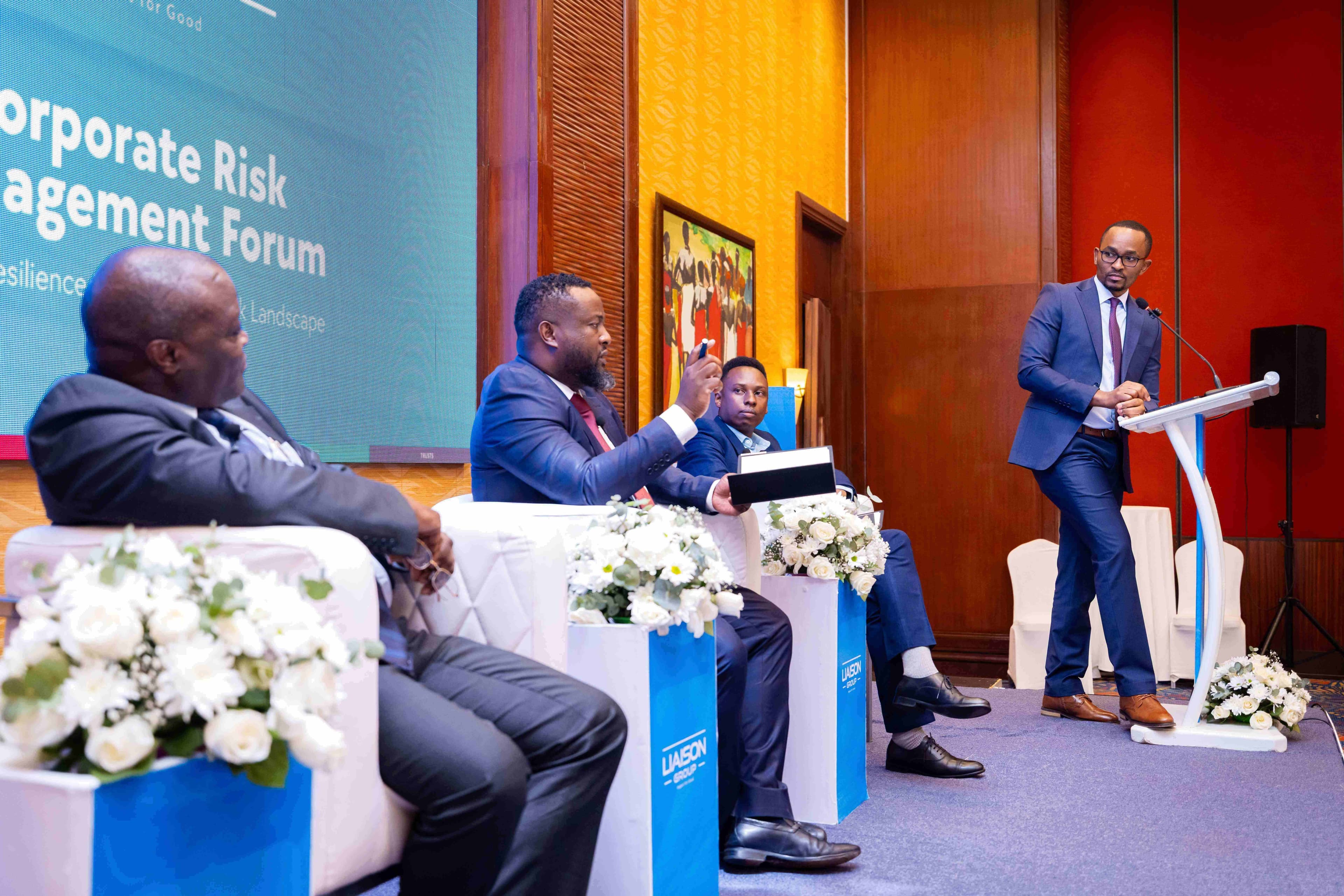
Businesses and institutions have been urged to strengthen risk management strategies and review their insurance coverage, as cybercrime, extreme weather events and supply chain disruptions pose growing threats to corporate operations.
Industry stakeholders made the call during a corporate risk management forum hosted by Liaison Group in Nairobi under the theme “Building Resilience in a Changing Risk Landscape”.
The forum brought together insurance professionals, regulators and industry players to explore strategies for protecting businesses against financial losses and ensuring continuity in an increasingly unpredictable operating environment.
Insurance Regulatory Authority (IRA) Chief Executive Officer and Commissioner of Insurance Godfrey Kiptum said effective regulation, consumer protection and public education remain critical to building confidence in the insurance industry.
In a speech delivered on his behalf by IRA Director of Supervision Kalai Musee, Kiptum revealed that Kenya’s insurance industry recorded gross direct premiums of Sh466.58 billion in 2025, representing a 16.5 per cent increase from the previous year.
Insurance penetration rose to 2.63 per cent of gross domestic product (GDP), the highest level since 2016, reflecting the sector’s growing contribution to the economy.
The industry also paid more than Sh227 billion in claims and policyholder benefits during the year, demonstrating its role in cushioning individuals and businesses against financial shocks.
“The reason insurance companies exist is to pay claims,” Kiptum said, warning that delayed or unfair settlements could erode public confidence and damage the reputation of the entire sector.
He identified policy holder protection, market development, consumer education and public confidence as key priorities, while calling for innovative insurance products targeting small businesses and underserved communities through digital and mobile platforms.
Liaison Group General Manager for Risk and Insurance Brian Kiprop said the growth of the insurance industry must translate into meaningful protection for individuals, families and businesses.
“Behind every policy, every premium, all benefits and claims is a person, a family, an institution or a business with a value to protect,” Kiprop said.
Liaison Group General Manager for Regional Business Denis Karanja challenged organisations to look beyond simply purchasing insurance policies and establish whether their coverage adequately protects their assets, revenue and operations.
“The question is no longer insurance, but what is the depth of the policies that we do have?” Karanja posed.
He said businesses needed to match their insurance cover to their actual exposure to risk, cautioning against reducing premiums or coverage costs without considering the potential consequences of major losses.
Karanja urged organisations to work with risk engineers and insurance intermediaries to identify vulnerabilities, improve safety measures and ensure insured assets are accurately valued.
He also called on businesses to diversify their suppliers and develop emergency response plans to minimize disruptions and accelerate recovery when unforeseen events occur.
Effective risk management, he said, should go beyond transferring financial risks to insurers and include proactive measures to protect assets, safeguard revenue and maintain business continuity.
Meanwhile, Peter Mugambi Muthuri, representing the Retirement Benefits Authority (RBA), highlighted the need for Kenyans to prepare financially for healthcare expenses after retirement.
Muthuri said assets held by Kenya’s retirement benefits industry had grown to Sh3.2 trillion by June 2026, up from Sh2.8 trillion in December 2025.
However, he noted that approximately 7.5 million people were covered by pension schemes, representing about 26 per cent of the population.
He explained that post-retirement medical fund regulations allow pension scheme members to set aside savings for future healthcare expenses while still in employment. The compliance deadline outlined in his presentation was August 2027.
The forum underscored the importance of integrating risk management into corporate decision-making, with participants emphasizing that resilience requires regular risk assessments, adequate insurance coverage, financial preparedness and collaboration between businesses, regulators and insurance providers.
As organisations face increasingly complex threats, stakeholders said proactive planning and appropriate protection would be essential to safeguarding investments, sustaining operations and securing long-term business growth.
By John Brighton



Comments
No comments yet. Be the first to share your thoughts.