
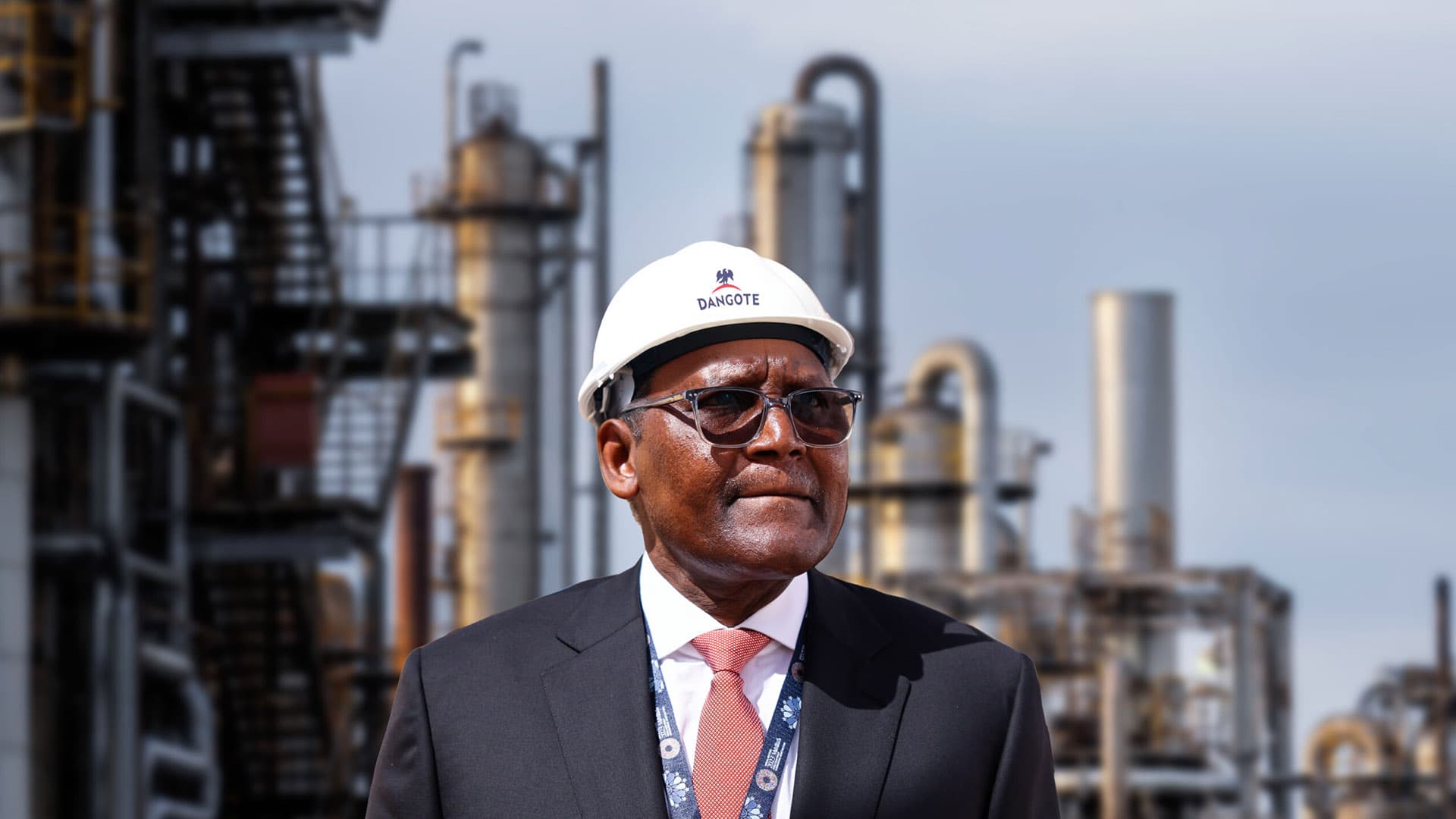
The Upcoming Dangote Petroleum Refinery IPO will provide Kenyan investors with access through Global Depositary Receipts (GDRs), which will then be trading on the Nairobi Securities Exchange(NSE). The NSE listing is targeted for December 8th 2026, According to a Renaissance Capital Africa presentation.
The structure will link Nigerian shares held in custody to GDRs issued in Kenya, which will trade on the NSE and settle through the CDSC in Kenya Shillings.
Renaissance Capital Africa is the lead transaction adviser and sponsoring broker, while the NSE is the project coordinator. Stanbic Bank Kenya is named the Receiving Bank and Custodian, Image Registrar as the registrar and G&A Advocates LLP as the lead legal adviser.
Licensed local brokers will handle investor eligibility and allocations, while Newmark Group is among the public-relations advisers.
Subject to regulatory approvals, the offer period is scheduled for 5-13th October, allotment around November 11th, settlement from November 12th to December 2nd and NSE trading from December 8th 2026.
The offer price is about KSh49.00 per underlying share, meaning the minimum 10-share subscription would be roughly KSh490. This is far cheaper than in Nigeria, where the offer price is KSh 55.00
However, the Kenyan Dangote offer remains subject to CMA approval. The GDRs are proposed to begin trading on the NSE in December.
This is not a direct NSE listing of Dangote Refinery shares. Investors would be buying GDRs representing an interest in the underlying Nigerian shares.
Investors should also verify the official offer documentation and use licensed intermediaries once the Kenyan approval is granted.
Dangote East Africa Refinery and its Impact
Meanwhile, President William Ruto’s Chief Economic Adviser David Ndii’s remarks on the proposed Dangote East Africa refinery point to something bigger than refining petroleum.
East Africa currently consumes roughly 20 million tonnes of petroleum products annually, while the region spends more than $10 billion a year on imports. Kenya alone accounts for about $4 billion of that bill.
If the proposed 700,000-barrel-per-day refinery in Lamu materialises, its significance could extend beyond reducing import dependence.
Ndii estimates that the Dangote Lamu project could support 50,000–60,000 construction jobs, inject about KSh 2 billion monthly in wages, and potentially add roughly 3 percentage points to manufacturing’s share of GDP, with petrochemicals contributing another 2 percentage points.
The bigger investment question is therefore not simply “How much oil will the Dangote Lamu refinery process?”
It is what industrial ecosystem can develop around it—refining, petrochemicals, logistics, manufacturing, storage and supporting services.
If that ecosystem develops at scale, Lamu could move from being primarily a logistics and port story to becoming a significant industrial centre and one of Kenya’s largest county economies.
For investors, this is the part worth watching: the Dangote Lamu refinery may be the project, but the real opportunity could be everything that grows around it.
This Wednesday’s ground –breaking ceremony was attended by Presidents Yoweri Kaguta Museveni of Uganda, Romuald Wadagni of Benin and Jean-Lucien Savi de Tové of Togo, and Prime Minister Abiy Ahmed Ali of Ethiopia.
The ceremony was also attended by former Nigerian President Olusegun Obasanjo and representatives of other African governments.
Upon completion, the Dangote refinery in Lamu is expected to process 700,000 barrels of crude oil a day, making it East Africa’s largest industrial project by capacity.
Ahead of the launch, some local residents took to the streets to demand more compensation for land used for the refinery.
Speaking to the BBC, Dangote, Africa’s richest man, dismissed the protests as games played by local marketers and international players, insisting the refinery would go ahead and would be ready by 2030 as planned.
The ground-breaking was also attended by the leaders of Uganda, Ethiopia, Togo and Benin.
“This is Africa coming together to build Africa. Today we are not simply breaking ground for a refinery, we’re breaking ground for a new chapter in Africa’s industrial journey to a brighter future,” Dangote said as he launched the project.
President William Ruto said “It is a declaration that Africa has entered a new age in which we will increasingly finance, build, process and add value here at home.”
The refinery is set to become the only one in East Africa and is Kenya’s largest infrastructure project since independence, surpassing the US $5.1bn Standard Gauge Railway.
In his interview with the BBC’s Focus on Africa programme, Dangote disputed the compensation claims and said the company took only the portion of land it needed from what the government made available.
“To come and say some people are demonstrating, demonstrating about what? Have you ever seen people demonstrating against themselves in terms of development?” he asked, indicating he was not fazed by the protests.
A group of 133 Lamu residents has approached Kenya’s High Court in a bid to stop the construction work.
As a result, activities such as excavation and construction on the disputed land are restricted until the next court hearing on 14 October.
But Kenya’s Energy and Petroleum Minister Opiyo Wandayi told the BBC that the refinery’s location did not mean it would rely on oil from the region.
“Refineries get crude oil from the market. And the market is open,” he said.
The refinery will also include a 1,000-megawatt power plant.
Dangote sees reliable electricity as a critical constraint on industrialisation across Africa, particularly in mineral-rich countries that still export raw materials rather than processing them locally.
He has about $50bn (£38bn) worth of projects in the pipeline, including plans to develop 10,000 megawatts of power generation capacity across Africa by 2030, with the potential to double that depending on demand.
In Lamu, the new power plant is designed to support Dangote’s operations as well as other industries expected to set up in the area.
“The power is there and what you do is what we call plug and play,” he said.
Kenya has relatively high fuel prices, raising expectations that greater refining capacity could eventually help bring down pump prices. However, the price of crude oil, the main raw material for fuel, set by international markets, remains a major factor in what consumers pay at the pump.
The Lamu refinery is Dangote’s largest proposed investment outside Nigeria. His refinery in Nigeria also has a processing capacity of 700,000 barrels a day.
Dangote plans to double that capacity after floating 4.1 million ordinary shares to raise up to $2.1bn earlier this month.

Comments
No comments yet. Be the first to share your thoughts.