

The Kenya shilling came under pressure against the US dollar during the week ending July 23 as global demand for the US Dollar strengthened amid rising geopolitical tensions and inflation concerns.
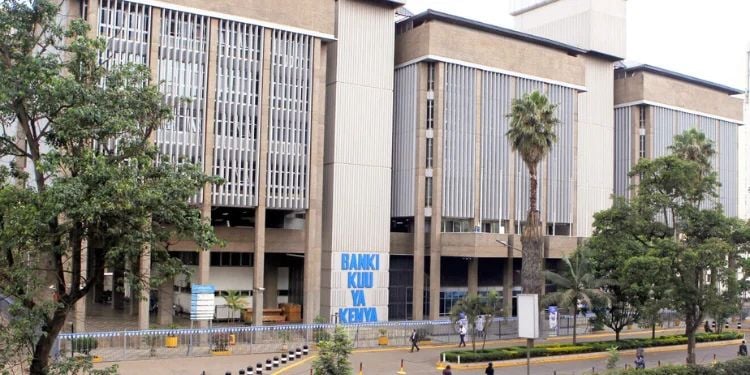
According to the Central Bank of Kenya (CBK), the shilling exchanged at Ksh129.53 per US dollar on July 23, compared to Ksh129.34 recorded on July 16.
The local currency also traded at Ksh129.53 against the dollar on July 27, the first trading day of the week.
CBK’s daily exchange rates showed the shilling exchanging at Ksh172.61 against the Sterling Pound, Ksh147.38 against the Euro and Ksh79.10 per 100 Japanese Yen on Monday.
The Kenyan currency traded at 29.14 against the Uganda shilling, 20.39 against the Tanzania shilling and 11.33 against the Rwanda franc.
Kenya Shilling Weakens Against Dollar
The latest CBK Weekly Bulletin indicated that the Kenya shilling remained relatively stable against major international and regional currencies during the week despite the slight depreciation against the dollar.
The movement comes as the U.S. Dollar Index strengthened by 0.7 percent during the week, reflecting increased investor demand for the American currency.
Foreign exchange reserves, however, declined during the week. CBK reported reserves of USD13.854 billion as of July 23, down from USD14.169 billion recorded on July 16.
The reserves were equivalent to 5.9 months of import cover compared to 6.0 months a week earlier.
Despite the decline, the reserves remained above the statutory requirement for CBK to maintain at least four months of import cover and continued to provide a buffer against external shocks.
The regulator said the reserves were adequate to support the stability of the foreign exchange market and meet the country’s external payment obligations.
Global inflation risks also remained elevated following continued conflict in the Middle East.
According to CBK, the European Central Bank maintained its policy rate at 2.25 percent during its July 23 meeting as policymakers adopted a cautious stance amid uncertainty and inflation concerns.
Meanwhile, Murban crude oil prices climbed sharply to USD86.05 per barrel on July 23 from USD79.09 per barrel a week earlier due to renewed supply concerns linked to the Middle East conflict.
Spot gold prices also increased to USD4,048.78 per ounce from USD3,969.94 over the same period.
Treasury Bonds Attract Strong Investor Demand
Investor appetite for government securities remained strong during the week under review.
The Treasury bill auction conducted on July 23 received bids worth Ksh38.5 billion against an advertised amount of Ksh28 billion, translating to a performance rate of 137.5 percent.
Interest rates on the 91-day, 182-day and 364-day Treasury bills declined marginally.
Demand was even stronger in the Treasury bond market.
The reopened 20-year and 25-year Treasury bonds attracted bids worth Ksh85.9 billion against an advertised amount of Ksh40 billion, representing an oversubscription rate of 214.8 percent.
The money market remained liquid during the week, with commercial banks holding excess reserves averaging Ksh14.7 billion above the required Cash Reserve Ratio.
Also, the average number of interbank transactions declined to six from 14 in the previous week, while the average value traded fell to Ksh3.7 billion from Ksh7.6 billion.
The Kenya Shilling Overnight Interbank Average Rate remained unchanged at 8.75 percent.
At the Nairobi Securities Exchange, the NASI, NSE 25 and NSE 20 share indices increased by 0.37 percent, 0.15 percent and 1.13 percent, respectively.
Market capitalization rose by 0.37 percent while total shares traded increased by 35.76 percent. Equity turnover jumped 50.81 percent during the week.
The bond market also recorded stronger activity, with turnover in the domestic secondary market increasing by 37.72 percent compared to the previous week.
Follow our and X Account for real-time news updates.


Comments
No comments yet. Be the first to share your thoughts.