
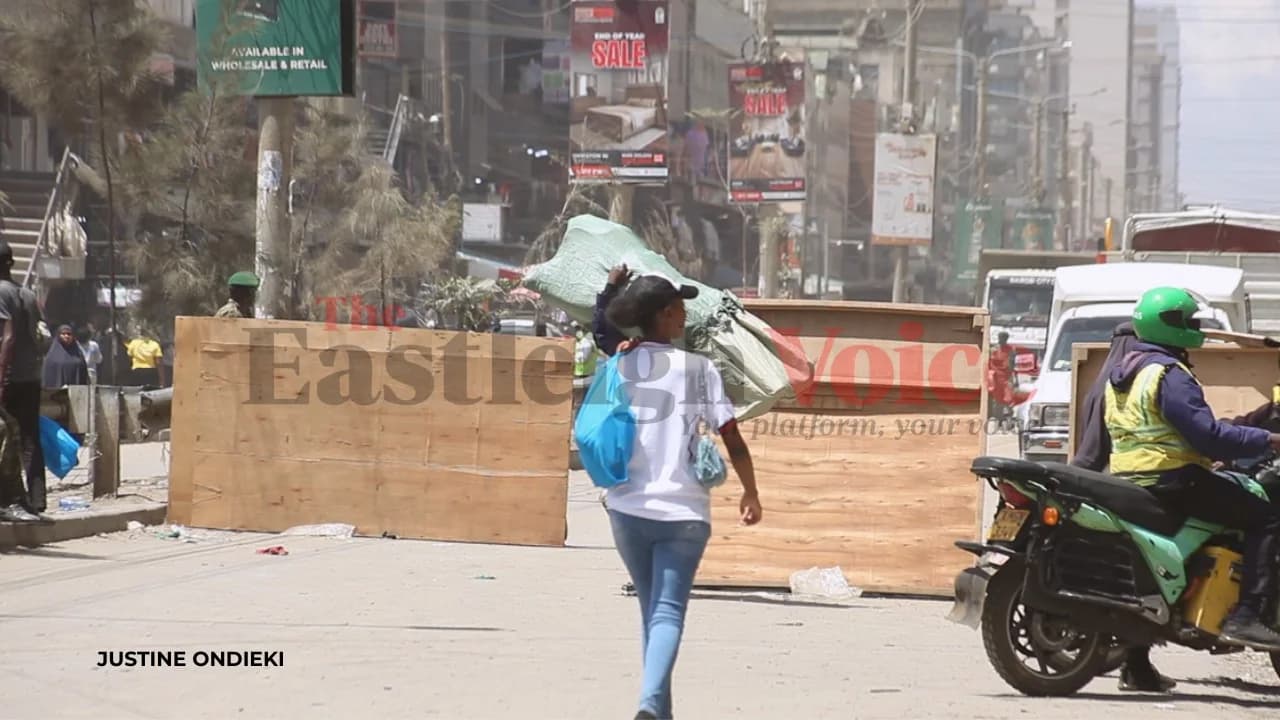
Eastleigh building collapse hits transport business as motorists lose half their daily trips

Road barriers and diversions around the collapsed building have cut daily trips by half for some drivers, increased fuel costs and left motorists and traders struggling to sustain their livelihoods.
The road closures around the collapsed Eastleigh building have cut daily trips by half for some motorists, driven away passengers and pushed up fuel costs, leaving drivers struggling to earn a living as the rescue operation enters its sixth day.
Motorists say diversions and restricted access have disrupted transport services, with drivers on the South C–Eastleigh route reporting a drop from about eight daily trips to just four. Others operating within Eastleigh say longer routes, fewer customers and prolonged waiting times have eaten into their earnings, while traders are also losing business as customers avoid the affected streets.
The drivers say restrictions around the scene have disrupted transport services, made businesses difficult to access and forced motorists to take longer routes. Others are spending more time waiting for passengers, with some operating on the South C–Eastleigh route reporting that their daily trips have dropped by half.
Timothy Nduku, a motorist operating in Section Three of Eastleigh, said roads had been closed on both sides of the collapsed building, forcing drivers to take longer routes when dropping off passengers.
He said the additional distance had increased fuel consumption at a time when business was already slow, leaving motorists with little money after meeting their daily operating expenses.
Timothy Nduku, a boda boda rider in Eastleigh, says road closures around the collapsed building have increased fuel costs and cut his earnings. (Photo: Justine Ondieki)Latest Stories
- Court petition filed to stop KMTC hiring, citing unconstitutional process
- Egypt orders closure of independent news site Mada Masr
- Eastleigh building collapse leaves traders counting losses as customers abandon busy streets
- Ruto seeks expanded labour mobility deal, urges Russia to open doors for 30,000 Kenyan workers
“We have had very bad business so far. Sometimes a customer comes, but because of the barriers, we have to take them through a longer route to reach their destination,” he said.
Nduku added that higher fuel expenses had worsened their situation, as fewer customers were travelling to the area and the money they earned was no longer enough to cover operating costs.
“By the end of the day, there is almost nothing left. We are spending more on fuel because we have to go around, yet the money we get from customers is too little to sustain us,” Nduku said.
He said the barriers had also affected traders whose shops had become difficult to access, prompting some customers to avoid making the extra effort to reach them.
Nduku appealed to authorities to consider creating safe access routes that would allow motorists and customers to move around without interfering with rescue operations.
Jacob Omondi, a motorist whose stage is located within the barricaded area, said the restrictions had made it difficult to serve customers, some of whom insisted on being dropped off in restricted zones without understanding why drivers could no longer access those areas.
He said the closures had disrupted normal operations, forcing motorists to explain to passengers why they could not reach certain destinations directly.
“We really want the government to consider us because we are losing a lot. This is our area of operation, and the restrictions have made it difficult for us to earn a living,” he said.
Omondi appealed to authorities to consider the challenges facing motorists and explore ways to ease movement in areas where it is safe to do so.
Jacob Omondi, a boda boda rider operating within the barricaded area in Eastleigh, says road closures have disrupted his business and made it difficult to earn a living. (Photo: Justine Ondieki)The disruption has also hit motorists operating beyond Eastleigh, particularly those serving the South C–Eastleigh route, where the number of daily trips has reportedly dropped by half.
One driver said they previously made about eight trips to and from Eastleigh daily but were now managing only four because fewer passengers were travelling to the area.
“We used to make about eight trips a day, but now we are managing only four. It takes much longer to fill the vehicle because fewer people are travelling to Eastleigh,” he said.
He added that the reduced number of trips had significantly affected their daily income, making it difficult to meet fuel expenses and other operating costs while supporting their families.
Gadaffi Ali, a motorist who transports customers from other parts of Nairobi to Eastleigh, said his business had also suffered since the building collapsed.
Ali said he had reduced the number of passengers he carried from eight to four because fewer customers were travelling to the area.
“We used to bring eight people, but now we are bringing four. It has affected us a lot,” he said, appealing to the government to help affected workers resume normal operations.
Jane Mwende, another worker in the area, said the road closures had made movement difficult, affecting her ability to access her workplace and move her belongings.
“We are poor people. You are closing our jobs. This is my life,” she said, appealing for government support.
The motorists acknowledged the need to secure the area as emergency teams continued searching for people believed to be trapped beneath the rubble. However, they said the restrictions had extended the economic impact of the building collapse to workers and businesses operating in surrounding areas.
As the rescue operation entered its sixth day on Wednesday, families continued waiting for news of their missing loved ones as emergency teams worked at the scene.
For motorists, the growing concern is how long they can sustain their businesses amid fewer passengers, longer routes and rising operating costs. They are urging authorities to explore safe ways of improving access to surrounding areas while ensuring rescue efforts continue without interruption.



Comments
No comments yet. Be the first to share your thoughts.