
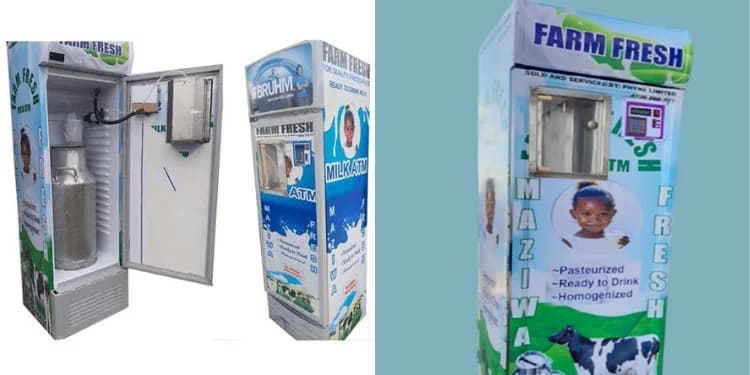
Starting a milk ATM business in Kenya in 2026 can cost about KSh135,000 to KSh250,000 for a small outlet, depending on the machine capacity, premises, licences, initial milk stock and other setup expenses.
The cost can increase significantly for entrepreneurs choosing larger machines or planning to set up their own milk processing facility.
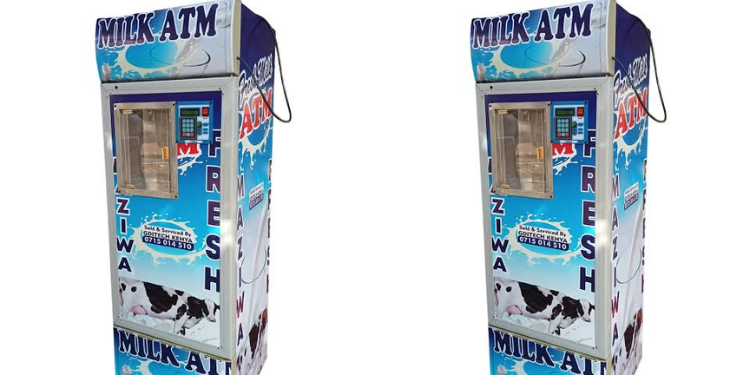
Current market listings show that milk ATM prices vary depending on capacity and supplier. Neema Technologies lists a 50-litre machine at KSh60,000, a 100-litre model at KSh75,000, a 150-litre machine at KSh120,000, a 200-litre unit at KSh130,000 and a 300-litre machine at KSh250,000.
Meanwhile, supplier Tassmatt lists a 150-litre milk ATM at KSh90,000 and a 300-litre model at KSh150,000, showing the price differences across suppliers and machine specifications.
How Much Does a Milk ATM Machine Cost?
The machine is normally the biggest single investment when starting the business.
Advertised prices from Kenyan suppliers include:
- 50 litres: about KSh60,000–KSh70,000
- 100 litres: about KSh75,000–KSh82,000
- 150 litres: about KSh90,000–KSh120,000
- 200 litres: about KSh130,000–KSh145,000
- 300 litres: about KSh150,000–KSh250,000
These prices vary by capacity, refrigeration system, construction materials, automation, dispensing technology, installation, and other features.
A supplier guide by Tassmatt puts a fully equipped 100-litre machine, including installation and initial training, at between KSh120,000 and KSh165,000. This is the supplier’s estimate and should not be interpreted as a government-set or industry-wide price.
How Much Capital Is Needed to Start?
A small operator must also budget for premises, licences, initial milk stock, cleaning equipment, branding, utilities and working capital.
Vinsol estimates that a basic milk ATM setup could require about KSh135,000, based on a KSh80,000 machine, KSh20,000 for licences and permits, KSh15,000 for rent, KSh10,000 for initial milk supply, and KSh10,000 for marketing.
Tassmatt’s 2026 business guide gives a higher estimate of KSh200,000 to KSh250,000 for a more fully equipped operation, including the machine, permits, rent deposit, initial milk stock and other startup requirements.
This means an entrepreneur should consider KSh150,000 to KSh250,000 as a planning range for a small outlet, while allowing for higher costs depending on the location and equipment selected.
Licences and Regulatory Requirements
The Kenya Dairy Board (KDB) states that a person cannot operate a dairy business without a regulatory permit issued by the Board. The Board issues, among others, milk bar and dairy produce dispenser regulatory permits, which are valid for one year.
Kenya’s Dairy Industry (Dairy Produce Safety) Regulations, 2021 also set specific requirements for milk dispensers.
Operators must obtain processed dairy produce from a registered dairy business operator. The milk must be transported in properly cleaned and sanitised food-grade containers, while the dispensing equipment must be made from food-grade materials and kept clean.
The regulations also require milk to be maintained between 4°C and 6°C, with records maintained, and state that milk should not be dispensed from the machine more than 24 hours after delivery to the establishment.
The premises must also meet hygiene requirements, including having an appropriate floor, washable walls and ceiling, safe storage for packaging materials and protection against insects and rodents.
In addition to KDB approval, entrepreneurs need to comply with applicable county business licensing and public-health requirements. The specific fees vary depending on the county and type of premises.
Do You Need a Pasteuriser?
An entrepreneur running a retail milk ATM can purchase processed milk from a registered dairy business instead of establishing a processing facility.
This can reduce the initial investment because buying raw milk and processing it independently requires additional equipment and compliance.
Tassmatt currently lists a 100-litre milk pasteuriser at KSh150,000, down from an indicated price of KSh165,000. Larger pasteurisers cost considerably more.
For a small retail outlet, sourcing compliant processed milk can let the entrepreneur focus on distribution and retail rather than setting up a full dairy-processing operation.
How Much Can a Milk ATM Seller Make Per Litre?
The potential margin depends on the price paid to the milk supplier and the retail price charged to customers.
Tassmatt’s business guide uses an example where pasteurised milk is purchased at approximately KSh55–KSh60 per litre and sold at around KSh70–KSh80 per litre, producing an indicative gross margin of KSh15–KSh20 per litre.
Other business estimates put potential gross margins at approximately KSh15–KSh30 per litre, although these are estimates rather than guaranteed market returns.
For example, at a KSh20 gross margin:
- 50 litres sold per day: KSh1,000 gross margin
- 100 litres per day: KSh2,000 gross margin
- 200 litres per day: KSh4,000 gross margin
At 100 litres sold every day, the business would generate approximately KSh60,000 in monthly gross margin before rent, electricity, labour, transport, cleaning, maintenance, permits and milk losses.
Why Location Matters
Location is one of the most important factors in determining whether a milk ATM business succeeds.
Potential markets include densely populated residential estates, neighbourhood shopping centres, markets and other areas with regular household demand.
Vinsol recommends locations with high foot traffic and a strong concentration of households, while BeyondForest similarly identifies estates, markets and busy retail areas as potential locations.
However, a busy location can also come with higher rent. Entrepreneurs therefore need to balance customer traffic against monthly operating costs.
These costs can determine whether a business remains viable after opening.
The Cost of Running Your Own Processing Operation
The investment becomes substantially higher if the entrepreneur wants to buy raw milk directly from farmers and process it before retailing.
A pasteuriser alone can cost around KSh150,000 for a 100-litre model, according to a current Tassmatt listing. Larger processing equipment can cost several hundred thousand shillings.
Such a business would also require appropriate dairy regulatory approvals, premises, cooling and other equipment.
For this reason, a small entrepreneur may find it more practical to start by purchasing processed milk from a registered supplier and expand into processing later.
Is a Milk ATM Business Profitable?
A milk ATM can generate a gross margin when the retail price is higher than the cost of purchasing milk, but profitability depends heavily on sales volume and operating expenses.
For example, a business selling 100 litres per day at a KSh20 gross margin would generate KSh2,000 per day or about KSh60,000 in gross margin over 30 days.
The operator would then have to deduct rent, electricity, water, labour, transport, cleaning, maintenance and other expenses.
A business with a high daily sales volume and relatively low operating costs can perform better than one with a larger machine but poor sales.
Follow our WhatsApp Channel and X Account for real-time news updates.


Comments
No comments yet. Be the first to share your thoughts.