
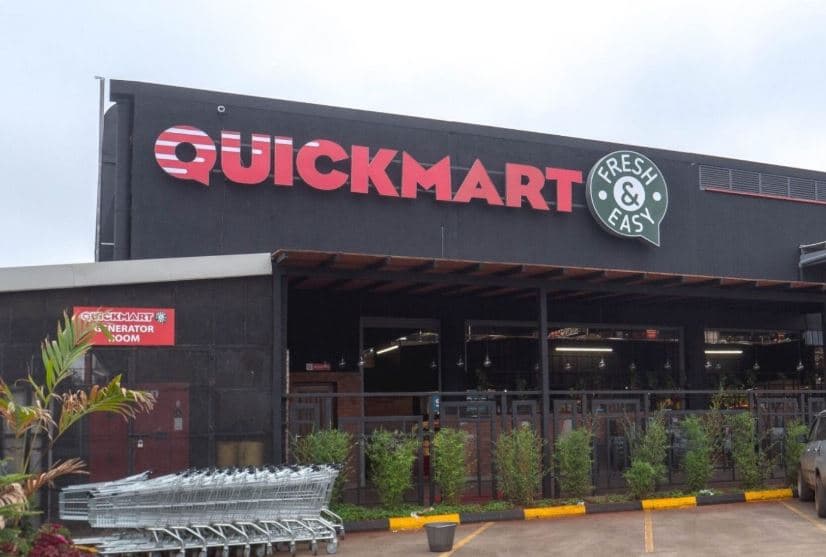
When Quickmart opened its first supermarket in Nakuru in 2006, it was a small family business serving shoppers in one town. Two decades later, the retailer has grown into one of Kenya’s largest supermarket chains, with 72 branches spread across 16 counties.
The journey from one shop to a national network has involved gradual expansion, a major business combination, new ownership and a shift towards a more structured retail operation. Quickmart’s growth also mirrors the changes in Kenya’s shopping habits, where supermarkets have increasingly moved closer to residential areas and become part of everyday life.
Here are five important stages that explain how the retailer grew.
1. The story began in Nakuru
Quickmart traces its beginnings to 2006, when the late John Kinuthia established the business in Nakuru as a family-owned supermarket.
The retailer did not immediately become a national chain. Its early growth was gradual, with the business building its customer base and expanding to four stores before making a major move into Nairobi.
That move came in 2010 and gave Quickmart access to a much larger market. Nairobi also offered the company an opportunity to establish itself in a city where competition among supermarkets was already becoming increasingly intense.
The expansion from Nakuru to Nairobi marked the beginning of Quickmart’s transformation from a regional retailer into a business with national ambitions.
2. The Tumaini combination opened a new chapter
One of the biggest changes in Quickmart’s history came through its relationship with Tumaini Self Service.
Tumaini had established a network of stores in several parts of Kenya. In October 2018, Sokoni Retail Kenya acquired Tumaini, which at the time had 13 outlets in Nairobi, Kiambu, Kajiado and Kisumu.
Quickmart had 10 outlets around Nairobi, Kiambu and Nakuru.
The two businesses were subsequently brought together under the Quickmart brand. Adenia Partners, which had invested in Tumaini, also invested in Quickmart.
The combination gave the retailer a larger network and created a stronger platform for further expansion. For customers, this meant seeing the Quickmart name appear in more locations. For the business, it meant managing a much bigger operation.
Expansion became the main growth engine
After the combination with Tumaini, Quickmart entered a period of rapid expansion.
The retailer continued opening branches while also incorporating locations into its growing network. This allowed it to reach more shoppers without depending entirely on building new stores from scratch.
Its branches have spread beyond Nairobi and Nakuru to different parts of the country, giving the company a presence in 16 counties.
Quickmart has also developed different store formats to serve different types of shoppers and locations. Its network includes supermarkets, hypermarkets and smaller express outlets.
By 2026, the company had reached 72 stores.
That is a significant change from the four-store operation it described during its earlier years. It also means the retailer now has to coordinate a much larger network of employees, suppliers, distribution arrangements and customer services.
4. The numbers tell the story of the growth
The size of Quickmart today is perhaps easier to understand through its business figures.
The retailer reported revenue of Sh50.4 billion in 2025. During the first six months of 2026, it recorded revenue of Sh27.3 billion, according to figures contained in its proposed listing information.
The company reported a profit after tax of Sh1.51 billion for 2025 and Sh873 million during the first half of 2026.
Its customer base has grown alongside its branch network. Quickmart recorded an average of about five million customer transactions every month during the first half of 2026.
It also had approximately 2.5 million members enrolled in its Q-Points loyalty programme.
Behind those transactions is a sizeable workforce. Quickmart employs more than 8,000 people and works with more than 700 suppliers and about 14,000 farmers across Kenya.
For a supermarket, growth is not simply about adding another building to a list of branches. Every new store brings the need for stock, transport, staff, technology, security, suppliers and a reliable supply of products.
5. The next chapter could be on the NSE
Quickmart’s proposed move to the Nairobi Securities Exchange represents another major stage in its development.
The proposed transaction involves the sale of existing shares by Sokoni Retail Kenya. The offer is expected to involve up to two billion existing ordinary shares, representing 50 per cent of Quickmart’s issued share capital, subject to the final terms and required approvals.
Importantly, this is an offer for sale rather than an issue of new shares by Quickmart. This means the proceeds from the shares being sold would go to the existing shareholder rather than directly into Quickmart’s business.
If completed, the transaction would allow members of the public to become shareholders in a supermarket that has spent two decades expanding from its original Nakuru base.
Quickmart’s history is therefore a story of steady growth rather than one dramatic overnight transformation. It began with a single family-owned store, expanded into Nairobi, combined with Tumaini, built a wider branch network and developed into a business with thousands of employees and millions of monthly customer transactions.
Today, the name that started in Nakuru appears on 72 stores across 16 counties.
The proposed NSE listing could mark the beginning of another phase in that journey, taking Quickmart from a family business that grew through the retail market to a company whose ownership could increasingly be shared with members of the investing public.



Comments
No comments yet. Be the first to share your thoughts.