
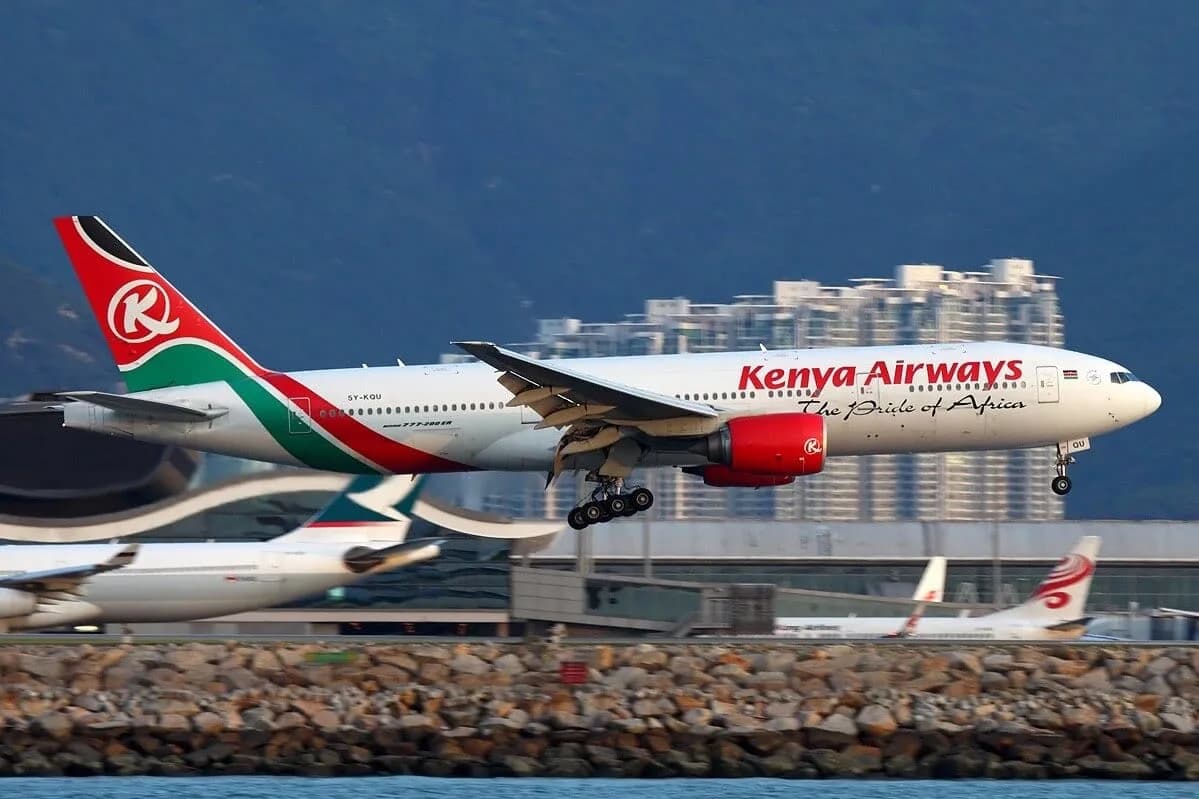
Kenya Airways has picked Sabre to replace the system that runs its reservations, ticketing, seat inventory and airport check-in. The airline says that system has been in place for more than two decades. Alongside it, Kenya Airways has hired Branchspace, a London travel technology firm, to build the booking website and app customers actually touch. Both announcements landed on 22 September 2026.
Every airline runs a passenger service system, or PSS. It is the one database that knows a flight exists, how many seats are left in each fare class, who has booked them, what each person paid, and who has checked in. The booking reference in your email came from the PSS, and so did the boarding pass the gate agent scans. It is the least visible and most load-bearing software an airline owns, which is why swapping it takes years.
Kenya Airways has not named the system it is dropping. It is Amadeus. The airline runs Amadeus Altéa for reservations, ticketing and departure control, and in April 2025 it extended that to distribute NDC fares through the Amadeus travel platform, the first sub-Saharan carrier to do so. Amadeus and Sabre are the two largest suppliers of this software, and a carrier the size of Kenya Airways is realistically choosing between the two of them. That choice tends to hold for twenty years, which is why airlines make it so rarely.
Sabre supplies the engine. Branchspace builds the shopfront. Its platform, Triplake, is a modular ecommerce system covering booking, ancillary sales, check-in, loyalty, payments and notifications, and its customers include British Airways, Finnair, Turkish Airlines, TAP Air Portugal and Air France-KLM. At Kenya Airways it becomes the primary digital touchpoint from day one, so the commercial team can change what a fare bundle looks like on kenya-airways.com without waiting for the system underneath to be finished.
Building the shopfront first is deliberate. Branchspace’s own engineers have written that the old system and the new one typically run side by side for five years or more, with a translation layer mapping between them, because trying to flip everything in one night is how these projects stall. Sabre is selling the same idea, which it calls modular migration. Both are describing a replacement that takes years.
Airline software is built around two records invented for paper tickets: the PNR, which is your booking, and the e-ticket, which is your right to fly one leg. Bags, seat selection, lounge access and wifi were bolted on later as separate documents. That is why changing one part of a trip so often breaks the rest of it.
The offer-and-order model scraps that. The airline makes you an offer, you accept, and the flights plus everything attached become a single order, the way any other retailer would handle it. IATA’s New Distribution Capability, or NDC, is the messaging standard that lets an airline push those richer offers out to travel agents and booking sites instead of the stripped-down fare feeds the old pipes allowed.
Kenya Airways is also buying Sabre Mosaic Offer Optimisation, which prices dynamically. It reads live booking data across the network and adjusts fares, bundles and add-ons to what it predicts a given traveller will pay. Sabre claims up to 5% revenue uplift from it. In practice, two people on the same Nairobi to London flight can be shown different prices for the same seat and the same bag, based on how each of them shopped.
The airline promises tailored fares and add-ons, easier bundling of a trip, a better mobile booking flow, faster airport check-in, an upgraded Asante Rewards experience and real-time rebooking when flights go wrong. Asante Rewards is Kenya Airways’ loyalty programme, launched in June 2023, and we covered the Absa and Visa co-branded card built on it last month. Self-service rebooking during disruption is the one worth watching, because it is the thing the current system handles worst and the thing passengers complain about most.
None of it arrives yet. Kenya Airways gave no go-live date, no cost, and no word on when or whether the Amadeus contract ends.
Kenya Airways lost KES 16.08 billion after tax in the six months to June 2026, a loss that widened by about 32% even though revenue rose 9% to KES 81.25 billion. Fuel cost KES 29 billion, up 66%. Fuel prices are not something the airline controls. Direct sales and ancillary revenue are, and both run through exactly this software. When Kenya Airways rebuilt its website in 2023, Julius Thairu, the airline’s Chief Commercial and Customer Officer, said just over 20% of customers booked there. Every point that number climbs is commission the airline keeps.
Thairu calls the combination “a more flexible and personalised experience for our customers and staff”, in the airline’s own words. What Kenya Airways wants out of it is more bookings on its own channels and more money per booking.
Ethiopian Airlines signed for SabreMosaic in November 2025. Air Tanzania took SabreSonic PSS and Sabre Mosaic NDC in August 2026. With Kenya Airways now signed, the region’s three largest carriers are all Sabre customers. We expect that to make codeshare and interline ties between them easier to build, because all three will eventually speak the same offer and order formats.
Kenya Airways flies to 42 destinations, 35 of them in Africa, and is SkyTeam’s only African member. Watch the website. The first booking flow built on Triplake is the only part of this a passenger will ever see, and it should appear well before the system underneath it is finished.


Comments
No comments yet. Be the first to share your thoughts.