
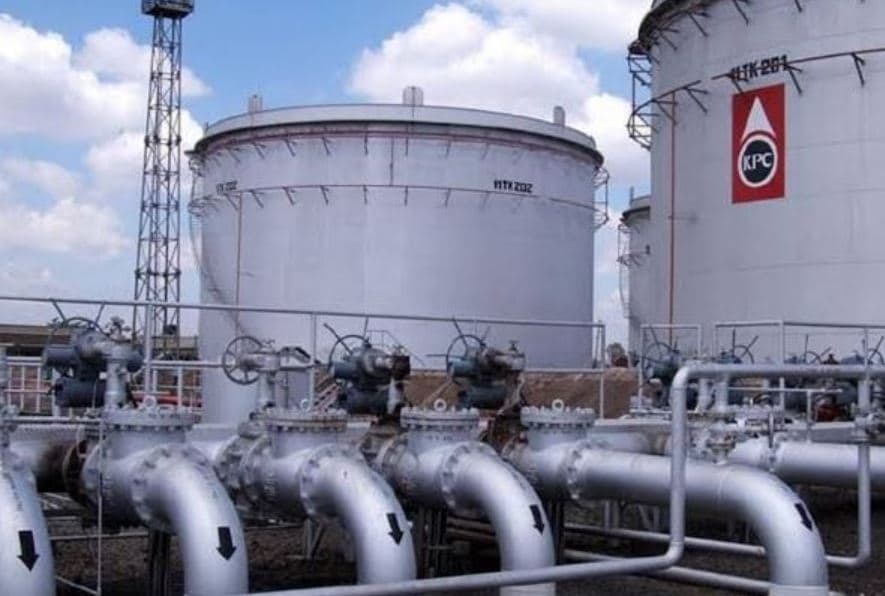
Kenya Pipeline Company (KPC) is preparing to move beyond its traditional petroleum transportation business as it seeks to increase annual revenue to Ksh68 billion by 2030.
The company is looking to tap into new income streams in petroleum trading, fuel storage, re-exports, liquefied petroleum gas (LPG), liquefied natural gas (LNG), biofuels and power generation. The strategy comes as the company seeks to strengthen its position in East Africa’s energy market following its partial privatisation and listing on the Nairobi Securities Exchange (NSE).
KPC’s latest financial results provide a strong starting point for the ambitious target. The company recorded a net profit of Ksh 11.58 billion for the financial year ended June 2026, representing a 13.1 per cent increase from Ksh10.24 billion reported a year earlier.
Revenue also increased by 8.78 per cent to Ksh 42.98 billion, supported by higher volumes of petroleum products transported through its network.
The growth reflects KPC’s established position in the regional fuel supply chain, where its infrastructure connects the Port of Mombasa to inland markets, including Uganda and other landlocked countries.
Company seeks new sources of revenue
KPC’s plans signal a shift towards becoming a broader energy infrastructure and trading business rather than depending almost entirely on transportation charges.
One of its major proposals involves developing an integrated petroleum trading hub at the Kenya Petroleum Refineries Limited facilities in Kipevu, Mombasa.
The facility is expected to support services such as bulk breaking, transhipment, bunkering and fuel re-exports. These activities could allow the company to earn additional income from handling petroleum products destined for different regional markets.
The expansion of storage capacity is another priority. KPC plans to invest in additional tank infrastructure, with the proposed improvements expected to increase its ability to handle larger petroleum volumes.
The company is also pursuing opportunities in alternative energy products, including LPG, LNG and biofuels, as it considers changes in the region’s energy requirements.
Its diversification plans are significant because they could reduce its dependence on conventional fuel transportation revenue while creating additional commercial opportunities.
However, the new business lines will require capital investment, suitable partnerships and access to reliable markets before they can make a substantial contribution to earnings.
Regional expansion puts Rwanda in focus
KPC is also looking to strengthen its presence beyond Kenya through the expansion of its pipeline network.
One of its major infrastructure ambitions is extending the pipeline from Eldoret towards Kampala in Uganda and eventually Kigali in Rwanda.
Rwanda is an important potential market because of its reliance on imported petroleum products and its position as a landlocked country.
In June 2026, Kenya and Rwanda signed agreements to facilitate petroleum imports through Kenya’s infrastructure. The arrangement provides an opportunity for KPC to increase the volume of fuel transported through its network.
The proposed Kigali extension would further strengthen this relationship by improving the movement of petroleum products between the countries.
For KPC, regional expansion could translate into increased throughput, greater utilisation of existing infrastructure and additional transportation revenue.
It would also place the company in a stronger position to compete with alternative petroleum supply routes through neighbouring countries.
Stronger balance sheet after NSE listing
KPC’s financial position also improved during the 2025/26 financial year.
Cash and cash equivalents increased by 84 per cent to Ksh 20.54 billion, while cash generated from operating activities rose by 34 per cent to Ksh 17.39 billion.
Total assets increased by six per cent to Ksh149.27 billion, while borrowings declined by 83 per cent to Ksh 442.86 million.
The stronger cash position gives the company additional financial flexibility as it considers investments in infrastructure and new business activities.
The company has also recommended a dividend payment of Ksh 5.81 billion, equivalent to Ksh0.32 per share, subject to the applicable shareholder approval.
KPC’s listing in March 2026 followed the government’s sale of 65 per cent of its shares through an initial public offering priced at Ksh9 per share. The government retained a 35 per cent stake.
The transition introduced a broader shareholder base and increased public scrutiny of the company’s financial performance.
The challenge now is to convert its strong earnings, infrastructure and regional relationships into sustainable growth.
Achieving the Ksh68 billion revenue target by 2030 will depend on how quickly KPC can execute its expansion projects, attract new business and turn its diversification plans into profitable operations.



Comments
No comments yet. Be the first to share your thoughts.