
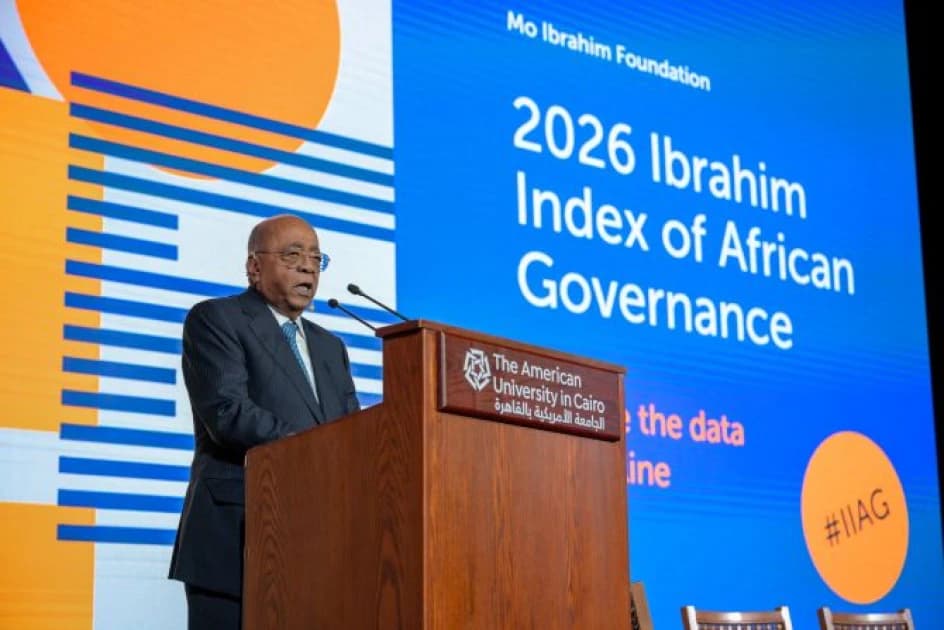
The report, released by the Mo Ibrahim Foundation on October 31, 2026, places Kenya above the continental average of 50.1 and Eastern Africa's regional average of 47.5.
Kenya's overall score improved by 0.9 points between 2016 and 2025.
Its strongest gains were recorded in Foundations for Economic Opportunity, which rose by 4.1 points to 65.3, followed by Participation, Rights, and Inclusion at 62.4, and Human Development at 62.3.
However, Security and Rule of Law emerged as the country's biggest governance concern, declining by 4.2 points to 54, making it the only one of the four main categories to record a drop.
The assessment also identified weaknesses in public procurement, which scored 29.7 points after losing 36.4 points over the review period.
Other declining indicators included public perception of the rule of law, which fell to 37.3, media freedom at 56.6, and public perception of anti-corruption efforts at 27.9.
Despite these challenges, Kenya registered improvements in several areas, including protection against discrimination, internet access, energy access, and education completion.
At the continental level, Seychelles topped the rankings, followed by Mauritius, Cabo Verde, Botswana, and South Africa. Namibia, Morocco, Senegal, and Ghana completed the top 10 alongside Kenya.
The index assesses governance across 54 African countries using 96 indicators drawn from 51 independent data sources.
Its four main areas are Security and Rule of Law; Participation, Rights and Inclusion; Foundations for Economic Opportunity; and Human Development.
At the bottom of the 2026 Ibrahim Index of African Governance rankings are South Sudan, which occupies 54th position, followed by Somalia, Sudan, Eritrea, Central African Republic, Niger, Democratic Republic of Congo, Chad, Libya, and Guinea-Bissau.

Comments
No comments yet. Be the first to share your thoughts.